


Ferromagnetic resonance of NiCoFe2O4 nanoparticles and microwave absorption properties of flexible NiCoFe2O4–carbon black/poly(vinyl alcohol) composites
文献信息
发布日期
2017-07-11
DOI
10.1039/C7CP03953K
影响因子
3.676
作者
Gopal Datt, Chetan Kotabage, A. C. Abhyankar
查看原文
摘要
The effect of cationic disorder and particle morphology on the ferromagnetic resonance (FMR) of NiCoFe2O4 nanoparticles (NPs) and the electromagnetic shielding effectiveness of flexible composites (wherein the nanoparticles are used as fillers) has been presented. Upon annealing at 1000 °C, spherical, ∼25 nm, single crystalline (as-prepared) NPs are transformed into octahedral, ∼200 nm, polycrystalline (annealed) NPs and change the cationic distribution significantly. The effect of shape, size and cationic distribution on the resonance properties has been discussed using the randomly-oriented anisotropic-axis model. The temperature dependent evolution of FMR spectra has been found to be consistent with a Bloch spin-relaxation model. Analysis of the FMR spectra reveals that NiCoFe2O4 nanoparticles have a large internal magnetic field along with broad FMR linewidths of ∼2–3 kOe, signifying high magnetic losses that are essential for the absorption of electromagnetic (EM) waves. Next, NiCoFe2O4–carbon black (NCF–CB) hybrids grafted in a PVA matrix, as flexible composite films with a thickness of ∼1.5 mm, are assessed for EM wave absorption properties in the range of 8–18 GHz. As compared to annealed-NCF–CB/PVA (21 dB, ∼99.5%), the as-prepared-NCF–CB/PVA composite film exhibits significantly large SE of 27 dB (∼99.9% attenuation of the EM wave), with a dominant contribution from absorption (SEA ∼ 21 dB). The electrical conductivity, the electric modulus, and Cole–Cole plots reveal that the dielectric losses in the as-prepared-NCF–CB/PVA have significant contributions from cationic disorder and particle size, as compared to the annealed-NCF–CB/PVA composites. Cationic disorder increases the d–d electron transition probability between adjacent ionic pairs such as Co2+/Fe3+ and a reduced particle size creates large interfacial polarization in the as-prepared NCF/CB hybrids. Considerably large values of the Landes g-factor, magnetic anisotropy and better impedance matching indicate a dominant magnetic loss contribution in ap-NCF (g = 4.5) as compared to an-NCF (g = 2.5) at 300 K.
期刊推荐

Chinese Journal of Chemistry

Critical Reviews in Solid State and Materials Sciences
Medicinal Chemistry Research

NDT & E International

Bioorganic & Medicinal Chemistry Letters

Colloid Journal

Herald of the Russian Academy of Sciences
Journal of Asian Natural Products Research

Electroanalysis
Bioorganic & Medicinal Chemistry
相关文献
Dynamics and mechanisms of DNA repair by photolyase
Zheyun Liu, Lijuan Wang, Dongping Zhong
2015-03-26
Perspective
DOI: 10.1039/C4CP05286B
Dithiafulvalene functionalized diketopyrrolopyrrole based sensitizers for efficient hydrogen production
S. Niveditha, K. Bhanuprakash
2015-04-27
Paper
DOI: 10.1039/C5CP01777G
Water-wetting surfaces as hydrate promoters during transport of carbon dioxide with impurities
Tatiana Kuznetsova, Bjørnar Jensen, Bjørn Kvamme, Sara Sjøblom
2015-04-13
Paper
DOI: 10.1039/C5CP00660K
Equilibration processes during gas uptake inside narrow pores
Joshua M. Vann, Samantha L. Molnar, M. Mercedes Calbi
2015-04-16
Paper
DOI: 10.1039/C5CP00502G
Atomic structure of biodegradable Mg-based bulk metallic glass
2015-04-15
Paper
DOI: 10.1039/C4CP03714F
(Hollow Au–Ag nanoparticles)–TiO2 composites for improved photocatalytic activity prepared from block copolymer-stabilized bimetallic nanoparticles
Na Li, Xiaoyu Zhang, Shulong Yuan, Xiaokai Zhang, Yuzhen Yuan, Xue Li
2015-04-01
Paper
DOI: 10.1039/C4CP06093H
Local strain effect on the thermal transport of graphene nanoribbons: a molecular dynamics investigation
Lanqing Xu, Xiaoman Zhang, Yongping Zheng
2015-04-01
Paper
DOI: 10.1039/C4CP06014H
Two-dimensional electronic-vibrational spectra: modeling correlated electronic and nuclear motion
F. Terenziani, A. Painelli
2015-04-20
Paper
DOI: 10.1039/C5CP01485A
A study of the mechanism of fluoride adsorption from aqueous solutions onto Fe-impregnated chitosan
Jing Zhang, Nan Chen, Zheng Tang, Yang Yu, Qili Hu, Chuanping Feng
2015-04-02
Paper
DOI: 10.1039/C5CP00817D
您可能还喜欢
化合物问答
4-[[6-(3-苯基苯基)-7H-嘌呤-2-基]氨基]苯磺酰胺(CAS号:2079895-42-2)适用哪些法规指南?
该化合物需遵循REACH法规以确保其安全使用和管理。同时,根据其潜在的生物降解性和毒性,也需要符合GHS分类中的相应要求。此外,若用于医药或食品相关领域,则还需...
2079895-42-24-{[6-(3-Biphenylyl)...
化合物问答
反式-度骨化醇(CAS号:74007-20-8)的物理化学性质是什么?
反式-度骨化醇是一种脂溶性维生素D3的衍生物,呈无色或白色结晶性粉末,不溶于水,溶于乙醇、丙酮、氯仿等有机溶剂。其分子式为C28H44O,分子量为404.65。...
74007-20-8trans-Doxercalcifero...
化合物问答
莲花掌苷(CAS号:59282-56-3)的市场或研究趋势如何?
莲花掌苷作为一种天然产物,近年来在抗炎、抗癌等生物活性研究方面显示出一定的潜力,因此市场需求逐渐增长。市场动态方面,随着天然产物开发的深入,预计该化合物的研究会...
59282-56-3Lindleyin
化合物问答
2-溴-6-(吡咯烷-1-基)吡啶-4-硼酸频那醇酯(CAS号:1150271-64-9)应用于哪些行业?
2-溴-6-(吡咯烷-1-基)吡啶-4-硼酸频那醇酯在医药领域有着广泛的应用,它可以用作药物合成中的中间体。此外,它还可以用于有机合成,特别是在构建复杂杂环化合...
1150271-64-92-Bromo-6-(1-pyrroli...
化合物问答
什么是methyl 2-(4-bromophenyl)-3-methylbutanoate(CAS号:1061284-70-5)?
methyl 2-(4-溴苯基)-3-甲基丁酸甲酯是一种化学物质,分子式为C12H13BrO2。它是一种有机化合物,具有一定的挥发性和易燃性。
1061284-70-52-(4-Bromo-phenyl)-3...
化合物问答
CJC1-295(CAS号:863288-34-0)的物理化学性质是什么?
CJC1-295是一种具有复杂肽链结构的化合物,其分子量约为1875 Da。该化合物在水中具有一定的溶解性,但在有机溶剂中的溶解性不佳。它是一种反应活性化合物,...
863288-34-0L-tyrosyl-D-alanyl-L...
化合物问答
三正丁基锍碘(CAS号:18146-62-8)的市场或研究趋势如何?
三正丁基锍碘作为一种重要的有机硫化合物,主要用于有机合成中作为亲电试剂。近年来,由于其在合成中的广泛应用,市场对其需求持续增长。此外,随着绿色化学的发展,对其替...
18146-62-8Tributylsulfonium io...
化合物问答
雌二醇-[13C3]同位素内标(CAS号:1261254-48-1)通常如何合成?
雌二醇-[13C3]同位素内标通常通过在雌二醇分子中引入[13C3]同位素来合成。常见的方法是通过化学标记反应,如与[13C3]标记的甲基溴化物进行亲核取代反应...
1261254-48-117beta-Estradiol-2,3...
化合物问答
N1-(2-吡啶甲基)-N2-(2-甲基-1-萘基)草酰胺(CAS号:2611225-93-3)的物理化学性质是什么?
N1-(2-吡啶甲基)-N2-(2-甲基-1-萘基)草酰胺为固体化合物,具有良好的结晶形态,分子量为340.34 g/mol。该化合物在水中的溶解度较低,但在有...
2611225-93-3N-(2-Methyl-1-naphth...
化合物问答
如何处理含有十五碳烯酸甲酯(顺-10)(C15:1)标准品(CAS号:90176-52-6)的废料?
含有十五碳烯酸甲酯(顺-10)(C15:1)标准品的废料应首先进行适当收集和储存,避免与其他化学品混合。然后,可采用焚烧或交由专业废物处理公司进行处理。处理过程...
90176-52-6(Z)-10-Pentadecenoic...
来源期刊
Physical Chemistry Chemical Physics

CiteScore:
5.5
自引率:
10.3%
年发文量:
3036
Physical Chemistry Chemical Physics (PCCP) is an international journal co-owned by 19 physical chemistry and physics societies from around the world. This journal publishes original, cutting-edge research in physical chemistry, chemical physics and biophysical chemistry. To be suitable for publication in PCCP, articles must include significant innovation and/or insight into physical chemistry; this is the most important criterion that reviewers and Editors will judge against when evaluating submissions. The journal has a broad scope and welcomes contributions spanning experiment, theory, computation and data science. Topical coverage includes spectroscopy, dynamics, kinetics, statistical mechanics, thermodynamics, electrochemistry, catalysis, surface science, quantum mechanics, quantum computing and machine learning. Interdisciplinary research areas such as polymers and soft matter, materials, nanoscience, energy, surfaces/interfaces, and biophysical chemistry are welcomed if they demonstrate significant innovation and/or insight into physical chemistry. Joined experimental/theoretical studies are particularly appreciated when complementary and based on up-to-date approaches.
推荐化合物
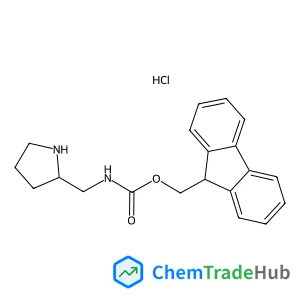
(S)-(9H-Fluoren-9-yl)methyl (pyrrolidin-2-ylmethyl)carbamate hydrochloride
CAS号:
1217813-15-4
分子式:
C20H23ClN2O2
推荐供应商


免责声明
本页面提供的学术期刊信息仅供参考和研究使用。我们与任何期刊出版商均无关联,也不处理投稿事宜。如有投稿相关咨询,请直接联系相关期刊出版商。
如发现页面信息有误,请发送邮件至 support@chemtradehub.com 联系我们。我们将及时核实并处理您的问题。