


Structure–property relationships in protic ionic liquids: a study of solvent–solvent and solvent–solute interactions
文献信息
发布日期
2017-10-12
DOI
10.1039/C7CP05076C
影响因子
3.676
作者
Carlos E. S. Bernardes, Filipe Agapito, Filomena Martins, Seishi Shimizu, Manuel E. Minas da Piedade, Adam J. Walker
查看原文
摘要
The ionic nature of a functionalized protic ionic liquid cannot be rationalized simply through the differences in aqueous proton dissociation constants between the acid precursor and the conjugate acid of the base precursor. The extent of proton transfer, i.e. the equilibrium ionicity, of a tertiary ammonium acetate protic ionic liquid can be significantly increased by introducing an hydroxyl functional group on the cation, compared to the alkyl or amino-functionalized analogues. This increase in apparent ionic nature correlates well with variations in solvent–solute and solvent–solvent interaction parameters, as well as with physicochemical properties such as viscosity.
期刊推荐
Electroanalysis
Medicinal Chemistry Research

NDT & E International

Journal of Asian Natural Products Research
Cellulose
Journal of the Indian Institute of Science
Bioorganic & Medicinal Chemistry Letters
Polycyclic Aromatic Compounds
Main Group Chemistry
Critical Reviews in Solid State and Materials Sciences
相关文献
The synergistic effect of rigid and flexible substituents on insertion polymerization with α-diimine nickel and palladium catalysts
Zijuan Hai, Zhou Lu, Shuaikang Li, Zhong-Yan Cao, Shengyu Dai
2021-07-30
Paper
DOI: 10.1039/D1PY00812A
Multicolor mechanochromism of a multinetwork elastomer that can distinguish between low and high stress
Haoxiang Wang, Lei Shen
2021-06-11
Paper
DOI: 10.1039/D1PY00637A
Chemical conjugation of nucleic acid aptamers and synthetic polymers
Maria Nerantzaki, Capucine Loth, Jean-François Lutz
2021-06-07
Minireview
DOI: 10.1039/D1PY00516B
Polyamides containing a biorenewable aromatic monomer based on coumalate esters: from synthesis to evaluation of the thermal and mechanical properties
Jurrie Noordijk, Bert Gebben, Monique H. M. Meeusen-Wierts, Katrien V. Bernaerts
2021-03-23
Paper
DOI: 10.1039/D1PY00005E
Engineering of pH-triggered nanoplatforms based on novel poly(2-methyl-2-oxazoline)-b-poly[2-(diisopropylamino)ethyl methacrylate] diblock copolymers with tunable morphologies for biomedical applications
Peter Černoch, Alessandro Jager, Zulfiya Černochová, Vladimir Sincari, Lindomar J. C. Albuquerque, Rafal Konefal, Ewa Pavlova, Fernando C. Giacomelli, Eliezer Jager
2021-04-14
Paper
DOI: 10.1039/D1PY00141H
Visible light-degradable supramolecular gels comprising cross-linked polyrotaxanes capped with trithiocarbonate groups
Tae Woong Kang, Atsushi Tamura, Yoshinori Arisaka, Nobuhiko Yui
2021-06-09
Paper
DOI: 10.1039/D1PY00569C
Retraction: A polyurethane–chitosan brush as an injectable hydrogel for controlled drug delivery and tissue engineering
2021-04-08
Retraction
DOI: 10.1039/D1PY90044G
您可能还喜欢
化合物问答
如何处理含有顺-二(2,2'-联吡啶)二氯化钌(II)二水合物(CAS号:67776-38-9)的废料?
处理含有该化合物的废料时,应先收集并分类,然后根据其危险特性选择合适的处理方法。推荐采用焚烧或由专业机构进行安全处理,以确保符合环保法规的要求。处理过程中应佩戴...
67776-38-93-{[(2R,3R,4S,5R,6R)...
化合物问答
4-amino-2-bromo-3-iodopyridine(CAS号:1300750-77-9)的市场或研究趋势如何?
4-氨基-2-溴-3-碘吡啶主要应用于药物合成和研究领域,尤其是在抗病毒和抗癌药物的研发中。随着新型药物的需求增加,该化合物的研究趋势较好。市场方面,由于其特殊...
1300750-77-92-bromo-3-iodopyridi...
化合物问答
4-乙酰基氨基-2-氨基-苯甲酸(CAS号:43134-76-5)的市场或研究趋势如何?
当前,4-乙酰基氨基-2-氨基-苯甲酸(CAS号:43134-76-5)在医药和化工领域有一定的应用。随着药物研发的进展,该化合物在新型药物设计中的应用可能增加...
43134-76-54-Acetamido-2-aminob...
化合物问答
庚a氟-1-(1-碘-1,2,2,2-四氟乙氧基)丙烷(CAS号:107432-46-2)的市场或研究趋势如何?
该化合物目前主要用于特定的工业应用,如氟聚合物的合成。市场趋势显示,由于其独特的结构和性能,未来可能在新型氟材料和特种化学品领域有更多的应用。研究趋势方面,主要...
107432-46-21,1,1,2,2,3,3-Heptaf...
化合物问答
在合成中是否有Propargyl-PEG13-bromide(CAS号:2055105-25-2)的替代品?
可以考虑使用1,3-丁二烯-1-炔-3-基-聚乙二醇-13-溴化物作为Propargyl-PEG13-bromide的替代品,因为两者在结构上相似,均可用于合成...
2055105-25-2Propargyl-peg13-brom...
化合物问答
2-氨基-6-甲氧基嘌呤(CAS号:20535-83-5)安全吗?
2-氨基-6-甲氧基嘌呤在正常使用条件下相对安全,但在操作时仍需注意防护措施,如佩戴手套和护目镜,避免吸入或接触皮肤和眼睛。
20535-83-56-Methoxy-7H-purin-2...
化合物问答
2-甲基-3-溴苯乙酸乙酯(CAS号:1261862-72-9)适用哪些法规指南?
该化合物根据其化学性质和潜在危害,可能适用于GHS(全球化学品统一分类和标签制度)的分类标准。具体分类需依据其毒性和燃烧危险性进行评估。此外,欧洲化学品管理局(...
1261862-72-9Ethyl (3-bromo-2-met...
化合物问答
4,4-二甲基吡咯烷-3-羧酸盐酸盐(CAS号:1351343-41-3)应用于哪些行业?
4,4-二甲基吡咯烷-3-羧酸盐酸盐在医药、聚合物和传感器领域有应用。在医药领域,它可以作为某些药物的中间体;在聚合物领域,它可用作某些聚合物的稳定剂;在传感器...
1351343-41-34,4-Dimethyl-3-pyrro...
化合物问答
处理5-Hydroxy-7-methoxy-2-(4-methoxyphenyl)-4-oxo-4H-chromen-6-yl 2-O-beta-D-xylopyranosyl-beta-D-glucopyranoside(CAS号:149998-39-0)时应注意哪些实验室安全事项?
处理该化合物时应注意使用个人防护装备(如手套、护目镜和实验服),在通风橱中操作。避免直接接触皮肤和吸入,泄漏时应立即清理并使用适当的吸收材料。参考安全数据表(S...
149998-39-05-Hydroxy-7-methoxy-...
化合物问答
7-甲基-1,2,3,4-四氢-吖啶-9-甲酸(CAS号:345621-27-4)的市场或研究趋势如何?
该化合物在医药研究中具有潜在应用价值,特别是在抗癌药物研发方面。随着研究的深入,对其合成方法的优化和生物活性的进一步探索将成为研究热点。
345621-27-47-Methyl-1,2,3,4-tet...
来源期刊
Physical Chemistry Chemical Physics

CiteScore:
5.5
自引率:
10.3%
年发文量:
3036
Physical Chemistry Chemical Physics (PCCP) is an international journal co-owned by 19 physical chemistry and physics societies from around the world. This journal publishes original, cutting-edge research in physical chemistry, chemical physics and biophysical chemistry. To be suitable for publication in PCCP, articles must include significant innovation and/or insight into physical chemistry; this is the most important criterion that reviewers and Editors will judge against when evaluating submissions. The journal has a broad scope and welcomes contributions spanning experiment, theory, computation and data science. Topical coverage includes spectroscopy, dynamics, kinetics, statistical mechanics, thermodynamics, electrochemistry, catalysis, surface science, quantum mechanics, quantum computing and machine learning. Interdisciplinary research areas such as polymers and soft matter, materials, nanoscience, energy, surfaces/interfaces, and biophysical chemistry are welcomed if they demonstrate significant innovation and/or insight into physical chemistry. Joined experimental/theoretical studies are particularly appreciated when complementary and based on up-to-date approaches.
推荐化合物
![Methyl 8-azabicyclo[3.2.1]octane-3-carboxylate hydrochloride structure](https://cnstatic.chemtradehub.com/structs/179/179022-43-6-77f5.webp "Methyl 8-azabicyclo[3.2.1]octane-3-carboxylate hydrochloride structure")
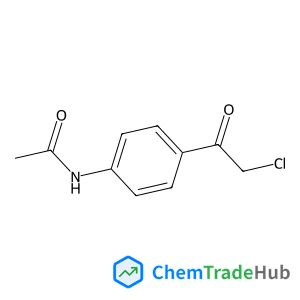
![[3-Chloro-5-(diethylcarbamoyl)phenyl]boronic acid structure](https://cnstatic.chemtradehub.com/structs/957/957120-59-1-febc.webp "[3-Chloro-5-(diethylcarbamoyl)phenyl]boronic acid structure")
推荐供应商




免责声明
本页面提供的学术期刊信息仅供参考和研究使用。我们与任何期刊出版商均无关联,也不处理投稿事宜。如有投稿相关咨询,请直接联系相关期刊出版商。
如发现页面信息有误,请发送邮件至 support@chemtradehub.com 联系我们。我们将及时核实并处理您的问题。