






![Ethyl 3-((6-(4,5-dihydro-1H-benzo[d]azepin-3(2H)-yl)-2-(pyridin-2-yl)pyrimidin-4-yl)amino)propanoate structure](https://cnstatic.chemtradehub.com/structs/137/1373423-53-0-496a.webp "Ethyl 3-((6-(4,5-dihydro-1H-benzo[d]azepin-3(2H)-yl)-2-(pyridin-2-yl)pyrimidin-4-yl)amino)propanoate structure")
Investigation of the dynamics of aqueous proline solutions using neutron scattering and molecular dynamics simulations
文献信息
发布日期
2017-09-21
DOI
10.1039/C7CP05474B
影响因子
3.676
作者
Paula Malo de Molina, Bernhard Frick, Andrew Wildes, Arantxa Arbe
查看原文
摘要
We applied quasielastic neutron scattering (QENS) techniques to samples with two different contrasts (deuterated solute/hydrogenated solvent and the opposite label) to selectively study the component dynamics of proline/water solutions. Results on diluted and concentrated solutions (31 and 6 water molecules/proline molecule, respectively) were analyzed in terms of the susceptibility and considering a recently proposed model for water dynamics [Arbe et al., Phys. Rev. Lett., 2016, 117, 185501] which includes vibrations and the convolution of localized motions and diffusion. We found that proline molecules not only reduce the average diffusion coefficient of water but also extend the time/frequency range of the crossover region (‘cage’) between the vibrations and purely diffusive behavior. For the high proline concentration we also found experimental evidence of water heterogeneous dynamics and a distribution of diffusion coefficients. Complementary molecular dynamics simulations show that water molecules start to perform rotational diffusion when they escape the cage regime but before the purely diffusive behavior is established. The rotational diffusion regime is also retarded by the presence of proline molecules. On the other hand, a strong coupling between proline and water diffusive dynamics which persists with decreasing temperature is directly observed using QENS. Not only are the temperature dependences of the diffusion coefficients of both components the same, but their absolute values also approach each other with increasing proline concentration. We compared our results with those reported using other techniques, in particular using dielectric spectroscopy (DS). A simple approach based on molecular hydrodynamics and a molecular treatment of DS allows rationalizing the a priori puzzling inconsistency between QENS and dielectric results regarding the dynamic coupling of the two components. The interpretation proposed is based on general grounds and therefore should be applicable to other biomolecular solutions.
相关文献
A novel shape-stabilized phase change material with tunable thermal conductivity for cold chain applications
Apoorv Balwani, Tridib Ambardar, Adarsh Kumar Pandey, Aravind Dasari, Sujay Chattopadhyay
2023-10-16
Paper
DOI: 10.1039/D3SU00289F
The effects of lignin source and extraction on the composition and properties of biorefined depolymerization products
Natalia Obrzut, Rob Hickmott, Lily Shure, Kimberly A. Gray
2023-10-27
Paper
DOI: 10.1039/D3SU00262D
N-doped graphene nanosheets-based optical nano switch for the selective detection of guanine and Pb2+
Gouri Sankar Das, Manish Srivastava, Kumud Malika Tripathi
2023-10-17
Paper
DOI: 10.1039/D3SU00328K
A guide to lignin valorization in biorefineries: traditional, recent, and forthcoming approaches to convert raw lignocellulose into valuable materials and chemicals
David Cannella, Diego Montesdeoca, Iwona Cybulska, Damien P. Debecker
2023-11-09
Tutorial Review
DOI: 10.1039/D3SU00140G
Development of sodium alginate–aloe vera hydrogel films enriched with organic fibers: study of the physical, mechanical, and barrier properties for food-packaging applications
Alina Hadi, Anjum Nawab, Feroz Alam, Sara Naqvi
2023-10-30
Paper
DOI: 10.1039/D3FB00122A
In situ crosslinked Schiff base biohydrogels containing Carica papaya peel extract: application in the packaging of fresh berries
Ganeswar Dalei, Swagat Kumar Das, Susri Sangita Mohapatra
2023-09-13
Paper
DOI: 10.1039/D3FB00096F
Exploring sustenance: cereal legume combinations for vegan meat development
Kannan Vignesh, Dev Kumar Yadav, D. D. Wadikar, A. D. Semwal
2023-10-26
Review Article
DOI: 10.1039/D3FB00074E
您可能还喜欢
化合物问答
如何处理含有8-氯咪唑并[1,2-A]吡嗪(CAS号:69214-33-1)的废料?
处理含有8-氯咪唑并[1,2-A]吡嗪的废料时,应首先将其收集并进行化学回收或降解。如果无法回收,需采用安全的化学处理方法,如中和、氧化还原或沉淀。处理过程中需...
69214-33-18-chloroimidazo[1,2-...
化合物问答
Calhex 231 hydrochloride(CAS号:2387505-78-2)适用哪些法规指南?
Calhex 231 hydrochloride 需要遵循《全球化学品统一分类和标签制度》(GHS)的分类和标签要求,以及欧盟的《化学品注册、评估、授权和限制条...
2387505-78-24-Chloro-N-[(1S,2S)-...
化合物问答
11-Beta,17-alpha,21-三羟基-5-beta-孕烯-3,20-二酮(CAS号:1482-50-4)的物理化学性质是什么?
11-Beta,17-alpha,21-三羟基-5-beta-孕烯-3,20-二酮是一种无色结晶性粉末,分子量为372.45 g/mol。该化合物在水中的溶解度...
1482-50-45β-Dihydrocortisol
化合物问答
处理5-异丙基-1,3,4-恶二唑-2-羧酸(CAS号:944907-13-5)时应注意哪些实验室安全事项?
处理5-异丙基-1,3,4-恶二唑-2-羧酸时应注意以下安全事项:穿戴适当的个人防护装备,包括实验室外套、手套和护目镜;操作应在通风橱中进行,以减少吸入或接触有...
944907-13-55-Isopropyl-1,3,4-ox...
化合物问答
benzyl 3-bromopropanoate(CAS号:90841-55-7)安全吗?
Benzyl 3-bromopropanoate属于有毒物质,吸入、摄入或皮肤接触均可能对人体造成伤害。操作时应佩戴防护眼镜、口罩和手套,避免吸入蒸汽和直接接触...
90841-55-7Benzyl 3-bromopropan...
化合物问答
什么是(R)-N-苄氧羰基-3,4-二氢-1H-异喹啉羧酸(CAS号:151004-88-5)?
(R)-N-苄氧羰基-3,4-二氢-1H-异喹啉羧酸是一种含有苄氧羰基和异喹啉环结构的化合物,分子式为C17H15NO3。它是一种有机化合物,具有一定的生物活性...
151004-88-5(1R)-2-[(Benzyloxy)c...
化合物问答
在合成中是否有1-苄基吡啶嗡-3-羧酸盐(CAS号:15990-43-9)的替代品?
可以考虑使用1-苄基吡啶-3-羧酸盐作为1-苄基吡啶嗡-3-羧酸盐的替代品。此外,还可以探索其他类似物,如1-苄基吡啶-3-氨基甲酸酯等。具体的替代品选择需根据...
15990-43-91-Benzyl-3-pyridiniu...
化合物问答
(2,6-二甲基吡啶-3-基)甲醇(CAS号:582303-10-4)安全吗?
(2,6-二甲基吡啶-3-基)甲醇在使用时需注意安全,应避免吸入其蒸汽,接触皮肤和眼睛。操作应在通风良好的环境中进行,佩戴适当的个人防护装备。
582303-10-4(2,6-Dimethyl-3-pyri...
化合物问答
5-溴-2-乙烯基吡啶(CAS号:226883-52-9)的物理化学性质是什么?
5-溴-2-乙烯基吡啶是一种有机化合物,外观为白色固体,具有良好的结晶性。分子量约为190.03 g/mol。它的溶解性在水中较差,但在有机溶剂如二氯甲烷、甲醇...
226883-52-95-Bromo-2-vinylpyrid...
化合物问答
2-羟基-3-硝基-5-甲基吡啶(CAS号:7464-14-4)应用于哪些行业?
2-羟基-3-硝基-5-甲基吡啶主要应用于医药、聚合物和半导体行业。在医药领域,它可以用作合成其他药物的中间体。在聚合物领域,它可以作为功能性单体参与聚合反应,...
7464-14-45-Methyl-3-nitro-2(1...
来源期刊
Physical Chemistry Chemical Physics

CiteScore:
5.5
自引率:
10.3%
年发文量:
3036
Physical Chemistry Chemical Physics (PCCP) is an international journal co-owned by 19 physical chemistry and physics societies from around the world. This journal publishes original, cutting-edge research in physical chemistry, chemical physics and biophysical chemistry. To be suitable for publication in PCCP, articles must include significant innovation and/or insight into physical chemistry; this is the most important criterion that reviewers and Editors will judge against when evaluating submissions. The journal has a broad scope and welcomes contributions spanning experiment, theory, computation and data science. Topical coverage includes spectroscopy, dynamics, kinetics, statistical mechanics, thermodynamics, electrochemistry, catalysis, surface science, quantum mechanics, quantum computing and machine learning. Interdisciplinary research areas such as polymers and soft matter, materials, nanoscience, energy, surfaces/interfaces, and biophysical chemistry are welcomed if they demonstrate significant innovation and/or insight into physical chemistry. Joined experimental/theoretical studies are particularly appreciated when complementary and based on up-to-date approaches.
推荐化合物
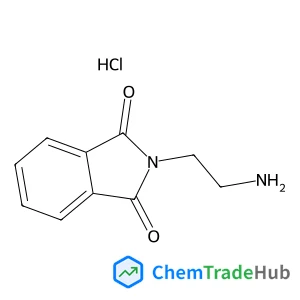
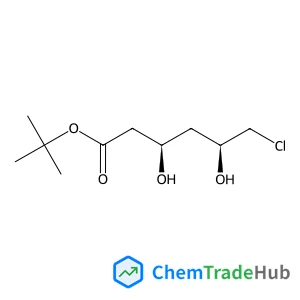
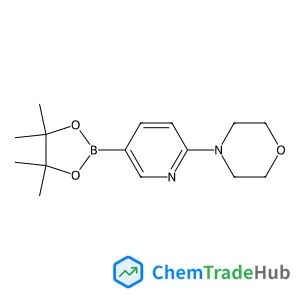
4-(5-(4,4,5,5-tetramethyl-1,3,2-dioxaborolan-2-yl)pyridin-2-yl)morpholine
CAS号:
485799-04-0
分子式:
C15H23BN2O3
推荐供应商





免责声明
本页面提供的学术期刊信息仅供参考和研究使用。我们与任何期刊出版商均无关联,也不处理投稿事宜。如有投稿相关咨询,请直接联系相关期刊出版商。
如发现页面信息有误,请发送邮件至 support@chemtradehub.com 联系我们。我们将及时核实并处理您的问题。