


Computational screening of functional groups for capture of toxic industrial chemicals in porous materials
文献信息
发布日期
2017-11-13
DOI
10.1039/C7CP06521C
影响因子
3.676
作者
David Fairen-Jimenez, Randall Q. Snurr
查看原文
摘要
A thermodynamic analysis using quantum chemical methods was carried out to identify optimal functional group candidates that can be included in metal–organic frameworks and activated carbons for the selective capture of toxic industrial chemicals (TICs) in humid air. We calculated the binding energies of 14 critical TICs plus water with a series of 10 functional groups attached to a naphthalene ring model. Using vibrational calculations, the free energies of adsorption were calculated in addition to the binding energies. Our results show that, in these systems, the binding energies and free energies follow similar trends. We identified copper(I) carboxylate as the optimal functional group (among those studied) for the selective binding of the majority of the TICs in humid air, and this functional group exhibits especially strong binding for sulfuric acid. Further thermodynamic analysis shows that the presence of water weakens the binding strength of sulfuric acid with the copper carboxylate group. Our calculations predict that functionalization of aromatic rings would be detrimental to selective capture of COCl2, CO2, and Cl2 under humid conditions. Finally, we found that forming an ionic complex, H3O+HSO4−, between H2SO4 and H2O via proton transfer is not favorable on copper carboxylate.
期刊推荐
Bioorganic & Medicinal Chemistry Letters
Acta Metallurgica Sinica-English Letters

Medicinal Chemistry Research
Journal of Asian Natural Products Research
Chinese Journal of Chemistry

Journal of the Indian Institute of Science

Herald of the Russian Academy of Sciences

NDT & E International

Colloid Journal

Critical Reviews in Solid State and Materials Sciences
相关文献
Salt-induced protein resistance of polyelectrolyte brushes studied using fluorescence correlation spectroscopy and neutron reflectometry
C. Czeslik, G. Jackler, T. Hazlett, E. Gratton, R. Steitz, A. Wittemann, M. Ballauff
2004-09-16
Paper
DOI: 10.1039/B410805A
Dynamics of the insertion reaction C(1D) + H2: A comparison of crossed molecular beam experiments with quasiclassical trajectory and quantum mechanical scattering calculations
Nadia Balucani, Giovanni Capozza, Laura Cartechini, Astrid Bergeat, Rolf Bobbenkamp, Piergiorgio Casavecchia, F. Javier Aoiz, Luis Bañares, Pascal Honvault, Béatrice Bussery-Honvault, Jean-Michel Launay
2004-07-21
Paper
DOI: 10.1039/B409327E
Electroactivity of a starburst hole-transport material in Langmuir–Blodgett films. Solid state effects and intervalence charge transfer
Vicente Parra, Teodosio Del Caño, María L. Rodríguez-Méndez, José A. De Saja, Marcel Bouvet, Yasuhiko Shirota
2007-03-09
Paper
DOI: 10.1039/B618509F
Highly dispersed magnesium oxide species on silica as photoactive sites for photoinduced direct methane coupling and photoluminescence
Leny Yuliati, Tadashi Hattori, Hisao Yoshida
2004-11-15
Paper
DOI: 10.1039/B410089A
Allylic hydrogen abstraction II. H-abstraction from 1,4 type polyalkenes as a model for free radical trapping by polyunsaturated fatty acids (PUFAs)‡
Milan Szori, Tamas Abou-Abdo, Christa Fittschen, Bela Viskolcz
2007-02-21
Paper
DOI: 10.1039/B613048H
Real time quantitative Raman spectroscopy of supported metal oxidecatalysts without the need of an internal standard
S. J. Tinnemans, M. H. F. Kox, T. A. Nijhuis, T. Visser, B. M. Weckhuysen
2004-11-18
Paper
DOI: 10.1039/B414427A
Quantum chemistry-based NMR spin Hamiltonian parameters of GABA for quantitation in magnetic resonance spectroscopy
A. R. Allouche, M. Aubert-Frécon, D. Graveron-Demilly
2007-04-17
Paper
DOI: 10.1039/B700631D
Modified Shepard interpolation method applied to trapping mediated adsorption dynamics
P. N. Abufager, C. Crespos, H. F. Busnengo
2007-03-07
Paper
DOI: 10.1039/B617209A
Anodic electron transfer mechanisms in microbial fuel cells and their energy efficiency
2007-05-09
Invited Article
DOI: 10.1039/B703627M
您可能还喜欢
化合物问答
4-[4-三氟甲基苯基]恶唑(CAS号:1126636-40-5)通常如何合成?
4-[4-三氟甲基苯基]恶唑通常通过将4-三氟甲基苯酚与异硫氰酸苯酯在有机溶剂中进行酯化反应合成。该反应可在无水条件下,使用适当的催化剂,如四丁基氢氧化铵,以提...
1126636-40-54-(4-(Trifluoromethy...
59729-32-71-[3-(Dimethylamino)...
化合物问答
RockPhos Pd G3(CAS号:2009020-38-4)通常如何合成?
RockPhos Pd G3 通常通过钯催化偶联反应合成,使用配体 (2'-Amino-2-biphenylyl)(methanesulfonato-kappa...
2009020-38-4(2'-Amino-2-biphenyl...
化合物问答
1-哌啶甲酰胺(CAS号:2158-03-4)的市场或研究趋势如何?
1-哌啶甲酰胺作为有机合成中的重要中间体,其市场需求主要受医药、农药、染料等行业推动。近年来,随着新药开发和绿色化学的发展,该化合物的研究趋势集中在开发更高效、...
2158-03-41-Piperidinecarboxam...
化合物问答
2-(二苯基膦基)乙胺(CAS号:4848-43-5)适用哪些法规指南?
2-(二苯基膦基)乙胺适用于多种法规指南,包括但不限于《全球化学品统一分类和标签制度》(GHS),欧盟《化学品注册、评估、授权和限制》法规(REACH),以及美...
4848-43-52-(Diphenylphosphino...
化合物问答
如何储存间苯二甲酸二烯丙酯(CAS号:1087-21-4)?
间苯二甲酸二烯丙酯应储存在阴凉、干燥、通风良好的地方,远离火源和热源。储存容器应密封,避免光照和高温。储存温度应控制在25℃以下,相对湿度应低于80%。避免与其...
1087-21-4Diallyl isophthalate
化合物问答
什么是间甲苯异硫代异氰酸酯(CAS号:621-30-7)?
间甲苯异硫代异氰酸酯是一种有机化合物,分子式为C7H7NO2S,具有刺激性气味。它是一种重要的有机合成中间体,在合成其他化合物时广泛应用。
621-30-71-Isothiocyanato-3-m...
化合物问答
在合成中是否有N-Boc-D-苯丙氨醇(CAS号:106454-69-7)的替代品?
在合成中,可以考虑使用N-Cbz-D-苯丙氨醇或N-Fmoc-D-苯丙氨醇作为替代品。这些化合物同样具有保护氨基的功能,且在合成过程中表现出良好的反应性能。
106454-69-72-Methyl-2-propanyl ...
化合物问答
3-羟甲基-2-氧异丙基吡啶(CAS号:954240-50-7)的主要用途是什么?
3-羟甲基-2-氧异丙基吡啶主要用于有机合成领域,可以作为合成其他药物、农药或精细化学品的中间体。此外,它还可能在实验室研究中作为特定反应的前体或溶剂。
954240-50-7(2-Isopropoxy-3-pyri...
化合物问答
6-氨基-9-甲基嘌呤(CAS号:700-00-5)应用于哪些行业?
6-氨基-9-甲基嘌呤目前主要应用于医药行业,作为某些药物的中间体。此外,它还可能用于聚合物、传感器和半导体的某些领域,作为功能性单体或掺杂剂。
700-00-59-Methyl-9H-purin-6-...
来源期刊
Physical Chemistry Chemical Physics

CiteScore:
5.5
自引率:
10.3%
年发文量:
3036
Physical Chemistry Chemical Physics (PCCP) is an international journal co-owned by 19 physical chemistry and physics societies from around the world. This journal publishes original, cutting-edge research in physical chemistry, chemical physics and biophysical chemistry. To be suitable for publication in PCCP, articles must include significant innovation and/or insight into physical chemistry; this is the most important criterion that reviewers and Editors will judge against when evaluating submissions. The journal has a broad scope and welcomes contributions spanning experiment, theory, computation and data science. Topical coverage includes spectroscopy, dynamics, kinetics, statistical mechanics, thermodynamics, electrochemistry, catalysis, surface science, quantum mechanics, quantum computing and machine learning. Interdisciplinary research areas such as polymers and soft matter, materials, nanoscience, energy, surfaces/interfaces, and biophysical chemistry are welcomed if they demonstrate significant innovation and/or insight into physical chemistry. Joined experimental/theoretical studies are particularly appreciated when complementary and based on up-to-date approaches.
推荐化合物
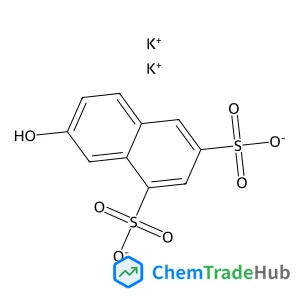
![Bis[(1,2,3,4,5-eta)-1-(diphenylphosphino)cyclopentadienyl]iron structure](https://cnstatic.chemtradehub.com/structs/121/12150-46-8-ecd2.webp "Bis[(1,2,3,4,5-eta)-1-(diphenylphosphino)cyclopentadienyl]iron structure")
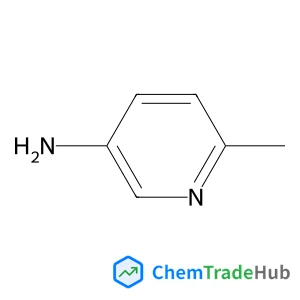
![[2',6'-bis(propan-2-yloxy)-[1,1'-biphenyl]-3-yl]dicyclohexylphosphane structure](https://cnstatic.chemtradehub.com/structs/787/787618-22-8-dda2.webp "[2',6'-bis(propan-2-yloxy)-[1,1'-biphenyl]-3-yl]dicyclohexylphosphane structure")
[2',6'-bis(propan-2-yloxy)-[1,1'-biphenyl]-3-yl]dicyclohexylphosphane
CAS号:
787618-22-8
分子式:
C30H43O2P
推荐供应商






免责声明
本页面提供的学术期刊信息仅供参考和研究使用。我们与任何期刊出版商均无关联,也不处理投稿事宜。如有投稿相关咨询,请直接联系相关期刊出版商。
如发现页面信息有误,请发送邮件至 support@chemtradehub.com 联系我们。我们将及时核实并处理您的问题。