




From ligand exchange to reaction intermediates: what does really happen during the synthesis of emissive complexes?‡
文献信息
发布日期
2017-12-20
DOI
10.1039/C7CP07142F
影响因子
3.676
作者
P. Polzin, I. V. Eliani, J. Ströh, M. Braun, N. Ruser, P. Rönfeldt, F. Bertram, C. Näther, S. Wöhlbrandt, M. Suta, H. Terraschke
查看原文
摘要
In situ monitoring of the formation of emissive complexes is essential to enable the development of rational synthesis protocols, to provide accurate control over the generation of structure-related properties (such as luminescence) and to facilitate the development of new compounds. In situ luminescence analysis of coordination sensors (ILACS) utilizes the sensitivity of the spectroscopic properties of lanthanide ions to their coordination environment to detect structural changes during crystallization processes. Here, ILACS was utilized to monitor the formation of [Eu(bipy)2(NO3)3] (bipy = 2,2′-bipyridine) during co-precipitation synthesis. Validity of the ILACS results was ensured by concomitant utilization of in situ monitoring of other reaction parameters, including in situ measurements of pH value, ionic conductivity, and infrared spectra, as well as ex situ and synchrotron-based in situ X-ray diffraction analyses. Gradual desolvation of the Eu3+ ions and attachment of ligands were detected by an exponential increase of the intensity of the 5D0 → 7FJ (J = 0–4) transitions in the emission spectrum. Additionally, the in situ emission spectra show a decrease in the crystallization rate and an increase in the induction time in response to a reduction in the concentration of the starting solutions from 12 mM until crystallization ceased at starting reactant concentrations <6 mM. An increase to a three-fold higher concentration leads to the formation of a reaction intermediate, and its stability was determined to be highly concentration-dependent. The in situ luminescence measurements also demonstrated the existence of a ligand exchange process within the [Eu(bipy)2(NO3)3] complex upon addition of a phen (phen = 1,10′-phenanthroline) solution and the generation of a new phen-containing emissive complex. In attempting to solve the structure of this new phen-containing complex, a different, but nevertheless previously unsynthesized complex, [Eu(phen)2(NO3)3]bipy, was obtained, which shows characteristic Eu3+ luminescence in the red spectral range.
相关文献
Binary structure and dynamics of the hydrogen bonds in the hydration shells of ions
Yonghui Zeng, Yunzhe Jia, Tianying Yan, Wei Zhuang
2021-04-16
Paper
DOI: 10.1039/D0CP06397E
The role of the potential field on occurrence and flow of octane in quartz nanopores
Kaiyun Zhan, Wenjing Fang, Zhiming Pan, Guilei Teng, Haixia Zheng, Li Zhao, Bing Liu
2021-04-27
Paper
DOI: 10.1039/D1CP00891A
Understanding the magnetization blocking mechanism in N23−-radical-bridged dilanthanide single-molecule magnets
Giang T. Nguyen, Liviu Ungur
2021-04-09
Paper
DOI: 10.1039/D1CP00452B
Electronic, magnetic, vibrational, and X-ray spectroscopy of inverse full-Heusler Fe2IrSi alloy
C. E. Ekuma, T. C. Chibueze, L. A. Fomin, I. V. Malikov, L. Zadeng, D. P. Rai
2021-05-14
Paper
DOI: 10.1039/D1CP00418B
Expanding carbon capture capacity: uncovering additional CO2 adsorption sites in imine-linked porous organic cages
Zezhong John Li, Simcha Srebnik
2021-03-23
Paper
DOI: 10.1039/D0CP06708C
Molecular dynamics study of the pore formation in single layer graphene oxide by a thermal reduction process
Federico Raffone, Filippo Savazzi, Giancarlo Cicero
2021-04-26
Paper
DOI: 10.1039/D1CP00134E
Optical, third order non-linear optical and electrochemical properties of dipolar, centrosymmetric and C2v organoimido polyoxometalate derivatives
Hani El Moll, Ryan Purdy, Kevin B. Vincent, Philip Spence, Jean-Pierre Malval, John Fielden
2021-05-07
Paper
DOI: 10.1039/D0CP06610A
Aqueous TMAO solution under high hydrostatic pressure
Inga Kolling, Christoph Hölzl, Sho Imoto, Serena R. Alfarano, Hendrik Vondracek, Lukas Knake, Fabio Novelli, Claudius Hoberg, Jean-Blaise Brubach, Pascale Roy, Harald Forbert, Gerhard Schwaab, Dominik Marx, Martina Havenith
2021-04-29
Paper
DOI: 10.1039/D1CP00703C
Dopants and grain boundary effects in monolayer MoS2: a first-principles study
Xiaoqian Qiu, Yiren Wang, Yong Jiang
2021-05-06
Paper
DOI: 10.1039/D1CP00156F
您可能还喜欢
化合物问答
4-[[6-(3-苯基苯基)-7H-嘌呤-2-基]氨基]苯磺酰胺(CAS号:2079895-42-2)适用哪些法规指南?
该化合物需遵循REACH法规以确保其安全使用和管理。同时,根据其潜在的生物降解性和毒性,也需要符合GHS分类中的相应要求。此外,若用于医药或食品相关领域,则还需...
2079895-42-24-{[6-(3-Biphenylyl)...
化合物问答
反式-度骨化醇(CAS号:74007-20-8)的物理化学性质是什么?
反式-度骨化醇是一种脂溶性维生素D3的衍生物,呈无色或白色结晶性粉末,不溶于水,溶于乙醇、丙酮、氯仿等有机溶剂。其分子式为C28H44O,分子量为404.65。...
74007-20-8trans-Doxercalcifero...
化合物问答
莲花掌苷(CAS号:59282-56-3)的市场或研究趋势如何?
莲花掌苷作为一种天然产物,近年来在抗炎、抗癌等生物活性研究方面显示出一定的潜力,因此市场需求逐渐增长。市场动态方面,随着天然产物开发的深入,预计该化合物的研究会...
59282-56-3Lindleyin
化合物问答
2-溴-6-(吡咯烷-1-基)吡啶-4-硼酸频那醇酯(CAS号:1150271-64-9)应用于哪些行业?
2-溴-6-(吡咯烷-1-基)吡啶-4-硼酸频那醇酯在医药领域有着广泛的应用,它可以用作药物合成中的中间体。此外,它还可以用于有机合成,特别是在构建复杂杂环化合...
1150271-64-92-Bromo-6-(1-pyrroli...
化合物问答
什么是methyl 2-(4-bromophenyl)-3-methylbutanoate(CAS号:1061284-70-5)?
methyl 2-(4-溴苯基)-3-甲基丁酸甲酯是一种化学物质,分子式为C12H13BrO2。它是一种有机化合物,具有一定的挥发性和易燃性。
1061284-70-52-(4-Bromo-phenyl)-3...
化合物问答
CJC1-295(CAS号:863288-34-0)的物理化学性质是什么?
CJC1-295是一种具有复杂肽链结构的化合物,其分子量约为1875 Da。该化合物在水中具有一定的溶解性,但在有机溶剂中的溶解性不佳。它是一种反应活性化合物,...
863288-34-0L-tyrosyl-D-alanyl-L...
化合物问答
三正丁基锍碘(CAS号:18146-62-8)的市场或研究趋势如何?
三正丁基锍碘作为一种重要的有机硫化合物,主要用于有机合成中作为亲电试剂。近年来,由于其在合成中的广泛应用,市场对其需求持续增长。此外,随着绿色化学的发展,对其替...
18146-62-8Tributylsulfonium io...
化合物问答
雌二醇-[13C3]同位素内标(CAS号:1261254-48-1)通常如何合成?
雌二醇-[13C3]同位素内标通常通过在雌二醇分子中引入[13C3]同位素来合成。常见的方法是通过化学标记反应,如与[13C3]标记的甲基溴化物进行亲核取代反应...
1261254-48-117beta-Estradiol-2,3...
化合物问答
N1-(2-吡啶甲基)-N2-(2-甲基-1-萘基)草酰胺(CAS号:2611225-93-3)的物理化学性质是什么?
N1-(2-吡啶甲基)-N2-(2-甲基-1-萘基)草酰胺为固体化合物,具有良好的结晶形态,分子量为340.34 g/mol。该化合物在水中的溶解度较低,但在有...
2611225-93-3N-(2-Methyl-1-naphth...
化合物问答
如何处理含有十五碳烯酸甲酯(顺-10)(C15:1)标准品(CAS号:90176-52-6)的废料?
含有十五碳烯酸甲酯(顺-10)(C15:1)标准品的废料应首先进行适当收集和储存,避免与其他化学品混合。然后,可采用焚烧或交由专业废物处理公司进行处理。处理过程...
90176-52-6(Z)-10-Pentadecenoic...
来源期刊
Physical Chemistry Chemical Physics

CiteScore:
5.5
自引率:
10.3%
年发文量:
3036
Physical Chemistry Chemical Physics (PCCP) is an international journal co-owned by 19 physical chemistry and physics societies from around the world. This journal publishes original, cutting-edge research in physical chemistry, chemical physics and biophysical chemistry. To be suitable for publication in PCCP, articles must include significant innovation and/or insight into physical chemistry; this is the most important criterion that reviewers and Editors will judge against when evaluating submissions. The journal has a broad scope and welcomes contributions spanning experiment, theory, computation and data science. Topical coverage includes spectroscopy, dynamics, kinetics, statistical mechanics, thermodynamics, electrochemistry, catalysis, surface science, quantum mechanics, quantum computing and machine learning. Interdisciplinary research areas such as polymers and soft matter, materials, nanoscience, energy, surfaces/interfaces, and biophysical chemistry are welcomed if they demonstrate significant innovation and/or insight into physical chemistry. Joined experimental/theoretical studies are particularly appreciated when complementary and based on up-to-date approaches.
推荐化合物
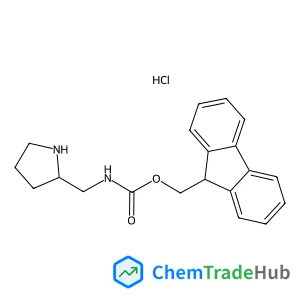
(S)-(9H-Fluoren-9-yl)methyl (pyrrolidin-2-ylmethyl)carbamate hydrochloride
CAS号:
1217813-15-4
分子式:
C20H23ClN2O2

推荐供应商




免责声明
本页面提供的学术期刊信息仅供参考和研究使用。我们与任何期刊出版商均无关联,也不处理投稿事宜。如有投稿相关咨询,请直接联系相关期刊出版商。
如发现页面信息有误,请发送邮件至 support@chemtradehub.com 联系我们。我们将及时核实并处理您的问题。