


The aromatic character of [10]annulenes and dicupra[10]annulenes from current density calculations
文献信息
发布日期
2017-11-20
DOI
10.1039/C7CP07212K
影响因子
3.676
作者
Maria Dimitrova, Dage Sundholm
查看原文
摘要
We have investigated the aromatic properties of seven low-lying isomers of [10]annulene and of the recently synthesized dicupra[10]annulene compounds that were crystallised with two or four lithium counterions (Wei et al., J. Am. Chem. Soc., 2016, 138, 60–63). The molecular structures of the [10]annulene conformers and the dicupra[10]annulenes with bulky trimethylsilyl (TMS) and phenyl groups, as well as the corresponding unsubstituted dicupra[10]annulenes were optimised using density functional theory, employing a semi-empirical dispersion correction to consider van der Waals interactions. The structures of the hydrocarbon annulenes were subsequently optimised at the SCS-MP2/def2-QZVPD level. Single-point coupled-cluster calculations with explicit treatment of the electron correlation CCSD(F12)(T) were performed to obtain the relative energies of the hydrocarbon annulenes. Four of the conformations lie close in energy relative to each other. Three substituted and three unsubstituted dicupra[10]annulene structures with either four, two or no Li+ counterions were investigated. Magnetically induced current densities calculated using the GIMIC program were used for the assessment of the aromatic properties of the studied molecules. The conformations of [10]annulene with lowest energies are non-aromatic. The calculations revealed that the electron donation of the lithium atoms to the dicupra[10]annulene core significantly affects the electronic and molecular structures of the dicupra[10]annulenes. The annulene ring is non-planar for all studied dicupra[10]annulenes except for the unsubstituted one with four Li+ counterions, which was also found to be the only molecule that sustains a strong diatropic ring current around the dicupra[10]annulene ring. The other five dicupra[10]annulenes sustain very weak net ring currents and can be considered non-aromatic.
相关文献
A novel pathway for maytansinoid release from thioether linked antibody–drug conjugates (ADCs) under oxidative conditions
Nathan Fishkin, Erin K. Maloney, Ravi V. J. Chari, Rajeeva Singh
2011-08-26
Communication
DOI: 10.1039/C1CC14164C
Oxidative, photo-activated TiO2nanoparticles in the catalytic acetylation of primary alcohols
Chien-Tien Chen, Jun-Qi Kao, Cheng-Yuan Liu, Ling-Yu Jiang
2011-01-31
Communication
DOI: 10.1039/C0CY00005A
Extraction and isolation of shikimic acid from Ginkgo biloba leaves utilizing an ionic liquid that dissolves cellulose
Toyonobu Usuki, Nanae Yasuda, Masahiro Yoshizawa-Fujita, Masahiro Rikukawa
2011-08-25
Communication
DOI: 10.1039/C1CC13306C
Expedient entry to the piperazinohydroisoquinoline ring system using a sequential Ugi/Pictet–Spengler/reductive methylation reaction protocol
Ma.-Angeles Cano-Herrera, Luis D. Miranda
2011-09-01
Communication
DOI: 10.1039/C1CC10759C
Simple methods for tuning the pore diameter of mesoporous carbon
Ulka B. Suryavanshi, Toru Ijima, Yasuhiko Hayashi, Masaki Tanemura
2011-08-26
Communication
DOI: 10.1039/C1CC13471J
A synthetic approach to kingianin A based on biosynthetic speculation
Pallavi Sharma, Dougal J. Ritson, James Burnley, John E. Moses
2011-08-24
Communication
DOI: 10.1039/C1CC13949E
Recent advances in hierarchically structured zeolites: synthesis and material performances
Zi Le Hua, Jian Zhou, Jian Lin Shi
2011-07-01
Feature Article
DOI: 10.1039/C1CC10261C
Synthesis of 2,4,6-trisubstituted pyridinesvia an olefin cross-metathesis/Heck–cyclisation–elimination sequence
Timothy J. Donohoe, John F. Bower, David B. Baker, José A. Basutto, Louis K. M. Chan, Peter Gallagher
2011-08-25
Communication
DOI: 10.1039/C1CC14257G
您可能还喜欢
化合物问答
如何处理含有8-氯咪唑并[1,2-A]吡嗪(CAS号:69214-33-1)的废料?
处理含有8-氯咪唑并[1,2-A]吡嗪的废料时,应首先将其收集并进行化学回收或降解。如果无法回收,需采用安全的化学处理方法,如中和、氧化还原或沉淀。处理过程中需...
69214-33-18-chloroimidazo[1,2-...
化合物问答
Calhex 231 hydrochloride(CAS号:2387505-78-2)适用哪些法规指南?
Calhex 231 hydrochloride 需要遵循《全球化学品统一分类和标签制度》(GHS)的分类和标签要求,以及欧盟的《化学品注册、评估、授权和限制条...
2387505-78-24-Chloro-N-[(1S,2S)-...
化合物问答
11-Beta,17-alpha,21-三羟基-5-beta-孕烯-3,20-二酮(CAS号:1482-50-4)的物理化学性质是什么?
11-Beta,17-alpha,21-三羟基-5-beta-孕烯-3,20-二酮是一种无色结晶性粉末,分子量为372.45 g/mol。该化合物在水中的溶解度...
1482-50-45β-Dihydrocortisol
化合物问答
处理5-异丙基-1,3,4-恶二唑-2-羧酸(CAS号:944907-13-5)时应注意哪些实验室安全事项?
处理5-异丙基-1,3,4-恶二唑-2-羧酸时应注意以下安全事项:穿戴适当的个人防护装备,包括实验室外套、手套和护目镜;操作应在通风橱中进行,以减少吸入或接触有...
944907-13-55-Isopropyl-1,3,4-ox...
化合物问答
benzyl 3-bromopropanoate(CAS号:90841-55-7)安全吗?
Benzyl 3-bromopropanoate属于有毒物质,吸入、摄入或皮肤接触均可能对人体造成伤害。操作时应佩戴防护眼镜、口罩和手套,避免吸入蒸汽和直接接触...
90841-55-7Benzyl 3-bromopropan...
化合物问答
什么是(R)-N-苄氧羰基-3,4-二氢-1H-异喹啉羧酸(CAS号:151004-88-5)?
(R)-N-苄氧羰基-3,4-二氢-1H-异喹啉羧酸是一种含有苄氧羰基和异喹啉环结构的化合物,分子式为C17H15NO3。它是一种有机化合物,具有一定的生物活性...
151004-88-5(1R)-2-[(Benzyloxy)c...
化合物问答
在合成中是否有1-苄基吡啶嗡-3-羧酸盐(CAS号:15990-43-9)的替代品?
可以考虑使用1-苄基吡啶-3-羧酸盐作为1-苄基吡啶嗡-3-羧酸盐的替代品。此外,还可以探索其他类似物,如1-苄基吡啶-3-氨基甲酸酯等。具体的替代品选择需根据...
15990-43-91-Benzyl-3-pyridiniu...
化合物问答
(2,6-二甲基吡啶-3-基)甲醇(CAS号:582303-10-4)安全吗?
(2,6-二甲基吡啶-3-基)甲醇在使用时需注意安全,应避免吸入其蒸汽,接触皮肤和眼睛。操作应在通风良好的环境中进行,佩戴适当的个人防护装备。
582303-10-4(2,6-Dimethyl-3-pyri...
化合物问答
5-溴-2-乙烯基吡啶(CAS号:226883-52-9)的物理化学性质是什么?
5-溴-2-乙烯基吡啶是一种有机化合物,外观为白色固体,具有良好的结晶性。分子量约为190.03 g/mol。它的溶解性在水中较差,但在有机溶剂如二氯甲烷、甲醇...
226883-52-95-Bromo-2-vinylpyrid...
化合物问答
2-羟基-3-硝基-5-甲基吡啶(CAS号:7464-14-4)应用于哪些行业?
2-羟基-3-硝基-5-甲基吡啶主要应用于医药、聚合物和半导体行业。在医药领域,它可以用作合成其他药物的中间体。在聚合物领域,它可以作为功能性单体参与聚合反应,...
7464-14-45-Methyl-3-nitro-2(1...
来源期刊
Physical Chemistry Chemical Physics

CiteScore:
5.5
自引率:
10.3%
年发文量:
3036
Physical Chemistry Chemical Physics (PCCP) is an international journal co-owned by 19 physical chemistry and physics societies from around the world. This journal publishes original, cutting-edge research in physical chemistry, chemical physics and biophysical chemistry. To be suitable for publication in PCCP, articles must include significant innovation and/or insight into physical chemistry; this is the most important criterion that reviewers and Editors will judge against when evaluating submissions. The journal has a broad scope and welcomes contributions spanning experiment, theory, computation and data science. Topical coverage includes spectroscopy, dynamics, kinetics, statistical mechanics, thermodynamics, electrochemistry, catalysis, surface science, quantum mechanics, quantum computing and machine learning. Interdisciplinary research areas such as polymers and soft matter, materials, nanoscience, energy, surfaces/interfaces, and biophysical chemistry are welcomed if they demonstrate significant innovation and/or insight into physical chemistry. Joined experimental/theoretical studies are particularly appreciated when complementary and based on up-to-date approaches.
推荐化合物
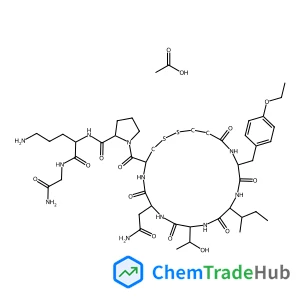
![N,N'-1,2-Ethanediylbis[2-(vinylsulfonyl)acetamide] structure](https://cnstatic.chemtradehub.com/structs/667/66710-66-5-b556.webp "N,N'-1,2-Ethanediylbis[2-(vinylsulfonyl)acetamide] structure")
![N-[(1S,2R,4S)-2-Amino-4-(dimethylcarbamoyl)cyclohexyl]-N'-(5-chloro-2-pyridinyl)ethanediamide structure](https://cnstatic.chemtradehub.com/structs/480/480452-37-7-0898.webp "N-[(1S,2R,4S)-2-Amino-4-(dimethylcarbamoyl)cyclohexyl]-N'-(5-chloro-2-pyridinyl)ethanediamide structure")
![N-[(9H-Fluoren-9-ylmethoxy)carbonyl]-beta-phenyl-L-phenylalanine structure](https://cnstatic.chemtradehub.com/structs/201/201484-50-6-c2fc.webp "N-[(9H-Fluoren-9-ylmethoxy)carbonyl]-beta-phenyl-L-phenylalanine structure")
推荐供应商






免责声明
本页面提供的学术期刊信息仅供参考和研究使用。我们与任何期刊出版商均无关联,也不处理投稿事宜。如有投稿相关咨询,请直接联系相关期刊出版商。
如发现页面信息有误,请发送邮件至 support@chemtradehub.com 联系我们。我们将及时核实并处理您的问题。