


Theoretical characterization of sulfur-to-selenium substitution in an emissive RNA alphabet: impact on H-bonding potential and photophysical properties
文献信息
发布日期
2018-02-23
DOI
10.1039/C7CP07656H
影响因子
3.676
作者
Mohit Chawla, Pau Besalú-Sala, Kanav Kalra, Romina Oliva, Luigi Cavallo
查看原文
摘要
We employ density functional theory (DFT) and time-dependent DFT (TDDFT) calculations to investigate the structural, energetic and optical properties of a new computationally designed RNA alphabet, where the nucleobases, tsA, tsG, tsC, and tsU (ts-bases), have been derived by replacing sulfur with selenium in the previously reported tz-bases, based on the isothiazolo[4,3-d]pyrimidine heterocycle core. We find out that the modeled non-natural bases have minimal impact on the geometry and energetics of the classical Watson–Crick base pairs, thus potentially mimicking the natural bases in a RNA duplex in terms of H-bonding. In contrast, our calculations indicate that H-bonded base pairs involving the Hoogsteen edge of purines are destabilized as compared to their natural counterparts. We also focus on the photophysical properties of the non-natural bases and correlate their absorption/emission peaks to the strong impact of the modification on the energy of the lowest unoccupied molecular orbital. It is indeed stabilized by roughly 1.1–1.6 eV as compared to the natural analogues, resulting in a reduction of the gap between the highest occupied and the lowest unoccupied molecular orbital from 5.3–5.5 eV in the natural bases to 3.9–4.2 eV in the modified ones, with a consequent bathochromic shift in the absorption and emission spectra. Overall, our analysis clearly indicates that the newly modelled ts-bases are expected to exhibit better fluorescent properties as compared to the previously reported tz-bases, while retaining similar H-bonding properties. In addition, we show that a new RNA alphabet based on size-extended benzo-homologated ts-bases can also form stable Watson–Crick base pairs with the natural complementary nucleobases.
期刊推荐
European Journal of Organic Chemistry
Photochemical & Photobiological Sciences
Environmental Toxicology and Pharmacology
Current Pharmaceutical Biotechnology
Journal of Medical Biochemistry

Physical Chemistry Chemical Physics
Contact Lens & Anterior Eye
Mini-Reviews in Medicinal Chemistry
Molecular Diversity

Coloration Technology
相关文献
Formic acid dehydrogenation over PdNi alloys supported on N-doped carbon: synergistic effect of Pd–Ni alloying on hydrogen release
Rizcky Tamarany, Dong Yun Shin, Sukho Kang, Hyangsoo Jeong, Jun Kim, Dong-Hee Lim
2021-04-30
Paper
DOI: 10.1039/D1CP00236H
Electromechanically active pair dynamics in a Gd-doped ceria single crystal
Simone Santucci, Haiwu Zhang, Ahsanul Kabir, Carlo Marini, Simone Sanna, Jyn Kyu Han, Gregor Ulbrich, Eva Maria Heppke, Ivano E. Castelli, Vincenzo Esposito
2021-04-20
Paper
DOI: 10.1039/D1CP00748C
An ultra-sensitive gas sensor based on a two-dimensional manganese porphyrin monolayer
Ze-Wen Hao, Mi-Mi Dong, Rui-Qin Zhang, Chuan-Kui Wang, Xiao-Xiao Fu
2021-04-22
Paper
DOI: 10.1039/D1CP00747E
The O K−2V spectrum of CO: the influence of the second core-hole
S. Carniato, R. Püttner, J. B. Martins, D. Céolin, R. Feifel
2021-04-22
Paper
DOI: 10.1039/D1CP00607J
Coarse-grained force-field for large scale molecular dynamics simulations of polyacrylamide and polyacrylamide-gels based on quantum mechanics
Andres Jaramillo-Botero, Xue-hai Ju, William A. Goddard, III
2021-04-28
Paper
DOI: 10.1039/D0CP05767C
Ordered mesoporous metal oxides for electrochemical applications: correlation between structure, electrical properties and device performance
Erdogan Celik, Yanjiao Ma, Torsten Brezesinski
2021-03-31
Perspective
DOI: 10.1039/D1CP00834J
Site-selective soft X-ray absorption as a tool to study protonation and electronic structure of gas-phase DNA
Xin Wang, Sivasudhan Rathnachalam, Klaas Bijlsma, Wen Li, Ronnie Hoekstra, Markus Kubin, Martin Timm, Bernd von Issendorff, Vicente Zamudio-Bayer, Shirin Faraji, Thomas Schlathölter
2021-05-10
Paper
DOI: 10.1039/D1CP01014J
A new perspective for evaluating the photoelectric performance of organic–inorganic hybrid perovskites based on the DFT calculations of excited states
Zhengyang Gao, Shengyi Chen, Yang Bai, Min Wang, Weijie Yang, Wei Li, Xunlei Ding
2021-04-28
Paper
DOI: 10.1039/D1CP01000J
La induced Si3 trimer bilayer on the Si(111) surface
Jing Xu
2021-04-20
Paper
DOI: 10.1039/D1CP01351C
Active particle diffusion in convection roll arrays
Pulak Kumar Ghosh, Yunyun Li
2021-05-10
Paper
DOI: 10.1039/D1CP01088C
您可能还喜欢
化合物问答
4-[[6-(3-苯基苯基)-7H-嘌呤-2-基]氨基]苯磺酰胺(CAS号:2079895-42-2)适用哪些法规指南?
该化合物需遵循REACH法规以确保其安全使用和管理。同时,根据其潜在的生物降解性和毒性,也需要符合GHS分类中的相应要求。此外,若用于医药或食品相关领域,则还需...
2079895-42-24-{[6-(3-Biphenylyl)...
化合物问答
反式-度骨化醇(CAS号:74007-20-8)的物理化学性质是什么?
反式-度骨化醇是一种脂溶性维生素D3的衍生物,呈无色或白色结晶性粉末,不溶于水,溶于乙醇、丙酮、氯仿等有机溶剂。其分子式为C28H44O,分子量为404.65。...
74007-20-8trans-Doxercalcifero...
化合物问答
莲花掌苷(CAS号:59282-56-3)的市场或研究趋势如何?
莲花掌苷作为一种天然产物,近年来在抗炎、抗癌等生物活性研究方面显示出一定的潜力,因此市场需求逐渐增长。市场动态方面,随着天然产物开发的深入,预计该化合物的研究会...
59282-56-3Lindleyin
化合物问答
2-溴-6-(吡咯烷-1-基)吡啶-4-硼酸频那醇酯(CAS号:1150271-64-9)应用于哪些行业?
2-溴-6-(吡咯烷-1-基)吡啶-4-硼酸频那醇酯在医药领域有着广泛的应用,它可以用作药物合成中的中间体。此外,它还可以用于有机合成,特别是在构建复杂杂环化合...
1150271-64-92-Bromo-6-(1-pyrroli...
化合物问答
什么是methyl 2-(4-bromophenyl)-3-methylbutanoate(CAS号:1061284-70-5)?
methyl 2-(4-溴苯基)-3-甲基丁酸甲酯是一种化学物质,分子式为C12H13BrO2。它是一种有机化合物,具有一定的挥发性和易燃性。
1061284-70-52-(4-Bromo-phenyl)-3...
化合物问答
CJC1-295(CAS号:863288-34-0)的物理化学性质是什么?
CJC1-295是一种具有复杂肽链结构的化合物,其分子量约为1875 Da。该化合物在水中具有一定的溶解性,但在有机溶剂中的溶解性不佳。它是一种反应活性化合物,...
863288-34-0L-tyrosyl-D-alanyl-L...
化合物问答
三正丁基锍碘(CAS号:18146-62-8)的市场或研究趋势如何?
三正丁基锍碘作为一种重要的有机硫化合物,主要用于有机合成中作为亲电试剂。近年来,由于其在合成中的广泛应用,市场对其需求持续增长。此外,随着绿色化学的发展,对其替...
18146-62-8Tributylsulfonium io...
化合物问答
雌二醇-[13C3]同位素内标(CAS号:1261254-48-1)通常如何合成?
雌二醇-[13C3]同位素内标通常通过在雌二醇分子中引入[13C3]同位素来合成。常见的方法是通过化学标记反应,如与[13C3]标记的甲基溴化物进行亲核取代反应...
1261254-48-117beta-Estradiol-2,3...
化合物问答
N1-(2-吡啶甲基)-N2-(2-甲基-1-萘基)草酰胺(CAS号:2611225-93-3)的物理化学性质是什么?
N1-(2-吡啶甲基)-N2-(2-甲基-1-萘基)草酰胺为固体化合物,具有良好的结晶形态,分子量为340.34 g/mol。该化合物在水中的溶解度较低,但在有...
2611225-93-3N-(2-Methyl-1-naphth...
化合物问答
如何处理含有十五碳烯酸甲酯(顺-10)(C15:1)标准品(CAS号:90176-52-6)的废料?
含有十五碳烯酸甲酯(顺-10)(C15:1)标准品的废料应首先进行适当收集和储存,避免与其他化学品混合。然后,可采用焚烧或交由专业废物处理公司进行处理。处理过程...
90176-52-6(Z)-10-Pentadecenoic...
来源期刊
Physical Chemistry Chemical Physics
CiteScore:
5.5
自引率:
10.3%
年发文量:
3036
Physical Chemistry Chemical Physics (PCCP) is an international journal co-owned by 19 physical chemistry and physics societies from around the world. This journal publishes original, cutting-edge research in physical chemistry, chemical physics and biophysical chemistry. To be suitable for publication in PCCP, articles must include significant innovation and/or insight into physical chemistry; this is the most important criterion that reviewers and Editors will judge against when evaluating submissions. The journal has a broad scope and welcomes contributions spanning experiment, theory, computation and data science. Topical coverage includes spectroscopy, dynamics, kinetics, statistical mechanics, thermodynamics, electrochemistry, catalysis, surface science, quantum mechanics, quantum computing and machine learning. Interdisciplinary research areas such as polymers and soft matter, materials, nanoscience, energy, surfaces/interfaces, and biophysical chemistry are welcomed if they demonstrate significant innovation and/or insight into physical chemistry. Joined experimental/theoretical studies are particularly appreciated when complementary and based on up-to-date approaches.
推荐化合物
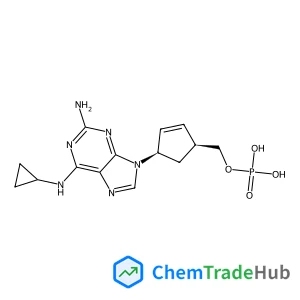
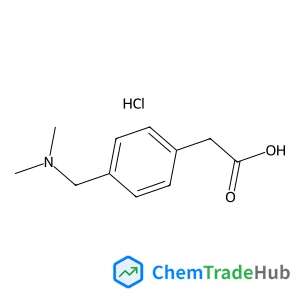
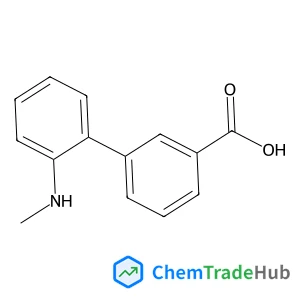

推荐供应商






免责声明
本页面提供的学术期刊信息仅供参考和研究使用。我们与任何期刊出版商均无关联,也不处理投稿事宜。如有投稿相关咨询,请直接联系相关期刊出版商。
如发现页面信息有误,请发送邮件至 support@chemtradehub.com 联系我们。我们将及时核实并处理您的问题。