




![2,6-Di(thiophen-2-yl)dithieno[3,2-b:2',3'-d]thiophene structure](https://cnstatic.chemtradehub.com/structs/910/910788-24-8-5b70.webp "2,6-Di(thiophen-2-yl)dithieno[3,2-b:2',3'-d]thiophene structure")
Computational analysis of carbohydrate recognition based on hybrid QM/MM modeling: a case study of norovirus capsid protein in complex with Lewis antigen
文献信息
发布日期
2018-01-09
DOI
10.1039/C7CP07701G
影响因子
3.676
作者
查看原文
摘要
Norovirus is a major pathogen of nonbacterial acute gastroenteritis in humans and animals. Carbohydrate recognition between norovirus capsid proteins and Lewis antigens is considered to play a critical role in initiating infection of eukaryotic cells. In this article, we first report a detailed atomistic simulation study of the norovirus capsid protein in complex with the Lewis antigen based on ab initio QM/MM combined with MD-FEP simulations. To understand the mechanistic details of ligand binding, we analyzed and compared the carbohydrate recognition mechanism of the wild-type P domain protein with a mutant protein. Small structural differences between two capsid proteins are observed on the weak interaction site of residue 389, which is located on the solvent exposed surface of the P domain. To further clarify affinity differences in ligand binding, we directly evaluated free energy changes of the ligand binding process. Although the mutant protein loses its interaction energy with the Lewis antigen, this small amount of energy penalty is compensated for by an increase in the solvation stability, which is induced by structural reorganization at the ligand binding site on the protein surface. As a sum of these opposite energy components, the mutant P domain obtains a slightly enhanced binding affinity for the Lewis antigen. The present computational study clearly demonstrated that a detailed free energy balance of the interaction energy between the capsid protein and the surrounding aqueous solvent is the mechanistic basis of carbohydrate recognition in the norovirus capsid protein.
相关文献
Sulfono-γ-AA modified peptides that inhibit HIV-1 fusion
Olapeju Bolarinwa, Meng Zhang, Erin Mulry, Min Lu, Jianfeng Cai
2018-10-11
Paper
DOI: 10.1039/C8OB02159G
Correction: A facile and high-yield formation of dipyrrin-boronic acid dyads and triads: a light-harvesting system in the visible region based on the efficient energy transfer
Masaki Yamamura, Shinya Yazaki, Motofumi Seki, Yasunori Matsui, Hiroshi Ikeda, Tatsuya Nabeshima
2018-07-20
Correction
DOI: 10.1039/C8OB90102C
Tetraphenylethylene conjugated p-hydroxyphenacyl: fluorescent organic nanoparticles for the release of hydrogen sulfide under visible light with real-time cellular imaging
C. Parthiban, Pavithra M., L. Vinod Kumar Reddy, Dwaipayan Sen, Melvin Samuel S., N. D. Pradeep Singh
2018-10-03
Paper
DOI: 10.1039/C8OB01629A
Chiral β3-isocyanopropionates for multicomponent synthesis of peptides and depsipeptides containing a β-amino acid fragment
Danil P. Zarezin, Olga I. Shmatova, Valentine G. Nenajdenko
2018-07-31
Paper
DOI: 10.1039/C8OB01507D
RNA-based boronate internucleosidic linkages: an entry into reversible templated ligation and loop formation
Alejandro Gimenez Molina, Ivan Barvik, Sabine Müller, Jean-Jacques Vasseur, Michael Smietana
2018-11-01
Paper
DOI: 10.1039/C8OB02182A
Rh-Catalyzed aminative dearomatization of 2-naphthols
Hang-Fei Tu
2018-10-31
Communication
DOI: 10.1039/C8OB02592D
C-Alkylation of N-alkylamides with styrenes in air and scale-up using a microwave flow reactor
Souma Tamaoki, Hiromichi Egami, Noriyuki Ohneda, Tadashi Okamoto, Hiromichi Odajima, Yoshitaka Hamashima
2018-09-29
Communication
DOI: 10.1039/C8OB02282H
Toward the total synthesis of patellazole B: synthesis of an advanced C1–C25 fragment corresponding to the macrocyclic skeleton
Andrew W. Phillips, Matthew J. Anketell, Tudor Balan, Nelson Y. S. Lam, Simon Williams, Ian Paterson
2018-09-07
Paper
DOI: 10.1039/C8OB01621F
Palladium catalyzed carbonylative annulation of the C(sp2)–H bond of N,1-diaryl-1H-tetrazol-5-amines and N,4-diaryl-4H-triazol-3-amines to quinazolinones
Attoor Chandrasekhar, Venkatachalam Ramkumar, Sethuraman Sankararaman
2018-10-25
Paper
DOI: 10.1039/C8OB02516A
您可能还喜欢
化合物问答
3 - (二氟甲基)-1 -氟苯(CAS号:26029-52-7)适用哪些法规指南?
3 - (二氟甲基)-1 -氟苯需遵循联合国全球化学品统一分类和标签制度(GHS),包括急性毒性、皮肤腐蚀/刺激、严重眼损伤/眼刺激等分类。同时,该化合物还需符...
26029-52-71-(Difluoromethyl)-3...
化合物问答
3,5-二甲基苯胺(CAS号:108-69-0)通常如何合成?
3,5-二甲基苯胺通常通过乙苯的氨解反应合成。反应中使用硫酸作为催化剂,反应温度为120-130°C。乙苯在硫酸存在下与氨反应,生成3,5-二甲基苯胺和苯胺副产...
108-69-03,5-Dimethylaniline
化合物问答
3-甲基异噻唑-5-胺(CAS号:24340-76-9)安全吗?
3-甲基异噻唑-5-胺在适当使用和储存条件下是相对安全的,但在操作时应注意防护措施。应避免吸入粉尘,避免与皮肤和眼睛直接接触。在操作过程中,应穿戴适当的防护装备...
24340-76-93-Methyl-1,2-thiazol...
化合物问答
3-(1,3-Thiazol-2-yl)-1H-indole(CAS号:135531-86-1)通常如何合成?
3-(1,3-噻唑-2-基)-1H-吲哚通常通过多步合成方法制备。首先,由噻唑-2-基溴化物和吲哚进行偶联反应,得到中间体。然后,通过还原反应将中间体转化为所需...
135531-86-13-(1,3-Thiazol-2-yl)...
化合物问答
4-溴-2-氟苯甲基氯(CAS号:85510-82-3)的主要用途是什么?
4-溴-2-氟苯甲基氯主要用于有机合成中间体,特别是在医药、农药和染料等领域。作为一种具有特定结构的化合物,它在合成复杂有机分子时扮演重要角色。
85510-82-34-Bromo-1-(chloromet...
化合物问答
处理Fmoc-β-(3-噻吩基)-D-Ala-OH(CAS号:220497-90-5)时应注意哪些实验室安全事项?
处理Fmoc-β-(3-噻吩基)-D-Ala-OH时,应佩戴防护手套、护目镜和实验服。操作应在通风橱内进行。如发生泄露,应立即用大量水冲洗,并通知实验室管理人员...
220497-90-5N-[(9H-Fluoren-9-ylm...
化合物问答
氮化硅(CAS号:12033-89-5)通常如何合成?
氮化硅通常通过氮化硅的直接反应合成,即在高温下将四氯化硅与氨气反应。具体步骤是将四氯化硅和氨气混合并加热至1300-1700℃,在该条件下,四氯化硅与氨气反应生...
12033-89-5Trisilicon tetranitr...
化合物问答
Cetirizine EP Impurity B DiHCl(CAS号:1000690-91-4)通常如何合成?
Cetirizine EP Impurity B DiHCl通常通过一锅法合成,首先将4-氯苯基-苯甲基氯甲酸酯与1-哌嗪乙酸反应,生成相应的酸,然后与盐酸反应...
1000690-91-4{4-[(4-Chlorophenyl)...
化合物问答
如何储存1-哌啶-4-基丁-1-酮(CAS号:3509-15-7)?
1-哌啶-4-基丁-1-酮应储存在阴凉、干燥的地方,避免阳光直射。存储容器应密封,并确保通风良好。建议储存温度不超过25℃,湿度保持在相对较低的水平。
3509-15-71-Piperidin-4-ylbuta...
化合物问答
如何处理含有VORUCICLIB(CAS号:1000023-04-0)的废料?
含有VORUCICLIB的废料应进行专业的收集和处理,包括使用适当的容器进行隔离,避免与其他化学品接触。处理方法通常包括化学中和、沉淀反应或吸附过程,随后进行焚...
1000023-04-02-[2-Chloro-4-(trifl...
来源期刊
Physical Chemistry Chemical Physics

CiteScore:
5.5
自引率:
10.3%
年发文量:
3036
Physical Chemistry Chemical Physics (PCCP) is an international journal co-owned by 19 physical chemistry and physics societies from around the world. This journal publishes original, cutting-edge research in physical chemistry, chemical physics and biophysical chemistry. To be suitable for publication in PCCP, articles must include significant innovation and/or insight into physical chemistry; this is the most important criterion that reviewers and Editors will judge against when evaluating submissions. The journal has a broad scope and welcomes contributions spanning experiment, theory, computation and data science. Topical coverage includes spectroscopy, dynamics, kinetics, statistical mechanics, thermodynamics, electrochemistry, catalysis, surface science, quantum mechanics, quantum computing and machine learning. Interdisciplinary research areas such as polymers and soft matter, materials, nanoscience, energy, surfaces/interfaces, and biophysical chemistry are welcomed if they demonstrate significant innovation and/or insight into physical chemistry. Joined experimental/theoretical studies are particularly appreciated when complementary and based on up-to-date approaches.
推荐化合物
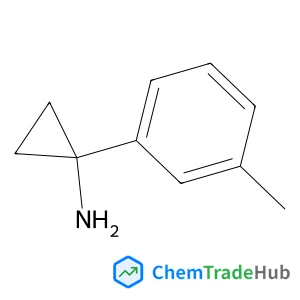
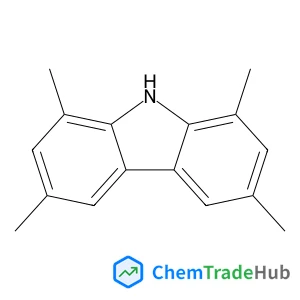
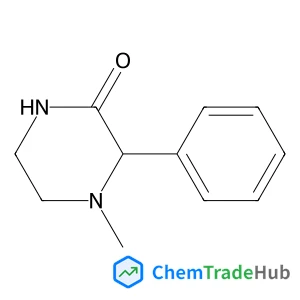
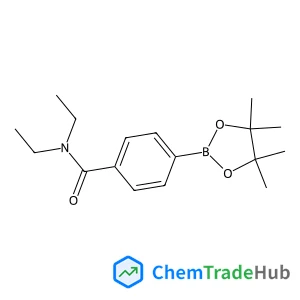
N,N-Diethyl-4-(4,4,5,5-tetramethyl-1,3,2-dioxaborolan-2-yl)benzamide
CAS号:
325142-99-2
分子式:
C17H26BNO3
推荐供应商



免责声明
本页面提供的学术期刊信息仅供参考和研究使用。我们与任何期刊出版商均无关联,也不处理投稿事宜。如有投稿相关咨询,请直接联系相关期刊出版商。
如发现页面信息有误,请发送邮件至 support@chemtradehub.com 联系我们。我们将及时核实并处理您的问题。