


Understanding proton capture and cation-induced dimerization of [Ag29(BDT)12]3− clusters by ion mobility mass spectrometry
文献信息
发布日期
2018-02-12
DOI
10.1039/C7CP08181B
影响因子
3.676
作者
Papri Chakraborty, Ananya Baksi, Sathish Kumar Mudedla, Abhijit Nag, Ganesan Paramasivam, Venkatesan Subramanian, Thalappil Pradeep
查看原文
摘要
Proton transfer reactions have been a topic of fundamental interest in several areas of chemistry and biology. However, such reactivity has not been explored in detail for nanoscale materials. In this article, we present a unique reaction of an atomically precise monolayer-protected silver nanocluster, [Ag29(BDT)12]3−, with a proton (H+). Under controlled conditions, the strong proton affinity facilitated a complete conversion of the cluster to its protonated form, [Ag29(BDT)12H]2−. Moreover, binding of alkali metal ions (Li+, Na+, K+, Rb+ and Cs+) induced specific structural changes and also favored dimerization of the cluster. In this case, the cations acted as a bridge between the two clusters and the degree of dimerization was specific to the size of the cations. The conformational changes and separation of the alkali–metal ion bound dimers from their respective monomers have been investigated by ion mobility mass spectrometry (IM MS) and tandem mass spectrometric studies. Density functional theory (DFT) calculations have been used to determine the possible structures of the monomers and the dimers. Similar reactivity of the cluster can also be extended to other metal ions. While the present study helps to expand the ion-chemistry of atomically precise clusters, gas-phase basicity of the molecule can be explored in further detail and this can find applications in the areas of sensing and materials in general.
期刊推荐

Foundations of Chemistry
European Journal of Organic Chemistry

Photochemical & Photobiological Sciences

Contact Lens & Anterior Eye

Green Chemistry
Current Pharmaceutical Biotechnology

Angewandte Chemie International Edition
Nature Reviews Drug Discovery
Journal of Enzyme inhibition and Medicinal Chemistry
Molecules
相关文献
From absolute potentials to a generalized computational standard hydrogen electrode for aqueous and non-aqueous solvents
Michael Busch, Elisabet Ahlberg, Kari Laasonen
2021-05-04
Paper
DOI: 10.1039/D1CP00499A
Ionisation of PF3: absolute partial electron ionisation cross sections and the formation and reactivity of dication states
Lilian K. Ellis-Gibbings, William G. Fortune, Bridgette Cooper, Jonathan Tennyson, Stephen D. Price
2021-04-26
Paper
DOI: 10.1039/D1CP01328A
Bond-forming and electron-transfer reactivity between Ar2+ and N2
Sam Armenta Butt, Stephen D. Price
2021-04-26
Paper
DOI: 10.1039/D1CP00918D
Observation and mechanism of cryo N2 cleavage by a tantalum cluster
Daniela V. Fries, Matthias P. Klein, Annika Steiner, Marc H. Prosenc, Gereon Niedner-Schatteburg
2021-05-07
Paper
DOI: 10.1039/D0CP06208A
Hydrogen adsorption trends on two metal-doped Ni2P surfaces for optimal catalyst design
Lauri Partanen, Simon Alberti, Kari Laasonen
2021-04-28
Paper
DOI: 10.1039/D1CP00684C
The role of the potential field on occurrence and flow of octane in quartz nanopores
Kaiyun Zhan, Wenjing Fang, Zhiming Pan, Guilei Teng, Haixia Zheng, Li Zhao, Bing Liu
2021-04-27
Paper
DOI: 10.1039/D1CP00891A
Aqueous TMAO solution under high hydrostatic pressure
Inga Kolling, Christoph Hölzl, Sho Imoto, Serena R. Alfarano, Hendrik Vondracek, Lukas Knake, Fabio Novelli, Claudius Hoberg, Jean-Blaise Brubach, Pascale Roy, Harald Forbert, Gerhard Schwaab, Dominik Marx, Martina Havenith
2021-04-29
Paper
DOI: 10.1039/D1CP00703C
The C(3P) + O2(3Σg−) → CO2 ↔ CO(1Σ+) + O(1D)/O(3P) reaction: thermal and vibrational relaxation rates from 15 K to 20 000 K
Juan Carlos San Vicente Veliz, Debasish Koner, Raymond J. Bemish
2021-04-12
Paper
DOI: 10.1039/D1CP01101D
How does the solvent composition influence the transport properties of electrolyte solutions? LiPF6 and LiFSA in EC and DMC binary solvent
Satoshi Uchida, Tetsu Kiyobayashi
2021-04-08
Paper
DOI: 10.1039/D1CP00967B
Formic acid dehydrogenation over PdNi alloys supported on N-doped carbon: synergistic effect of Pd–Ni alloying on hydrogen release
Rizcky Tamarany, Dong Yun Shin, Sukho Kang, Hyangsoo Jeong, Jun Kim, Dong-Hee Lim
2021-04-30
Paper
DOI: 10.1039/D1CP00236H
您可能还喜欢
化合物问答
4-[[6-(3-苯基苯基)-7H-嘌呤-2-基]氨基]苯磺酰胺(CAS号:2079895-42-2)适用哪些法规指南?
该化合物需遵循REACH法规以确保其安全使用和管理。同时,根据其潜在的生物降解性和毒性,也需要符合GHS分类中的相应要求。此外,若用于医药或食品相关领域,则还需...
2079895-42-24-{[6-(3-Biphenylyl)...
化合物问答
反式-度骨化醇(CAS号:74007-20-8)的物理化学性质是什么?
反式-度骨化醇是一种脂溶性维生素D3的衍生物,呈无色或白色结晶性粉末,不溶于水,溶于乙醇、丙酮、氯仿等有机溶剂。其分子式为C28H44O,分子量为404.65。...
74007-20-8trans-Doxercalcifero...
化合物问答
莲花掌苷(CAS号:59282-56-3)的市场或研究趋势如何?
莲花掌苷作为一种天然产物,近年来在抗炎、抗癌等生物活性研究方面显示出一定的潜力,因此市场需求逐渐增长。市场动态方面,随着天然产物开发的深入,预计该化合物的研究会...
59282-56-3Lindleyin
化合物问答
2-溴-6-(吡咯烷-1-基)吡啶-4-硼酸频那醇酯(CAS号:1150271-64-9)应用于哪些行业?
2-溴-6-(吡咯烷-1-基)吡啶-4-硼酸频那醇酯在医药领域有着广泛的应用,它可以用作药物合成中的中间体。此外,它还可以用于有机合成,特别是在构建复杂杂环化合...
1150271-64-92-Bromo-6-(1-pyrroli...
化合物问答
什么是methyl 2-(4-bromophenyl)-3-methylbutanoate(CAS号:1061284-70-5)?
methyl 2-(4-溴苯基)-3-甲基丁酸甲酯是一种化学物质,分子式为C12H13BrO2。它是一种有机化合物,具有一定的挥发性和易燃性。
1061284-70-52-(4-Bromo-phenyl)-3...
化合物问答
CJC1-295(CAS号:863288-34-0)的物理化学性质是什么?
CJC1-295是一种具有复杂肽链结构的化合物,其分子量约为1875 Da。该化合物在水中具有一定的溶解性,但在有机溶剂中的溶解性不佳。它是一种反应活性化合物,...
863288-34-0L-tyrosyl-D-alanyl-L...
化合物问答
三正丁基锍碘(CAS号:18146-62-8)的市场或研究趋势如何?
三正丁基锍碘作为一种重要的有机硫化合物,主要用于有机合成中作为亲电试剂。近年来,由于其在合成中的广泛应用,市场对其需求持续增长。此外,随着绿色化学的发展,对其替...
18146-62-8Tributylsulfonium io...
化合物问答
雌二醇-[13C3]同位素内标(CAS号:1261254-48-1)通常如何合成?
雌二醇-[13C3]同位素内标通常通过在雌二醇分子中引入[13C3]同位素来合成。常见的方法是通过化学标记反应,如与[13C3]标记的甲基溴化物进行亲核取代反应...
1261254-48-117beta-Estradiol-2,3...
化合物问答
N1-(2-吡啶甲基)-N2-(2-甲基-1-萘基)草酰胺(CAS号:2611225-93-3)的物理化学性质是什么?
N1-(2-吡啶甲基)-N2-(2-甲基-1-萘基)草酰胺为固体化合物,具有良好的结晶形态,分子量为340.34 g/mol。该化合物在水中的溶解度较低,但在有...
2611225-93-3N-(2-Methyl-1-naphth...
化合物问答
如何处理含有十五碳烯酸甲酯(顺-10)(C15:1)标准品(CAS号:90176-52-6)的废料?
含有十五碳烯酸甲酯(顺-10)(C15:1)标准品的废料应首先进行适当收集和储存,避免与其他化学品混合。然后,可采用焚烧或交由专业废物处理公司进行处理。处理过程...
90176-52-6(Z)-10-Pentadecenoic...
来源期刊
Physical Chemistry Chemical Physics

CiteScore:
5.5
自引率:
10.3%
年发文量:
3036
Physical Chemistry Chemical Physics (PCCP) is an international journal co-owned by 19 physical chemistry and physics societies from around the world. This journal publishes original, cutting-edge research in physical chemistry, chemical physics and biophysical chemistry. To be suitable for publication in PCCP, articles must include significant innovation and/or insight into physical chemistry; this is the most important criterion that reviewers and Editors will judge against when evaluating submissions. The journal has a broad scope and welcomes contributions spanning experiment, theory, computation and data science. Topical coverage includes spectroscopy, dynamics, kinetics, statistical mechanics, thermodynamics, electrochemistry, catalysis, surface science, quantum mechanics, quantum computing and machine learning. Interdisciplinary research areas such as polymers and soft matter, materials, nanoscience, energy, surfaces/interfaces, and biophysical chemistry are welcomed if they demonstrate significant innovation and/or insight into physical chemistry. Joined experimental/theoretical studies are particularly appreciated when complementary and based on up-to-date approaches.
推荐化合物
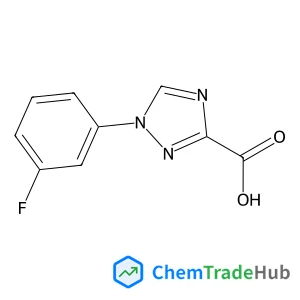
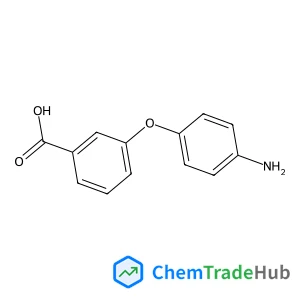
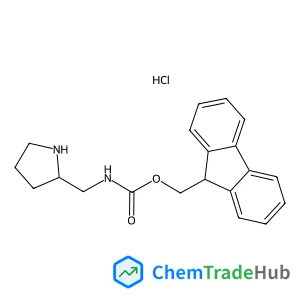
(S)-(9H-Fluoren-9-yl)methyl (pyrrolidin-2-ylmethyl)carbamate hydrochloride
CAS号:
1217813-15-4
分子式:
C20H23ClN2O2
推荐供应商




免责声明
本页面提供的学术期刊信息仅供参考和研究使用。我们与任何期刊出版商均无关联,也不处理投稿事宜。如有投稿相关咨询,请直接联系相关期刊出版商。
如发现页面信息有误,请发送邮件至 support@chemtradehub.com 联系我们。我们将及时核实并处理您的问题。