


Cooperative bimetallic catalysis in asymmetric allylic substitution
文献信息
发布日期
2017-11-09
DOI
10.1039/C7OB02476B
影响因子
3.876
作者
Jingke Fu, Xiaohong Huo, Bowen Li
查看原文
摘要
Synergistic catalysis is gaining increasing attention due to its advantages over traditional catalytic methodologies, such as improved catalytic activity, broader substrate scope, increased selectivity and lower cost. Methodologies involving the synergistic combination of metal catalysts and organocatalysts have been intensively studied. Given the clear benefits of bimetallic catalyst systems consisting of two distinct metal catalysts, cooperative bimetallic catalysis has proved to be successful for a number of difficult asymmetric transformations. This review highlights the recent advances in bimetallic systems for catalytic asymmetric allylic substitution reactions. Strategies using a chiral metal catalyst and the cooperative effect of a second achiral metal catalyst for asymmetric transformations are discussed. Additionally, several challenging asymmetric reactions realized by employing two different chiral metal catalysts in a synergistic manner are also covered.
期刊推荐
Nature Medicine
Russian Journal of Coordination Chemistry
Chemical Communications
Saudi Pharmaceutical Journal
Crystallography Reports
Current Opinion in Colloid & Interface Science
Chemistry Education Research and Practice
Russian Journal of Organic Chemistry
Russian Journal of General Chemistry
Journal of Peptide Science
相关文献
Combined excitatory and inhibitory coupling in a 1-D array of Belousov–Zhabotinsky droplets
Ning Li, Irving R. Epstein, Seth Fraden
2014-04-17
Paper
DOI: 10.1039/C4CP00957F
Conformation of the neurotransmitter γ-aminobutyric acid in liquid water
N. Ottosson, M. Pastorczak, Sietse T. van der Post, Huib J. Bakker
2014-04-10
Communication
DOI: 10.1039/C4CP00671B
Cobalt porphyrin electrode films for electrocatalytic water oxidation
Ali Han, Hongxing Jia, Hao Ma, Shifan Ye, Haotian Wu, Haitao Lei, Yongzhen Han, Rui Cao, Pingwu Du
2014-04-15
Paper
DOI: 10.1039/C4CP00523F
Thermoresponsive fluorescence of a graphene–polymer composite based on a local surface plasmon resonance effect
Yunyun Huang, Wensheng Lin, Kan Chen, Wenkai Zhang, Xudong Chen, Ming Qiu Zhang
2014-03-14
Paper
DOI: 10.1039/C4CP00773E
Understanding the chemical dynamics of the reactions of dicarbon with 1-butyne, 2-butyne, and 1,2-butadiene – toward the formation of resonantly stabilized free radicals
Dorian S. N. Parker, Surajit Maity, Beni B. Dangi, Ralf I. Kaiser, Alexander Landera, Alexander M. Mebel
2014-05-02
Paper
DOI: 10.1039/C4CP00639A
Iron near absorption edge X-ray spectroscopy at aqueous-membrane interfaces
Wenjie Wang, Ivan Kuzmenko, David Vaknin
2014-05-23
Paper
DOI: 10.1039/C4CP00657G
Intermolecular network analysis of the liquid and vapor interfaces of pentane and water: microsolvation does not trend with interfacial properties
Yasaman Ghadar, Aurora E. Clark
2014-05-01
Paper
DOI: 10.1039/C4CP00602J
Built-in potential shift and Schottky-barrier narrowing in organic solar cells with UV-sensitive electron transport layers
Cheng Li, Dan Credgington, Doo-Hyun Ko, Zhuxia Rong, Jianpu Wang, Neil C. Greenham
2014-04-11
Communication
DOI: 10.1039/C4CP01251H
Selective adsorption of bismuth telluride nanoplatelets through electrostatic attraction
2014-04-23
Paper
DOI: 10.1039/C4CP00690A
Computational investigations on the catalytic mechanism of maleate isomerase: the role of the active site cysteine residues
Hisham M. Dokainish, Bogdan F. Ion, James W. Gauld
2014-05-08
Paper
DOI: 10.1039/C4CP01342E
您可能还喜欢
化合物问答
十二烷基磺酸钠(CAS号:2386-53-0)的主要用途是什么?
十二烷基磺酸钠主要用作表面活性剂,广泛应用于洗涤剂、肥皂、化妆品和工业清洁产品中。它能有效去除油脂和污垢,常用于制造洗发水、沐浴露、洗衣粉和金属清洗剂。此外,它...
2386-53-01-Dodecanesulfonic a...
化合物问答
5-羟基异喹啉(CAS号:2439-04-5)适用哪些法规指南?
5-羟基异喹啉作为化学品,主要适用的法规包括GHS全球化学品统一分类和标签制度,REACH法规等。GHS将5-羟基异喹啉分类为皮肤腐蚀/刺激类别2,严重眼损伤/...
2439-04-55-Isoquinolinol
化合物问答
在合成中是否有FIDAS-5 | Wnt(CAS号:1391934-98-7)的替代品?
合成中可以考虑使用类似结构的化合物,如4-[(E)-2-(2-氯-6-氟苯基)乙烯基]-N-甲基苯胺的类似物或衍生物作为替代品。这类化合物可能具有相似的生物活性...
1391934-98-74-[(E)-2-(2-Chloro-6...
化合物问答
(R)-tert-Butyl 2-(5-bromo-1H-imidazol-2-yl)pyrrolidine-1-carboxylate(CAS号:1370600-56-8)通常如何合成?
该化合物通常通过如下步骤合成:首先,将4-溴-1H-咪唑与对甲苯磺酸在乙酸乙酯中反应,得到中间体5-溴-1H-咪唑-2-甲酸乙酯。然后,该中间体与2-甲基-2-...
1370600-56-82-Methyl-2-propanyl ...
化合物问答
处理4-(吡咯烷-1-基)环己酮(CAS号:10421-18-8)时应注意哪些实验室安全事项?
处理4-(吡咯烷-1-基)环己酮时,应佩戴手套、护目镜和实验室外套,以防止直接接触或吸入。在通风橱中操作,确保良好的通风条件。一旦发生泄漏,应立即清理并使用适当...
10421-18-84-(Pyrrolidin-1-yl)c...
化合物问答
如何处理含有异麦芽糖醇(CAS号:534-73-6)的废料?
含有异麦芽糖醇的废液应首先进行分类收集,避免与其他化学品混合。对于小规模的废液,可以通过焚烧或加入特定的化学试剂进行无害化处理。对于大规模的废液,建议联系专业的...
534-73-66-O-alpha-D-Glucopyr...
化合物问答
7-甲基壬酸(CAS号:41653-89-8)的主要用途是什么?
7-甲基壬酸主要用于有机合成领域,作为合成其他化合物的原料。此外,它还可能作为一种中间体用于药品制造和香料合成,但具体用途需要根据其具体的化学结构和反应特性来确...
41653-89-87-Methylnonanoic aci...
化合物问答
N-甲氧基-N-甲基甲基吡啶羧酰胺(CAS号:148493-07-6)应用于哪些行业?
N-甲氧基-N-甲基甲基吡啶羧酰胺在医药领域有一定的应用,作为一种潜在的药物前体或中间体。此外,该化合物也可能应用于聚合物改性剂、传感器材料等。由于其独特的化学...
148493-07-6N-Methoxy-N-methylpi...
化合物问答
什么是惕各酸香叶酯(CAS号:7785-33-3)?
惕各酸香叶酯是一种化合物,化学名称为(2E)-3,7-二甲基-2,6-辛二烯-1-基(2E)-2-甲基-2-丁烯酸酯。它是一种具有香叶香气的化合物,分子式为C1...
7785-33-3(2E)-3,7-Dimethyl-2,...
化合物问答
1-环丁基哌嗪(CAS号:132800-13-6)安全吗?
1-环丁基哌嗪在适当的操作条件下是相对安全的,但如遇明火或高热会释放有毒气体。操作时应佩戴防护眼镜和手套,避免吸入或接触皮肤、眼睛。
132800-13-61-Cyclobutylpiperazi...
来源期刊
Organic & Biomolecular Chemistry

CiteScore:
3.4
自引率:
10.3%
年发文量:
1041
Organic & Biomolecular Chemistry (OBC) publishes original and high impact research and reviews in organic chemistry. We welcome research that shows new or significantly improved protocols or methodologies in total synthesis, synthetic methodology or physical and theoretical organic chemistry as well as research that shows a significant advance in the organic chemistry or molecular design aspects of chemical biology, catalysis, supramolecular and macromolecular chemistry, theoretical chemistry, mechanism-oriented physical organic chemistry, medicinal chemistry or natural products. Articles published in the journal should report new work which makes a highly-significant impact in the field. Routine and incremental work is generally not suitable for publication in the journal. More details about key areas of our scope are below. In all cases authors should include in their article clear rationale for why their research has been carried out.
推荐化合物
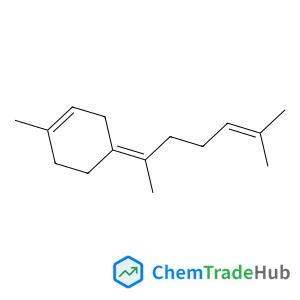
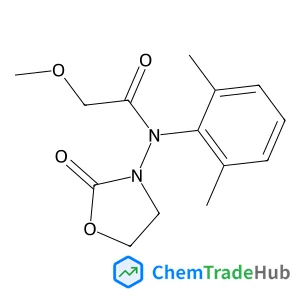
N-(2,6-Dimethylphenyl)-2-methoxy-N-(2-oxo-1,3-oxazolidin-3-yl)acetamide
CAS号:
77732-09-3
分子式:
C14H18N2O4
推荐供应商





免责声明
本页面提供的学术期刊信息仅供参考和研究使用。我们与任何期刊出版商均无关联,也不处理投稿事宜。如有投稿相关咨询,请直接联系相关期刊出版商。
如发现页面信息有误,请发送邮件至 support@chemtradehub.com 联系我们。我们将及时核实并处理您的问题。