





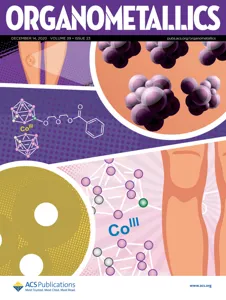






Simultaneous doping and crosslinking of polythiophene films
文献信息
发布日期
2017-11-21
DOI
10.1039/C7PY01688C
影响因子
5.582
作者
P. Reinold, K. Bruchlos, S. Ludwigs
查看原文
摘要
We present a click chemistry approach for the synthesis of conjugated redox polymers based on highly regioregular polythiophenes with tunable amounts of pendant redox-active triphenylamine (TPA) groups. After solution-processing doping of homogeneous films was performed electrochemically and chemically by the acceptor F4TCNQ and the chemical oxidant FeCl3. We find that doping is accompanied by crosslinking upon electrochemical triggers or by oxidation with FeCl3 leading to polythiophene films crosslinked via tetraphenylbenzidine (TPB) units. Cyclic voltammetry coupled with in situ absorption spectroscopy and in situ conductance measurements show similar oxidation and conductivity regimes for the backbone and the pendant redox units making the films prone to stable redox switching. Bulk conductivities as high as 8 S cm−1 are measured by four-point-probe, i.e. values comparable to doped regioregular poly(3-hexylthiophene) are reachable. The crosslinking reaction renders the films insoluble in all tested solvents, opening potential applications of the materials in direct contact with organic solvents.
相关文献
Understanding the building-up process of three dimensional open-framework metal phosphates: Acid degradation of the 3D structures to lower dimensional structures
Amitava Choudhury
2003-01-06
Communication
DOI: 10.1039/B210037C
Novel and efficient chiral sulfideoxathiane ligands for palladium-catalyzed asymmetric allylic alkylation
Yuko Okuyama, Hiroto Nakano, Kouichi Takahashi, Hiroshi Hongo, Chizuko Kabuto
2003-01-17
Communication
DOI: 10.1039/B211031H
Identification of novel sulfur-containing derivatives of chlorophyll a in a Recent sediment
Angela H. Squier, Dominic A. Hodgson, Brendan J. Keely
2003-02-10
Communication
DOI: 10.1039/B212243J
Synthesis, spectral and electrochemical investigations of bichromophoric pentads possessing tetraazaporphyrin and (bipy)2RuII/(phen)2RuII moieties
Rajendra Prasad, Elisa Murguly, Neil R. Branda
2003-01-27
Communication
DOI: 10.1039/B209812A
Construction of extended networks with a trimeric pyrazole synthon
Ishtvan Boldog, Eduard B. Rusanov, Joachim Sieler, Steffen Blaurock, Konstantin V. Domasevitch
2003-02-25
Communication
DOI: 10.1039/B212540D
Site-selective RNA scission at two sites for precise genotyping of SNPs by mass spectrometry‡
Akinori Kuzuya, Ryo Mizoguchi, Fumi Morisawa, Makoto Komiyama
2003-02-25
Communication
DOI: 10.1039/B300368J
Transfer hydrogenation using recyclable polyurea-encapsulated palladium: efficient and chemoselective reduction of aryl ketones
Jin-Quan Yu, Hai-Chen Wu, Chandrashekar Ramarao, Jonathan B. Spencer, Steven V. Ley
2003-02-12
Communication
DOI: 10.1039/B300074P
Regiocontrolled Ru-catalyzed addition of carboxylic acids to alkynes: practical protocols for the synthesis of vinyl esters
2003-02-17
Communication
DOI: 10.1039/B211277A
Systematic manipulation of surface chemical reaction on the nanoscale: a novel approach for constructing three-dimensional nanostructures
Xiuzhu Wang, Dejian Zhou, Trevor Rayment, Chris Abell
2003-01-20
Communication
DOI: 10.1039/B211906D
A simple and efficient method for synthesis of 5-substituted 2′-deoxyuridine nucleosides using metal–halogen exchange reaction of 5-iodo-2′-deoxyuridine sodium salt
Mariko Aso, Toshiyuki Kaneko, Morihide Nakamura, Noboru Koga, Hiroshi Suemune
2003-04-02
Communication
DOI: 10.1039/B301425H
您可能还喜欢
化合物问答
6-氯-2H-1,4-苯并噁嗪-3(4H)-酮(CAS号:7652-29-1)应用于哪些行业?
6-氯-2H-1,4-苯并噁嗪-3(4H)-酮主要应用于医药、农药和聚合物等领域。在医药领域,该化合物可用于合成抗菌药物;在农药领域,可用作杀虫剂的中间体;在聚...
7652-29-16-Chloro-2H-1,4-benz...
化合物问答
活性氧化铝(CAS号:1302-74-5)应用于哪些行业?
活性氧化铝广泛应用于医药、聚合物、传感器、半导体和催化等领域。在医药行业,活性氧化铝用作吸附剂和干燥剂,有助于去除杂质和水分。在聚合物行业,它用作增白剂和抗结块...
1302-74-5aluminum;trihydrate
化合物问答
什么是硅胶(CAS号:112926-00-8)?
硅胶(Silica gel, pptd.,cryst.-free)是一种无定形、多孔的硅酸盐材料,主要成分为二氧化硅(SiO₂)。其结构由硅氧四面体构成,通过酸...
112926-00-8Silica gel, pptd.,cr...
化合物问答
二乙基甲基一氢硅烷(CAS号:760-32-7)的主要用途是什么?
二乙基甲基一氢硅烷主要用于有机合成、表面处理以及作为溶剂。它还被用作合成其他硅烷化合物的原料,以及在涂料、粘合剂和密封剂中的应用。
760-32-7Diethyl(methyl)silan...
化合物问答
在合成中是否有N-花生四烯酰基甘氨酸(CAS号:179113-91-8)的替代品?
在合成过程中,可以考虑使用类似结构的化合物作为替代品,例如N-亚油酰基甘氨酸或N-花生二烯酰基甘氨酸。这些替代品在结构上有类似的双键位置,但可能具有不同的物理化...
179113-91-8Glycine, N-[(5Z,8Z,1...
化合物问答
在合成中是否有1-(4-甲氧基苯基)丙烷-1,2-二酮(CAS号:10557-27-4)的替代品?
在合成过程中,可以考虑使用类似结构的化合物作为替代品,例如1-(3-甲氧基苯基)丙烷-1,2-二酮或1-(4-羟基苯基)丙烷-1,2-二酮。这些替代品具有相似的...
10557-27-41-(4-Methoxyphenyl)p...
化合物问答
N-(4-氨基-1-苄基-3-羟基-5-苯基戊基)-3-甲基-2-(2-氧代四氢嘧啶-1-基)-丁酰胺 5-氧代吡咯烷-2-甲酸(CAS号:192726-06-0)通常如何合成?
该化合物通常通过一系列复杂的有机合成步骤获得。首先,通过芳香族化合物的羟基化反应获得羟基化产物,然后通过酰化反应形成酰胺中间体,最后通过环化反应得到目标产物。常...
192726-06-05-Oxo-L-proline - (2...
化合物问答
(S)-2-氨基-3-喹啉-2-丙酸(CAS号:161513-46-8)的市场或研究趋势如何?
该化合物作为生物活性化合物,尤其是在药物化学领域表现出色。近年来,随着对新型抗炎、抗病毒和抗癌药物的研究增加,其市场和研究趋势持续增长。此外,其在神经科学领域的...
161513-46-8(S)-2-Amino-3-quinol...
化合物问答
核黄素磷酸钠(CAS号:130-40-5)安全吗?
核黄素磷酸钠在常规使用条件下安全,但高剂量可能引起刺激性反应。操作时需佩戴防护手套和护目镜,避免吸入粉尘。若接触皮肤或眼睛,应立即用大量清水冲洗。急救时需根据接...
130-40-5Sodium 1-deoxy-1-(7,...
化合物问答
盐酸丙胺卡因杂质A(EP) 标准品(CAS号:19281-31-3)通常如何合成?
盐酸丙胺卡因杂质A(EP) 标准品可通过重氮化反应和随后的酰胺化反应合成。首先,利用氯化反应将苯环上的氢原子转化为氯原子,然后通过芳香族重氮化反应引入氨基,最后...
19281-31-32-Chloro-N-(2-methyl...
来源期刊
Polymer Chemistry

CiteScore:
8.6
自引率:
7.3%
年发文量:
457
Polymer Chemistry welcomes submissions in all areas of polymer science that have a strong focus on macromolecular chemistry. Manuscripts may cover a broad range of fields, yet no direct application focus is required.
推荐化合物
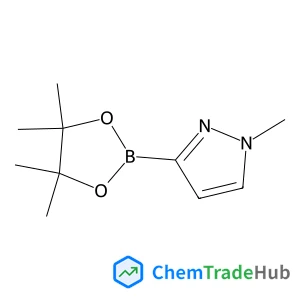
1-Methyl-3-(4,4,5,5-tetramethyl-1,3,2-dioxaborolan-2-yl)-1H-pyrazole
CAS号:
1020174-04-2
分子式:
C10H17BN2O2
![4-{2-[4-(2-Methyl-2-propanyl)phenyl]ethoxy}quinazoline structure](https://cnstatic.chemtradehub.com/structs/120/120928-09-8-d3db.webp "4-{2-[4-(2-Methyl-2-propanyl)phenyl]ethoxy}quinazoline structure")
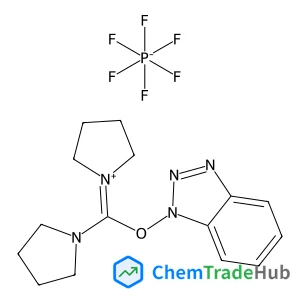
(1H-Benzotriazol-1-yloxy)(di-1-pyrrolidinyl)methylium hexafluorophosphate
CAS号:
105379-24-6
分子式:
C15H21F6N5OP
推荐供应商





免责声明
本页面提供的学术期刊信息仅供参考和研究使用。我们与任何期刊出版商均无关联,也不处理投稿事宜。如有投稿相关咨询,请直接联系相关期刊出版商。
如发现页面信息有误,请发送邮件至 support@chemtradehub.com 联系我们。我们将及时核实并处理您的问题。