


![3-[4-(difluoromethoxy)phenyl]-2-({[(9H-fluoren-9-yl)methoxy]carbonyl}amino)propanoic acid structure](https://cnstatic.chemtradehub.com/structs/149/1496564-27-2-952e.webp "3-[4-(difluoromethoxy)phenyl]-2-({[(9H-fluoren-9-yl)methoxy]carbonyl}amino)propanoic acid structure")
Photocatalytic activity and charge carrier dynamics of TiO2 powders with a binary particle size distribution
文献信息
发布日期
2018-02-12
DOI
10.1039/C8CP00398J
影响因子
3.676
作者
Fabian Sieland, Jenny Schneider
查看原文
摘要
The effects of the particle size distribution on the charge carrier dynamics and the photocatalytic activity of mixed titanium dioxide (TiO2) powder samples were investigated in this work. Instead of the synthesis of the small semiconductor particles, the binary particle size distributions of the powders were obtained by mixing commercially available TiO2 powders with different particle sizes. The pure anatase samples (average diameters: 7, 20, and 125 nm, respectively) were created via ultrasound treatment and discreet drying. The photocatalytic activity of the powder samples was assessed by the degradation of nitric oxide (NO) and acetaldehyde in the gas phase. Furthermore, the charge carrier kinetics was determined using transient absorption spectroscopy following pulsed laser excitation. Importantly, a recently published model based on fractal dimensions was used to fit the transient signals of the photo generated charge carriers in the TiO2 powder samples. The effects of the particle size on the acetaldehyde degradation could be explained by the formation of agglomerates, which reduce the available surface area of smaller particles. The fast oxidation of acetaldehyde on the surface of TiO2 by direct hole transfer was further independent of the observed charge carrier lifetimes on the microsecond time scale. The photocatalytic NO degradation, on the other hand, increased for samples containing larger amounts of small particles. The corresponding photonic efficiencies correlated well with the charge carrier lifetimes determined by the time-resolved studies. Hence, it was concluded that a long charge carrier lifetime generally leads to higher fractional conversions of NO. The employed fractal fit function was proved to be beneficial for the kinetic analysis of charge carrier recombination in TiO2, in direct comparison with a second order fit function.
期刊推荐
European Journal of Organic Chemistry

Coloration Technology
Molecules
Advanced Engineering Materials
Journal of Medical Biochemistry

Physical Chemistry Chemical Physics

Contact Lens & Anterior Eye
Angewandte Chemie International Edition
Environmental Toxicology and Pharmacology
Current Pharmaceutical Biotechnology
相关文献
A NaSO2CF3/NaBrO3-mediated bromotrifluoromethylation of enyne via free-radical cascade processes
Xiao-Jie Shang, Dong Liu, Zhong-Quan Liu
2018-08-30
Research Article
DOI: 10.1039/C8QO00847G
Ag(i)-Catalyzed solvent-free CO2 capture with homopropargylic amines: an efficient access to 1,3-oxazinan-2-ones
Weilin Wang, Yixin Fu, Yimeng Li, Ruitong Yao, Lingyan Liu, Weixing Chang
2018-10-10
Research Article
DOI: 10.1039/C8QO00978C
Manganese-catalyzed direct C2-allylation of indoles
Shang Wu, Quanlu Yang, Qinzheng Hu, Yanbin Wang, Lihua Chen, Hong Zhang, Lan Wu, Jia Li
2018-08-27
Research Article
DOI: 10.1039/C8QO00674A
Solvent-tuned chemoselective carboazidation and diazidation of alkenes via iron catalysis
Lei Xu, Jian Chen, Lingling Chu
2018-12-27
Research Article
DOI: 10.1039/C8QO01142G
Convenient approach to polyoxygenated dibenzo[c,e]pyrrolo[1,2-a]azepines from donor–acceptor cyclopropanes
Maksim A. Boichenko, Olga A. Ivanova, Ivan A. Andreev, Alexey O. Chagarovskiy, Irina I. Levina, Victor B. Rybakov, Dmitriy A. Skvortsov
2018-08-30
Research Article
DOI: 10.1039/C8QO00742J
Gold-catalyzed ring enlargement and cycloisomerization of alkynylamide tethered alkylidenecyclopropanes
Jia-hao Zhang, Yin Wei
2018-09-17
Research Article
DOI: 10.1039/C8QO00907D
Palladium-catalyzed asymmetric annulation between aryl iodides and racemic epoxides using a chiral norbornene cocatalyst
Renhe Li, Guangbin Dong
2018-09-25
Research Article
DOI: 10.1039/C8QO00808F
N-(2-Fluoro-2,2-dinitroethyl)azoles: a novel assembly of diverse explosophoric building blocks for energetic compound design
Nadezhda V. Palysaeva, Irina A. Vatsadze, Kyrill Yu. Suponitsky, Dmitry E. Dmitriev, Aleksei B. Sheremetev
2018-12-05
Research Article
DOI: 10.1039/C8QO01173G
您可能还喜欢
化合物问答
什么是3-表南美楝属二醇(CAS号:19942-04-2)?
3-表南美楝属二醇是一种具有特定立体化学结构的化合物,其分子式为C31H52O2,属于甾醇类化合物。它具有光学活性,是一种复杂的有机分子,主要存在于一些植物中。
19942-04-2(3S,5R,8R,9R,10R,13R...
化合物问答
3-羧基-5-碘苯甲酸甲酯(CAS号:50765-22-5)应用于哪些行业?
3-羧基-5-碘苯甲酸甲酯主要应用于医药行业,作为合成某些药物中间体的重要原料。此外,它还可能用于聚合物的改性、传感器的制备以及半导体材料的制备等领域。
50765-22-5Methyl 3-hydroxy-5-i...
化合物问答
什么是3-Bromoindolin-2-one(CAS号:22942-87-6)?
3-Bromoindolin-2-one是一种含有溴代基团的吲哚酮衍生物,分子式为C9H7BrNO。它是一种无色固体,具有一定的挥发性,熔点为158-159°C...
22942-87-63-Bromoindolin-2-one
化合物问答
如何处理含有L-Lysyl-L-phenylalanyl-L-isoleucylglycyl-L-leucyl-L-methioninamide(CAS号:2990-43-4)的废料?
对于含有该化合物的废液,应先进行中和处理,然后根据其毒性和活性选择合适的处置方法。可以考虑焚烧处理或由专业的化学品废物处理公司进行无害化处理。处理过程中需注意环...
2990-43-4L-Lysyl-L-phenylalan...
化合物问答
ANGIOTENSIN 1/2 + A (2 - 8)(CAS号:51833-76-2)的物理化学性质是什么?
ANGIOTENSIN 1/2 + A (2 - 8)是一种蛋白质类化合物,具有典型的蛋白质性质。它的分子量约为5900 Da。该化合物在水中具有一定的溶解性,...
51833-76-2ANGIOTENSIN 1/2 + A ...
化合物问答
如何储存2-甲基硫代嘧啶-5-硼酸频那酯(CAS号:940284-18-4)?
应将该化合物存放在阴凉干燥、通风良好的地方,避免阳光直射。建议将化合物密封保存在避光的、干燥的容器中,远离火源和高温环境。
940284-18-42-(Methylthio)-5-(4,...
化合物问答
什么是苏丹红IV氘代物 标准品(CAS号:1014689-18-9)?
苏丹红IV氘代物 标准品是一种含有氘代标记的苏丹红IV化合物,是一种用于化合物分析、结构确证以及代谢研究的标准物质。
1014689-18-91-[(E)-{2-Methyl-4-[...
化合物问答
(+)-2-Amino-6-propionamido-d3-tetrahydrobenzothiazole(CAS号:1217680-69-7)适用哪些法规指南?
该化合物需要遵循《全球化学品统一分类和标签制度》(GHS)中的分类和标签要求,具体分类需依据其毒性和物理化学性质。此外,还需要符合《欧盟化学品注册、评估、授权和...
1217680-69-7(+)-2-Amino-6-propio...
化合物问答
如何储存2-氨基-2-(2-吡啶)乙酸乙酯(CAS号:55243-15-7)?
2-氨基-2-(2-吡啶)乙酸乙酯应储存于阴凉、干燥、通风良好的环境中,避免高温和光照。应使用密封容器储存,并远离易燃物、氧化剂和其他危险化学品。
55243-15-7Ethyl 2-amino-2-(pyr...
化合物问答
3-羟基-4-甲氧基吡啶-2-羧酸(CAS号:210300-09-7)的主要用途是什么?
3-羟基-4-甲氧基吡啶-2-羧酸主要用于合成其他有机化合物,如药物合成、农药合成和染料合成等。此外,它还可用作中间体和试剂,在化学研究领域也有一定的应用。
210300-09-73-Hydroxy-4-methoxy-...
来源期刊
Physical Chemistry Chemical Physics
CiteScore:
5.5
自引率:
10.3%
年发文量:
3036
Physical Chemistry Chemical Physics (PCCP) is an international journal co-owned by 19 physical chemistry and physics societies from around the world. This journal publishes original, cutting-edge research in physical chemistry, chemical physics and biophysical chemistry. To be suitable for publication in PCCP, articles must include significant innovation and/or insight into physical chemistry; this is the most important criterion that reviewers and Editors will judge against when evaluating submissions. The journal has a broad scope and welcomes contributions spanning experiment, theory, computation and data science. Topical coverage includes spectroscopy, dynamics, kinetics, statistical mechanics, thermodynamics, electrochemistry, catalysis, surface science, quantum mechanics, quantum computing and machine learning. Interdisciplinary research areas such as polymers and soft matter, materials, nanoscience, energy, surfaces/interfaces, and biophysical chemistry are welcomed if they demonstrate significant innovation and/or insight into physical chemistry. Joined experimental/theoretical studies are particularly appreciated when complementary and based on up-to-date approaches.
推荐化合物
![(1S)-1,5-Anhydro-2-O-alpha-L-arabinopyranosyl-1-[5-hydroxy-7-({6-O-[3-(4-hydroxy-3-methoxyphenyl)propanoyl]-beta-D-glucopyranosyl}oxy)-2-(4-hydroxyphenyl)-4-oxo-4H-chromen-6-yl]-D-glucitol structure](https://cnstatic.chemtradehub.com/structs/225/2252345-81-4-bcff.webp "(1S)-1,5-Anhydro-2-O-alpha-L-arabinopyranosyl-1-[5-hydroxy-7-({6-O-[3-(4-hydroxy-3-methoxyphenyl)propanoyl]-beta-D-glucopyranosyl}oxy)-2-(4-hydroxyphenyl)-4-oxo-4H-chromen-6-yl]-D-glucitol structure")
![(3S,4aS,8aS)-2-[(2R,3S)-3-Amino-2-hydroxy-4-phenylbutyl]-N-(2-methyl-2-propanyl)decahydro-3-isoquinolinecarboxamide structure](https://cnstatic.chemtradehub.com/structs/136/136522-17-3-4d77.webp "(3S,4aS,8aS)-2-[(2R,3S)-3-Amino-2-hydroxy-4-phenylbutyl]-N-(2-methyl-2-propanyl)decahydro-3-isoquinolinecarboxamide structure")
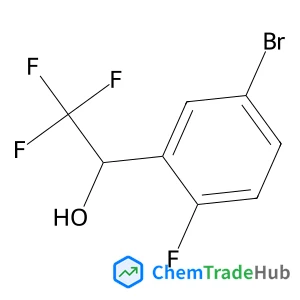
推荐供应商





免责声明
本页面提供的学术期刊信息仅供参考和研究使用。我们与任何期刊出版商均无关联,也不处理投稿事宜。如有投稿相关咨询,请直接联系相关期刊出版商。
如发现页面信息有误,请发送邮件至 support@chemtradehub.com 联系我们。我们将及时核实并处理您的问题。