


![tert-Butyl N-[(2-chloropyridin-4-yl)methyl]carbamate structure](https://cnstatic.chemtradehub.com/structs/916/916210-27-0-9f95.webp "tert-Butyl N-[(2-chloropyridin-4-yl)methyl]carbamate structure")
Fundamental study of hydrogen-attachment-induced peptide fragmentation occurring in the gas phase and during the matrix-assisted laser desorption/ionization process
文献信息
发布日期
2018-04-09
DOI
10.1039/C8CP00733K
影响因子
3.676
作者
Daiki Asakawa, Hidenori Takahashi, Shinichi Iwamoto, Koichi Tanaka
查看原文
摘要
Mass spectrometry with hydrogen-radical-mediated fragmentation techniques has been used for the sequencing of proteins/peptides. The two methods, matrix-assisted laser desorption/ionization in-source decay (MALDI-ISD) and hydrogen attachment/abstraction dissociation (HAD) are known as hydrogen-radical-mediated fragmentation techniques. MALDI-ISD occurs during laser induced desorption processes, whereas HAD utilizes the association of hydrogen with peptide ions in the gas phase. In this study, the general mechanisms of MALDI-ISD and HAD of peptides were investigated. We demonstrated the fragmentation of four model peptides and investigated the fragment formation pathways using density functional theory (DFT) calculations. The current experimental and computational joint study indicated that MALDI-ISD and HAD produce aminoketyl radical intermediates, which immediately undergo radical-induced cleavage at the N–Cα bond located on the C-terminal side of the radical site, leading to the c′/z˙ fragment pair. In the case of MALDI-ISD, the z˙ fragments undergo a subsequent reaction with the matrix to give z′ and matrix adducts of the z fragments. In contrast, the c′ and z˙ fragments react with hydrogen atoms during the HAD processes, and various fragment species, such as c˙, c′, z˙ and z′, were observed in the HAD-MS/MS mass spectra.
期刊推荐
Photochemical & Photobiological Sciences
Faraday Discussions
Molecular Diversity

Contact Lens & Anterior Eye
Nature Reviews Drug Discovery

Coloration Technology
Environmental Toxicology and Pharmacology
Mini-Reviews in Medicinal Chemistry
Journal of Enzyme inhibition and Medicinal Chemistry

Physical Chemistry Chemical Physics
相关文献
LCST-type liquid–liquid phase separation behaviour of poly(ethylene oxide) derivatives in an ionic liquid
Ryohei Tsuda, Koichi Kodama, Takeshi Ueki, Hisashi Kokubo, Shin-ichiro Imabayashi, Masayoshi Watanabe
2008-08-28
Communication
DOI: 10.1039/B810127B
Hydration of counterions in cation exchange resins studied by X-ray absorption fine structure
Makoto Harada, Tetsuo Okada
2008-09-10
Communication
DOI: 10.1039/B810997D
Electron transfer in pristine and functionalised single-walled carbon nanotubes
Matteo Iurlo, Demis Paolucci, Massimo Marcaccio, Francesco Paolucci
2008-08-21
Feature Article
DOI: 10.1039/B809285K
Adsorption properties and structure of CO2 adsorbed on open coordination sites of metal–organic framework Ni2(dhtp) from gas adsorption, IR spectroscopy and X-ray diffraction
Pascal D. C. Dietzel, Rune E. Johnsen, Helmer Fjellvåg, Silvia Bordiga, Elena Groppo, Sachin Chavan, Richard Blom
2008-09-24
Communication
DOI: 10.1039/B810574J
Heterogeneous ultrathin films fabricated by alternate assembly of exfoliated layered double hydroxides and polyanion
Jing Bin Han, Jun Lu, Min Wei, Zhong Lin Wang, Xue Duan
2008-09-12
Communication
DOI: 10.1039/B807479H
Asymmetric 1,3-dipolar cycloaddition with a P-stereogenic dipolarophile: An efficient approach to novel P-stereogenic 1,2-diphosphine systems
Nikolai Vinokurov, K. Michał Pietrusiewicz, Sławomir Frynas, Michael Wiebcke, Holger Butenschön
2008-09-12
Communication
DOI: 10.1039/B810573A
Supramolecular aptamer–thrombin linear and branched nanostructures
Yossi Weizmann, Adam B. Braunschweig, Ofer I. Wilner, Zoya Cheglakov, Itamar Willner
2008-09-22
Communication
DOI: 10.1039/B812486H
Self-organization of a new fluorous porphyrin and C60 films on indium-tin-oxide electrode
Alessandro Varotto, Louis Todaro, Mikki Vinodu, Gang-yu Liu
2008-09-19
Communication
DOI: 10.1039/B806795C
Photochromic oligothienoacene derivatives with photo-switchable luminescene properties and computational studies
Chi-Chiu Ko, Wai Han Lam, Vivian Wing-Wah Yam
2008-09-12
Communication
DOI: 10.1039/B810585E
Oriented cell growth on self-assembled bacteriophage M13 thin films
L. Andrew Lee, Kai Li, Brandon Harp, Charlene M. Mello, Zhongwei Niu, Qian Wang
2008-09-11
Communication
DOI: 10.1039/B811039E
您可能还喜欢
化合物问答
3 - (二氟甲基)-1 -氟苯(CAS号:26029-52-7)适用哪些法规指南?
3 - (二氟甲基)-1 -氟苯需遵循联合国全球化学品统一分类和标签制度(GHS),包括急性毒性、皮肤腐蚀/刺激、严重眼损伤/眼刺激等分类。同时,该化合物还需符...
26029-52-71-(Difluoromethyl)-3...
化合物问答
3,5-二甲基苯胺(CAS号:108-69-0)通常如何合成?
3,5-二甲基苯胺通常通过乙苯的氨解反应合成。反应中使用硫酸作为催化剂,反应温度为120-130°C。乙苯在硫酸存在下与氨反应,生成3,5-二甲基苯胺和苯胺副产...
108-69-03,5-Dimethylaniline
化合物问答
3-甲基异噻唑-5-胺(CAS号:24340-76-9)安全吗?
3-甲基异噻唑-5-胺在适当使用和储存条件下是相对安全的,但在操作时应注意防护措施。应避免吸入粉尘,避免与皮肤和眼睛直接接触。在操作过程中,应穿戴适当的防护装备...
24340-76-93-Methyl-1,2-thiazol...
化合物问答
3-(1,3-Thiazol-2-yl)-1H-indole(CAS号:135531-86-1)通常如何合成?
3-(1,3-噻唑-2-基)-1H-吲哚通常通过多步合成方法制备。首先,由噻唑-2-基溴化物和吲哚进行偶联反应,得到中间体。然后,通过还原反应将中间体转化为所需...
135531-86-13-(1,3-Thiazol-2-yl)...
化合物问答
4-溴-2-氟苯甲基氯(CAS号:85510-82-3)的主要用途是什么?
4-溴-2-氟苯甲基氯主要用于有机合成中间体,特别是在医药、农药和染料等领域。作为一种具有特定结构的化合物,它在合成复杂有机分子时扮演重要角色。
85510-82-34-Bromo-1-(chloromet...
化合物问答
处理Fmoc-β-(3-噻吩基)-D-Ala-OH(CAS号:220497-90-5)时应注意哪些实验室安全事项?
处理Fmoc-β-(3-噻吩基)-D-Ala-OH时,应佩戴防护手套、护目镜和实验服。操作应在通风橱内进行。如发生泄露,应立即用大量水冲洗,并通知实验室管理人员...
220497-90-5N-[(9H-Fluoren-9-ylm...
化合物问答
氮化硅(CAS号:12033-89-5)通常如何合成?
氮化硅通常通过氮化硅的直接反应合成,即在高温下将四氯化硅与氨气反应。具体步骤是将四氯化硅和氨气混合并加热至1300-1700℃,在该条件下,四氯化硅与氨气反应生...
12033-89-5Trisilicon tetranitr...
化合物问答
Cetirizine EP Impurity B DiHCl(CAS号:1000690-91-4)通常如何合成?
Cetirizine EP Impurity B DiHCl通常通过一锅法合成,首先将4-氯苯基-苯甲基氯甲酸酯与1-哌嗪乙酸反应,生成相应的酸,然后与盐酸反应...
1000690-91-4{4-[(4-Chlorophenyl)...
化合物问答
如何储存1-哌啶-4-基丁-1-酮(CAS号:3509-15-7)?
1-哌啶-4-基丁-1-酮应储存在阴凉、干燥的地方,避免阳光直射。存储容器应密封,并确保通风良好。建议储存温度不超过25℃,湿度保持在相对较低的水平。
3509-15-71-Piperidin-4-ylbuta...
化合物问答
如何处理含有VORUCICLIB(CAS号:1000023-04-0)的废料?
含有VORUCICLIB的废料应进行专业的收集和处理,包括使用适当的容器进行隔离,避免与其他化学品接触。处理方法通常包括化学中和、沉淀反应或吸附过程,随后进行焚...
1000023-04-02-[2-Chloro-4-(trifl...
来源期刊
Physical Chemistry Chemical Physics
CiteScore:
5.5
自引率:
10.3%
年发文量:
3036
Physical Chemistry Chemical Physics (PCCP) is an international journal co-owned by 19 physical chemistry and physics societies from around the world. This journal publishes original, cutting-edge research in physical chemistry, chemical physics and biophysical chemistry. To be suitable for publication in PCCP, articles must include significant innovation and/or insight into physical chemistry; this is the most important criterion that reviewers and Editors will judge against when evaluating submissions. The journal has a broad scope and welcomes contributions spanning experiment, theory, computation and data science. Topical coverage includes spectroscopy, dynamics, kinetics, statistical mechanics, thermodynamics, electrochemistry, catalysis, surface science, quantum mechanics, quantum computing and machine learning. Interdisciplinary research areas such as polymers and soft matter, materials, nanoscience, energy, surfaces/interfaces, and biophysical chemistry are welcomed if they demonstrate significant innovation and/or insight into physical chemistry. Joined experimental/theoretical studies are particularly appreciated when complementary and based on up-to-date approaches.
推荐化合物
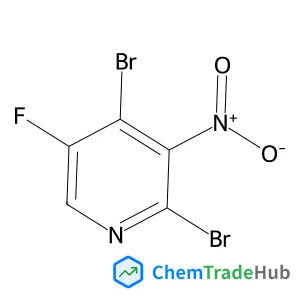
![1-[3-(4-Morpholinylsulfonyl)phenyl]methanamine structure](https://cnstatic.chemtradehub.com/structs/933/933989-32-3-51af.webp "1-[3-(4-Morpholinylsulfonyl)phenyl]methanamine structure")
推荐供应商







免责声明
本页面提供的学术期刊信息仅供参考和研究使用。我们与任何期刊出版商均无关联,也不处理投稿事宜。如有投稿相关咨询,请直接联系相关期刊出版商。
如发现页面信息有误,请发送邮件至 support@chemtradehub.com 联系我们。我们将及时核实并处理您的问题。