


Magnetic field effects on coenzyme B12- and B6-dependent lysine 5,6-aminomutase: switching of the J-resonance through a kinetically competent radical-pair intermediate
文献信息
发布日期
2018-04-25
DOI
10.1039/C8CP01497C
影响因子
3.676
作者
Jun-Ru Chen, Shyue-Chu Ke
查看原文
摘要
The environmental magnetic field is beneficial to migratory bird navigation through the radical-pair mechanism. One of the continuing challenges in understanding how magnetic fields may perturb biological processes is that only a very few field-sensitive examples have been explored despite the prevalence of radical pairs in enzymatic reactions. We show that the reaction of adenosylcobalamin- and pyridoxal-5′-phosphate-dependent lysine 5,6-aminomutase proceeds via radical-pair intermediates and is magnetic field dependent. The 5′-deoxyadenosyl radical from adenosylcobalamin abstracts a C5(H) from the substrate to yield a {cob(II)alamin – substrate} radical pair wherein the large spin–spin interaction (2J = 8000 gauss) locks the radical pair in a triplet state, as evidenced by electron paramagnetic resonance spectroscopy. Application of an external magnetic field in the range of 6500 to 8500 gauss triggers intersystem crossing to the singlet {cob(II)alamin – substrate} radical-pair state. Spin-conserved H back-transfer from deoxyadenosine to the substrate radical yields a singlet {cob(II)alamin-5′-deoxyadenosyl} radical pair. Spin-selective recombination to adenosylcobalamin decreased the enzyme catalytic efficiency kcat/Km by 16% at 7600 gauss. As a mechanistic probe, observation of magnetic field effects successfully demonstrates the presence of a kinetically significant radical pair in this enzyme. The study of a pronounced high-field level-crossing characteristic through an immobilized radical pair with a constant exchange interaction deepens our understanding of how a magnetic field may interact with an enzyme.
期刊推荐
Journal of the American Chemical Society
Advances in Colloid and Interface Science
Corrosion Science
Chemistry of Heterocyclic Compounds
Journal of the Chinese Chemical Society
Accounts of Chemical Research
Biopolymers
Bulletin of the Chemical Society of Japan

Ferroelectrics
Anti-Corrosion Methods and Materials
相关文献
Novel binaphthyl and biphenyl α- and β-amino acids and esters: organocatalysis of asymmetric Diels–Alder reactions. A combined synthetic and computational study
Philip C. Bulman Page, Francesca S. Kinsey, Yohan Chan, Ian R. Strutt, Alexandra M. Z. Slawin, Garth A. Jones
2018-09-17
Paper
DOI: 10.1039/C8OB01795F
Stereo- and regioselective photocycloaddition of extended alkenes using γ-cyclodextrin
Akshay Kashyap, Treyvon K. Bokosike, Nattamai Bhuvanesh, Mahesh Pattabiraman
2018-09-12
Communication
DOI: 10.1039/C8OB01966E
Activation of the hypervalent fluoroiodane reagent by hydrogen bonding to hexafluoroisopropanol
Harsimran K. Minhas, William Riley, Alison M. Stuart, Martyna Urbonaite
2018-09-18
Paper
DOI: 10.1039/C8OB02236D
Regioselectivity of aryl radical attack onto isocyanates and isothiocyanates
Geethika K. Weragoda, Rowan L. Pilkington, Richard A. J. O'Hair
2018-11-14
Paper
DOI: 10.1039/C8OB02209G
A novel synthesis of N-hydroxy-3-aroylindoles and 3-aroylindoles‡
Gabriella Ieronimo, Giovanni Palmisano, Angelo Maspero, Alessandro Marzorati, Luca Scapinello, Norberto Masciocchi, Giancarlo Cravotto, Alessandro Barge, Marco Simonetti, Keshav Lalit Ameta, Kenneth M. Nicholas, Andrea Penoni
2018-07-24
Communication
DOI: 10.1039/C8OB01471J
Campestarenes: new building blocks with 5-fold symmetry
Seong Nam, David C. Ware
2018-08-21
Paper
DOI: 10.1039/C8OB00957K
Synthesis of highly rigid phosphine–oxazoline ligands for palladium-catalyzed asymmetric allylic alkylation
Zhongxuan Qiu, Rui Sun, Dawei Teng
2018-10-01
Paper
DOI: 10.1039/C8OB02265H
Correction: Development of oligonucleotide-based antagonists of Ebola virus protein 24 inhibiting its interaction with karyopherin alpha 1
Keisuke Tanaka, Yoichi Miyamoto, Takumi Okuda, Tatsuro Kasai, Kentaro Onodera, Masahiro Oka, Yoshihiro Yoneda
2018-10-04
Correction
DOI: 10.1039/C8OB90140F
Investigations into the biosynthesis of the antifungal strobilurins
Zafar Iqbal, Li-Chen Han, Anna M. Soares-Sello, Risa Nofiani, Gerald Thormann, Axel Zeeck, Russell J. Cox, Christine L. Willis, Thomas J. Simpson
2018-07-20
Paper
DOI: 10.1039/C8OB00608C
您可能还喜欢
化合物问答
3 - (二氟甲基)-1 -氟苯(CAS号:26029-52-7)适用哪些法规指南?
3 - (二氟甲基)-1 -氟苯需遵循联合国全球化学品统一分类和标签制度(GHS),包括急性毒性、皮肤腐蚀/刺激、严重眼损伤/眼刺激等分类。同时,该化合物还需符...
26029-52-71-(Difluoromethyl)-3...
化合物问答
3,5-二甲基苯胺(CAS号:108-69-0)通常如何合成?
3,5-二甲基苯胺通常通过乙苯的氨解反应合成。反应中使用硫酸作为催化剂,反应温度为120-130°C。乙苯在硫酸存在下与氨反应,生成3,5-二甲基苯胺和苯胺副产...
108-69-03,5-Dimethylaniline
化合物问答
3-甲基异噻唑-5-胺(CAS号:24340-76-9)安全吗?
3-甲基异噻唑-5-胺在适当使用和储存条件下是相对安全的,但在操作时应注意防护措施。应避免吸入粉尘,避免与皮肤和眼睛直接接触。在操作过程中,应穿戴适当的防护装备...
24340-76-93-Methyl-1,2-thiazol...
化合物问答
3-(1,3-Thiazol-2-yl)-1H-indole(CAS号:135531-86-1)通常如何合成?
3-(1,3-噻唑-2-基)-1H-吲哚通常通过多步合成方法制备。首先,由噻唑-2-基溴化物和吲哚进行偶联反应,得到中间体。然后,通过还原反应将中间体转化为所需...
135531-86-13-(1,3-Thiazol-2-yl)...
化合物问答
4-溴-2-氟苯甲基氯(CAS号:85510-82-3)的主要用途是什么?
4-溴-2-氟苯甲基氯主要用于有机合成中间体,特别是在医药、农药和染料等领域。作为一种具有特定结构的化合物,它在合成复杂有机分子时扮演重要角色。
85510-82-34-Bromo-1-(chloromet...
化合物问答
处理Fmoc-β-(3-噻吩基)-D-Ala-OH(CAS号:220497-90-5)时应注意哪些实验室安全事项?
处理Fmoc-β-(3-噻吩基)-D-Ala-OH时,应佩戴防护手套、护目镜和实验服。操作应在通风橱内进行。如发生泄露,应立即用大量水冲洗,并通知实验室管理人员...
220497-90-5N-[(9H-Fluoren-9-ylm...
化合物问答
氮化硅(CAS号:12033-89-5)通常如何合成?
氮化硅通常通过氮化硅的直接反应合成,即在高温下将四氯化硅与氨气反应。具体步骤是将四氯化硅和氨气混合并加热至1300-1700℃,在该条件下,四氯化硅与氨气反应生...
12033-89-5Trisilicon tetranitr...
化合物问答
Cetirizine EP Impurity B DiHCl(CAS号:1000690-91-4)通常如何合成?
Cetirizine EP Impurity B DiHCl通常通过一锅法合成,首先将4-氯苯基-苯甲基氯甲酸酯与1-哌嗪乙酸反应,生成相应的酸,然后与盐酸反应...
1000690-91-4{4-[(4-Chlorophenyl)...
化合物问答
如何储存1-哌啶-4-基丁-1-酮(CAS号:3509-15-7)?
1-哌啶-4-基丁-1-酮应储存在阴凉、干燥的地方,避免阳光直射。存储容器应密封,并确保通风良好。建议储存温度不超过25℃,湿度保持在相对较低的水平。
3509-15-71-Piperidin-4-ylbuta...
化合物问答
如何处理含有VORUCICLIB(CAS号:1000023-04-0)的废料?
含有VORUCICLIB的废料应进行专业的收集和处理,包括使用适当的容器进行隔离,避免与其他化学品接触。处理方法通常包括化学中和、沉淀反应或吸附过程,随后进行焚...
1000023-04-02-[2-Chloro-4-(trifl...
来源期刊
Physical Chemistry Chemical Physics

CiteScore:
5.5
自引率:
10.3%
年发文量:
3036
Physical Chemistry Chemical Physics (PCCP) is an international journal co-owned by 19 physical chemistry and physics societies from around the world. This journal publishes original, cutting-edge research in physical chemistry, chemical physics and biophysical chemistry. To be suitable for publication in PCCP, articles must include significant innovation and/or insight into physical chemistry; this is the most important criterion that reviewers and Editors will judge against when evaluating submissions. The journal has a broad scope and welcomes contributions spanning experiment, theory, computation and data science. Topical coverage includes spectroscopy, dynamics, kinetics, statistical mechanics, thermodynamics, electrochemistry, catalysis, surface science, quantum mechanics, quantum computing and machine learning. Interdisciplinary research areas such as polymers and soft matter, materials, nanoscience, energy, surfaces/interfaces, and biophysical chemistry are welcomed if they demonstrate significant innovation and/or insight into physical chemistry. Joined experimental/theoretical studies are particularly appreciated when complementary and based on up-to-date approaches.
推荐化合物
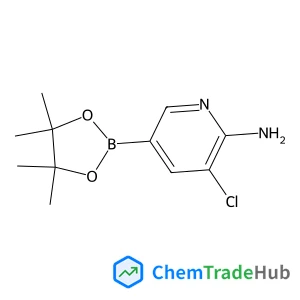
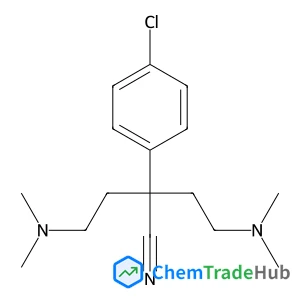
3-Chloro-5-(4,4,5,5-tetramethyl-1,3,2-dioxaborolan-2-yl)-2-pyridinamine
CAS号:
1032758-99-8
分子式:
C11H16BClN2O2
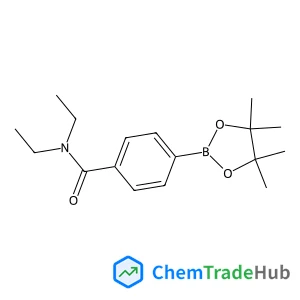
N,N-Diethyl-4-(4,4,5,5-tetramethyl-1,3,2-dioxaborolan-2-yl)benzamide
CAS号:
325142-99-2
分子式:
C17H26BNO3
推荐供应商






免责声明
本页面提供的学术期刊信息仅供参考和研究使用。我们与任何期刊出版商均无关联,也不处理投稿事宜。如有投稿相关咨询,请直接联系相关期刊出版商。
如发现页面信息有误,请发送邮件至 support@chemtradehub.com 联系我们。我们将及时核实并处理您的问题。