







Flue gas adsorption on periodic mesoporous phenylene-silica: a DFT approach
文献信息
发布日期
2018-05-29
DOI
10.1039/C8CP02589D
影响因子
3.676
作者
Mirtha A. O. Lourenço, Paula Ferreira, José R. B. Gomes
查看原文
摘要
Periodic mesoporous organosilicas (PMOs) were suggested as potential adsorbents for CO2/CH4 separation because of their large affinities towards CO2 and low interaction with CH4. Herewith, we present a comprehensive computational study on the binding properties of flue gas species with the pore walls of periodic mesoporous phenylene-silica (Ph-PMO) for understanding the possible impact of other gaseous species in the CO2/CH4 separation. The calculations considered three exchange–correlation functionals (PBE, PBE-D2 and M06-2X) based on the density functional theory and the walls of the periodic mesoporous phenylene-silica were modelled within the cluster model approach. The components of the flue gas considered were the diatomic CO, H2, N2, O2 and NO molecules, the triatomic CO2, H2O, H2S and SO2 species, the tetratomic SO3 and NH3 gases and the pentatomic CH4 molecule. The calculated data demonstrate that the presence of H2O, SO2, NH3, H2S and SO3 is a significant threat to CO2 capture by Ph-PMO and suggest that the Ph-PMO material would present high selectivity for CO2 over CH4, CO, H2 or N2 adsorption. The adsorption behaviour of flue gas components in Ph-PMO can be directly related to the experimental proton affinities, basicities or even the polarizabilities of the gaseous molecules.
相关文献
Reverse orthogonal strategy for oligosaccharide synthesis‡§
Kohki Fujikawa, N. Vijaya Ganesh, Yih Horng Tan, Keith J. Stine, Alexei V. Demchenko
2011-09-05
Communication
DOI: 10.1039/C1CC13409D
Precise engineering and visualization of signs and magnitudes of DNA writhe on the basis of PNA invasion
Dawei Li, Zhaoqi Yang, Yi Long, Guanjia Zhao, Bei Lv, Shuhui Hiew, Magdeline Tao Tao Ng, Juanjuan Guo, HongKee Tan, Hao Zhang, Weixing Yuan, Haibin Su, Tianhu Li
2011-09-05
Communication
DOI: 10.1039/C1CC13158C
Yeast cell wall particles: a promising class of nature-inspired microcarriers for multimodal imaging
João Nuno Moreira, Carlos F. G. C. Geraldes, Silvia Rizzitelli, Silvio Aime, Enzo Terreno
2011-09-01
Communication
DOI: 10.1039/C1CC14019A
Functionalization of luminescent cyclometalated iridium(iii) polypyridine complexes with a fluorous moiety: photophysics, protein-binding, bioconjugation, and cellular uptake properties
Siu-Kit Leung, Hua-Wei Liu, Kenneth Kam-Wing Lo
2011-04-27
Communication
DOI: 10.1039/C1CC11423A
Brief, efficient and highly diastereoselective synthesis of (±)-pumiliotoxin C based on the generation of an octahydroquinoline precursor via a four-component reaction
Swarupananda Maiti, J. Carlos Menéndez
2011-05-06
Communication
DOI: 10.1039/C1CC11246E
High throughput discovery of heteroaromatic-modifying enzymes allows enhancement of novobiocin selectivity
Sital M. Patel, Maria de la Fuente, Song Ke, Andreia M. R. Guimarães, Adeola O. Oliyide, Xiaoyun Ji, Paul Stapleton, Anne Osbourn, Yi Pan, Dianna J. Bowles, Benjamin G. Davis, Andreas Schatzlein, Min Yang
2011-08-24
Communication
DOI: 10.1039/C1CC13552J
Synthesis, characterization and ethylene oligomerization behaviour of 8-(1-aryliminoethylidene)quinaldinylnickel dihalides
Shengju Song, Tianpengfei Xiao, Tongling Liang, Fosong Wang, Carl Redshaw, Wen-Hua Sun
2011-02-08
Paper
DOI: 10.1039/C0CY00002G
Titanium nitride catalyst cathode in a Li–air fuel cell with an acidic aqueous solution
Ping He, Yonggang Wang, Haoshen Zhou
2011-09-05
Communication
DOI: 10.1039/C1CC14144A
Novel N,O-Cu(OAc)2 complex catalysed diastereo- and enantioselective 1,4-addition of glycine derivatives to alkylidene malonates
Ming Wang, Yu-Hua Shi, Jun-Fei Luo, Wenting Du, Xiao-Xin Shi, Wei-Ping Deng
2011-02-04
Paper
DOI: 10.1039/C0CY00001A
A novel pH-sensitive (±)-α-tocopherol–5-fluorouracil adduct with antioxidant and anticancer properties
Dong-Wei Li, Fang-Fang Tian, Yu-Shu Ge, Xin-Liang Ding, Jia-Han Li, Zi-Qiang Xu, Mei-Fang Zhang, Xiao-Le Han, Ran Li, Feng-Lei Jiang
2011-09-05
Communication
DOI: 10.1039/C1CC13821A
您可能还喜欢
化合物问答
如何处理含有8-氯咪唑并[1,2-A]吡嗪(CAS号:69214-33-1)的废料?
处理含有8-氯咪唑并[1,2-A]吡嗪的废料时,应首先将其收集并进行化学回收或降解。如果无法回收,需采用安全的化学处理方法,如中和、氧化还原或沉淀。处理过程中需...
69214-33-18-chloroimidazo[1,2-...
化合物问答
Calhex 231 hydrochloride(CAS号:2387505-78-2)适用哪些法规指南?
Calhex 231 hydrochloride 需要遵循《全球化学品统一分类和标签制度》(GHS)的分类和标签要求,以及欧盟的《化学品注册、评估、授权和限制条...
2387505-78-24-Chloro-N-[(1S,2S)-...
化合物问答
11-Beta,17-alpha,21-三羟基-5-beta-孕烯-3,20-二酮(CAS号:1482-50-4)的物理化学性质是什么?
11-Beta,17-alpha,21-三羟基-5-beta-孕烯-3,20-二酮是一种无色结晶性粉末,分子量为372.45 g/mol。该化合物在水中的溶解度...
1482-50-45β-Dihydrocortisol
化合物问答
处理5-异丙基-1,3,4-恶二唑-2-羧酸(CAS号:944907-13-5)时应注意哪些实验室安全事项?
处理5-异丙基-1,3,4-恶二唑-2-羧酸时应注意以下安全事项:穿戴适当的个人防护装备,包括实验室外套、手套和护目镜;操作应在通风橱中进行,以减少吸入或接触有...
944907-13-55-Isopropyl-1,3,4-ox...
化合物问答
benzyl 3-bromopropanoate(CAS号:90841-55-7)安全吗?
Benzyl 3-bromopropanoate属于有毒物质,吸入、摄入或皮肤接触均可能对人体造成伤害。操作时应佩戴防护眼镜、口罩和手套,避免吸入蒸汽和直接接触...
90841-55-7Benzyl 3-bromopropan...
化合物问答
什么是(R)-N-苄氧羰基-3,4-二氢-1H-异喹啉羧酸(CAS号:151004-88-5)?
(R)-N-苄氧羰基-3,4-二氢-1H-异喹啉羧酸是一种含有苄氧羰基和异喹啉环结构的化合物,分子式为C17H15NO3。它是一种有机化合物,具有一定的生物活性...
151004-88-5(1R)-2-[(Benzyloxy)c...
化合物问答
在合成中是否有1-苄基吡啶嗡-3-羧酸盐(CAS号:15990-43-9)的替代品?
可以考虑使用1-苄基吡啶-3-羧酸盐作为1-苄基吡啶嗡-3-羧酸盐的替代品。此外,还可以探索其他类似物,如1-苄基吡啶-3-氨基甲酸酯等。具体的替代品选择需根据...
15990-43-91-Benzyl-3-pyridiniu...
化合物问答
(2,6-二甲基吡啶-3-基)甲醇(CAS号:582303-10-4)安全吗?
(2,6-二甲基吡啶-3-基)甲醇在使用时需注意安全,应避免吸入其蒸汽,接触皮肤和眼睛。操作应在通风良好的环境中进行,佩戴适当的个人防护装备。
582303-10-4(2,6-Dimethyl-3-pyri...
化合物问答
5-溴-2-乙烯基吡啶(CAS号:226883-52-9)的物理化学性质是什么?
5-溴-2-乙烯基吡啶是一种有机化合物,外观为白色固体,具有良好的结晶性。分子量约为190.03 g/mol。它的溶解性在水中较差,但在有机溶剂如二氯甲烷、甲醇...
226883-52-95-Bromo-2-vinylpyrid...
化合物问答
2-羟基-3-硝基-5-甲基吡啶(CAS号:7464-14-4)应用于哪些行业?
2-羟基-3-硝基-5-甲基吡啶主要应用于医药、聚合物和半导体行业。在医药领域,它可以用作合成其他药物的中间体。在聚合物领域,它可以作为功能性单体参与聚合反应,...
7464-14-45-Methyl-3-nitro-2(1...
来源期刊
Physical Chemistry Chemical Physics

CiteScore:
5.5
自引率:
10.3%
年发文量:
3036
Physical Chemistry Chemical Physics (PCCP) is an international journal co-owned by 19 physical chemistry and physics societies from around the world. This journal publishes original, cutting-edge research in physical chemistry, chemical physics and biophysical chemistry. To be suitable for publication in PCCP, articles must include significant innovation and/or insight into physical chemistry; this is the most important criterion that reviewers and Editors will judge against when evaluating submissions. The journal has a broad scope and welcomes contributions spanning experiment, theory, computation and data science. Topical coverage includes spectroscopy, dynamics, kinetics, statistical mechanics, thermodynamics, electrochemistry, catalysis, surface science, quantum mechanics, quantum computing and machine learning. Interdisciplinary research areas such as polymers and soft matter, materials, nanoscience, energy, surfaces/interfaces, and biophysical chemistry are welcomed if they demonstrate significant innovation and/or insight into physical chemistry. Joined experimental/theoretical studies are particularly appreciated when complementary and based on up-to-date approaches.
推荐化合物
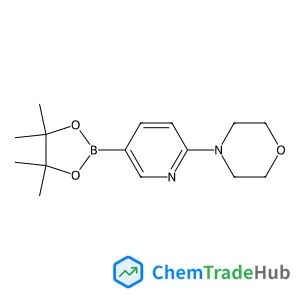
4-(5-(4,4,5,5-tetramethyl-1,3,2-dioxaborolan-2-yl)pyridin-2-yl)morpholine
CAS号:
485799-04-0
分子式:
C15H23BN2O3
推荐供应商





免责声明
本页面提供的学术期刊信息仅供参考和研究使用。我们与任何期刊出版商均无关联,也不处理投稿事宜。如有投稿相关咨询,请直接联系相关期刊出版商。
如发现页面信息有误,请发送邮件至 support@chemtradehub.com 联系我们。我们将及时核实并处理您的问题。