



Effect of cobalt content on the electrochemical properties and structural stability of NCA type cathode materials
文献信息
发布日期
2018-08-16
DOI
10.1039/C8CP03237H
影响因子
3.676
作者
Kamalika Ghatak, Swastik Basu, Tridip Das, Vidushi Sharma, Hemant Kumar, Dibakar Datta
查看原文
摘要
At present, the most common type of cathode materials, NCA (Li1−xNi0.80Co0.15Al0.05O2, x = 0 to 1), have a very high concentration of cobalt. Since cobalt is toxic and expensive, the existing design of cathode materials is neither cost-effective nor environmentally benign. We have performed density functional theory (DFT) calculations to investigate electrochemical, electronic, and structural properties of four types of NCA cathode materials with the simultaneous decrease in Co content along with the increase in Ni content. Our results show that even if the cobalt concentration is significantly decreased from 16.70% (NCA_I) to 4.20% (NCA_IV), variation in intercalation potential and specific capacity is not significant. For example, in the case of 50% Li concentration, the voltage drop is only ∼17% while the change in specific capacity is negligible. Moreover, we have also explored the influence of sodium doping in the intercalation site on the electrochemical, electronic, and structural properties. By considering two extreme cases of NCAs (i.e., with highest and lowest Co content: NCA_I and NCA_IV, respectively), we have demonstrated the importance of Na doping from the structural and electronic point of view. Our results provide insight into the design of environmentally benign, low-cost cathode materials with reduced cobalt concentration.
相关文献
Spatial metabolic fingerprinting using FT-IR spectroscopy: investigating abiotic stresses on Micrasterias hardyi
Soyab A. Patel, Felicity Currie, Nalin Thakker, Royston Goodacre
2008-10-21
Paper
DOI: 10.1039/B809441A
Dithizone nanofiber-coated membrane for filtration-enrichment and colorimetric detection of trace Hg(ii) ion
Toshishige M. Suzuki
2009-04-23
Paper
DOI: 10.1039/B816461D
Optofluidic ring resonator sensors for rapid DNT vapor detection
Yuze Sun, Jing Liu, Greg Frye-Mason, Shiou-jyh Ja, Aaron K. Thompson, Xudong Fan
2009-03-20
Paper
DOI: 10.1039/B900050J
Multifunctional magnetic bead-based electrochemical immunoassay for the detection ofaflatoxin B1 in food
Dianping Tang, Zhaoyang Zhong, Reinhard Niessner, Dietmar Knopp
2009-05-20
Paper
DOI: 10.1039/B902401H
Phosphopeptide enrichment on functionalized polymer microspots for MALDI-MS analysis
Wei-Han Wang, Merlin L. Bruening
2008-12-03
Paper
DOI: 10.1039/B815598D
Nucleic acid biosensors for environmental pollution monitoring
Ilaria Palchetti, Marco Mascini
2008-06-02
Critical Review
DOI: 10.1039/B802920M
Plasmon-controlled fluorescence: a new paradigm in fluorescence spectroscopy
Joseph R. Lakowicz, Krishanu Ray, Mustafa Chowdhury, Henryk Szmacinski, Yi Fu, Jian Zhang, Kazimierz Nowaczyk
2008-07-16
Critical Review
DOI: 10.1039/B802918K
您可能还喜欢
化合物问答
4-((4-甲基哌嗪-1-基)甲基)苯硼酸(CAS号:763120-62-3)的市场或研究趋势如何?
随着有机硼化学的发展,该化合物在催化、药物合成、材料科学等领域展现出潜在的应用价值。近年来,其在药物前体合成中的应用越来越受到关注。市场趋势显示,随着科研投入的...
763120-62-3{4-[(4-Methyl-1-pipe...
化合物问答
如何储存2,4,5-三甲基-1-硝基苯(CAS号:610-91-3)?
2,4,5-三甲基-1-硝基苯应储存在阴凉、干燥且通风良好的地方,避免阳光直射。储存在密封的金属容器中,远离火源和热源。储存温度应控制在25°C以下,湿度不宜过...
610-91-31,2,4-Trimethyl-5-ni...
化合物问答
处理2,5-二碘噻吩(CAS号:625-88-7)时应注意哪些实验室安全事项?
在处理2,5-二碘噻吩时,应穿戴适当的个人防护装备(PPE),包括实验室外套、手套和防护眼镜。在通风橱中进行操作以避免吸入蒸气。如果发生泄漏,应立即疏散人员并使...
625-88-72,5-Diiodothiophene
化合物问答
在合成中是否有6-bromo-3-chloro-1H-indole(CAS号:57916-08-2)的替代品?
在合成6-溴-3-氯-1H-吲哚(CAS号:57916-08-2)时,可以考虑使用一些类似的化合物作为替代品,如6-氯-3-氯-1H-吲哚或3-氯-1H-吲哚,...
57916-08-26-bromo-3-chloro-1H-...
化合物问答
在合成中是否有(R)-(-)-1-(1-萘基)乙基异氰酸酯(CAS号:42340-98-7)的替代品?
可以考虑使用类似结构的化合物,如1-[(1R)-1-(2-氨基乙基)萘-1-基]乙基异氰酸酯作为替代品。此外,还可以寻找其他类型的异氰酸酯衍生物,如苯基异氰酸酯...
42340-98-71-[(1R)-1-Isocyanato...
化合物问答
3-氨基苯甲酰苯胺(CAS号:14315-16-3)适用哪些法规指南?
3-氨基苯甲酰苯胺适用于多项法规指南,包括但不限于GHS(全球化学品统一分类和标签制度)分类为皮肤腐蚀/刺激类别2,以及潜在的皮肤过敏性类别1。在欧盟地区,它受...
14315-16-33-Amino-N-phenylbenz...
化合物问答
β-环柠檬醛-D5(CAS号:26309-95-5)通常如何合成?
β-环柠檬醛-D5可通过不对称合成方法获得。常见的合成路线包括以环己酮为原料,经过选择性氧化、还原、保护基引入等步骤,最终得到目标化合物。该合成过程中通常使用多...
26309-95-5[(2,2-Dimethylpropan...
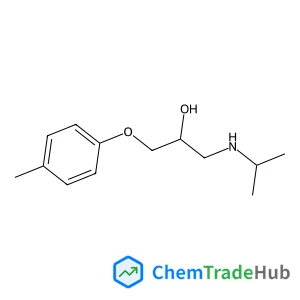
34915-68-9Bunitrolol
化合物问答
如何处理含有BIO-1211(CAS号:187735-94-0)的废料?
对于含有BIO-1211(CAS号:187735-94-0)的废料,首先应进行分类收集,确保符合环保要求。然后,可以考虑通过焚烧或其他专业处理方法进行处置。在处...
187735-94-0BIO-1211
化合物问答
如何处理含有4-氯-2-氟-3-甲基苯酚(CAS号:1351668-24-0)的废料?
含有该化合物的废液应收集至专用容器中,避免与其他化学品混合。可采用焚烧或送交专业废弃物处理公司处理。处理过程中需遵守当地环保法规,确保不产生二次污染。处理前应进...
1351668-24-04-Chloro-2-fluoro-3-...
来源期刊
Physical Chemistry Chemical Physics

CiteScore:
5.5
自引率:
10.3%
年发文量:
3036
Physical Chemistry Chemical Physics (PCCP) is an international journal co-owned by 19 physical chemistry and physics societies from around the world. This journal publishes original, cutting-edge research in physical chemistry, chemical physics and biophysical chemistry. To be suitable for publication in PCCP, articles must include significant innovation and/or insight into physical chemistry; this is the most important criterion that reviewers and Editors will judge against when evaluating submissions. The journal has a broad scope and welcomes contributions spanning experiment, theory, computation and data science. Topical coverage includes spectroscopy, dynamics, kinetics, statistical mechanics, thermodynamics, electrochemistry, catalysis, surface science, quantum mechanics, quantum computing and machine learning. Interdisciplinary research areas such as polymers and soft matter, materials, nanoscience, energy, surfaces/interfaces, and biophysical chemistry are welcomed if they demonstrate significant innovation and/or insight into physical chemistry. Joined experimental/theoretical studies are particularly appreciated when complementary and based on up-to-date approaches.
推荐化合物
推荐供应商



免责声明
本页面提供的学术期刊信息仅供参考和研究使用。我们与任何期刊出版商均无关联,也不处理投稿事宜。如有投稿相关咨询,请直接联系相关期刊出版商。
如发现页面信息有误,请发送邮件至 support@chemtradehub.com 联系我们。我们将及时核实并处理您的问题。