


![1-[3-(4-Morpholinylsulfonyl)phenyl]methanamine structure](https://cnstatic.chemtradehub.com/structs/933/933989-32-3-51af.webp "1-[3-(4-Morpholinylsulfonyl)phenyl]methanamine structure")
Effective modulation of intramolecular ferromagnetic interaction of diradicals by functionalization of cross-conjugated coupler
文献信息
发布日期
2018-07-20
DOI
10.1039/C8CP03689F
影响因子
3.676
作者
Francis Kirby B. Burnea, Kyoung Chul Ko
查看原文
摘要
Cross-conjugated molecules are an interesting class of conjugated systems possessing a spatially separated HOMO and LUMO. Most previous studies have taken advantage of this property by using it in organic semiconductor applications. Herein, we undertake a new investigation on the use of this type of molecule, in particular benzo[1,2-d;4,5-d′]bisoxazole (BBO), as a coupler for organic diradicals. BBO has two sites available for adding a substituent and a spin center (SC) which are along its 4,8- and 2,6-axes. Functionalizations using electron donating (ED) and electron withdrawing (EW) groups were imposed to tune its FMOs and it was found that the longer 2,6-axis is an ideal site with a broader LUMO range via substituent effects. Diradicalization of these BBOs using nitronyl nitroxide (NN) and nitroxide (NO) as SCs was done using the remaining available axis. The calculated J values are linearly dependent on the LUMO energy of the coupler, but with 4,8-NH2-2,6-SC as an outlier. This exceptional case is related to 4,8-NH2-2,6-SC having the lowest BBO-NN dihedral angle. Moreover, the diradicals 4,8-X-2,6-SC (with X = H, NH2, CH3) have higher J values than 2,6-X-4,8-SC (with X = H, NH2, CH3), which is counterintuitive because the latter have a shorter coupling path. These diradicals are positioned to the right of the intersection of their trend lines, which implies that diradicals with LUMO values to the right of this intersection have the tendency to attain J values that are higher than those diradicals with a shorter coupling path. 4,8-NH2-2,6-SC even surpasses the projected JMax values which we associate with the highest attainable J values due to LUMO tuning via substituent effects. These results provide useful insights, especially into the interplay between the LUMO and the dihedral angle and how these affect magnetism in diradicals. In conclusion, we found that BBO can be a good candidate as an effective coupler for diradicals with tunable J values via incorporation of ED and EW groups. This first approach to studying the application of cross-conjugated molecules as couplers also paves the way for new candidates for the development of more effective diradical systems.
期刊推荐
Foundations of Chemistry
Journal of Medical Biochemistry
Environmental Toxicology and Pharmacology

Green Chemistry
Mini-Reviews in Medicinal Chemistry
Journal of Enzyme inhibition and Medicinal Chemistry

Coloration Technology
Nature Reviews Drug Discovery
European Journal of Organic Chemistry
Photochemical & Photobiological Sciences
相关文献
Enhancing supercapacitive performance: integration of bio-mass-derived carbon into a CaMn3O6 nanocomposite
Palanisamy Rajkumar, Vediyappan Thirumal, Maalavika S. Iyer, Karuppanan Aravinth, Mozaffar Abdollahifar, Kisoo Yoo, Jinho Kim
2023-11-15
Paper
DOI: 10.1039/D3NJ04629J
Smart bionic applications based on a multiple stimulus response GO-PDANP/PDMS bilayer flexible actuator
Song He, Chunxiang He, Xinyu Liu, Chunhua Du, Xin Jin, Qilin Chen, Ping Li
2023-11-14
Paper
DOI: 10.1039/D3NJ04471H
Fine-tuning of the charge-separated state energy in compact orthogonal naphthalene–phenoxazine dyads and its effect on the thermally-activated delayed fluorescence
Jieyu Tang, Xi Liu, Xue Zhang, Jianzhang Zhao, Yan Wan
2023-11-13
Paper
DOI: 10.1039/D3NJ04201D
Polymorphism, mesomorphism and anti-oxidant character of homoleptic bis[(E)-2-(1-((o-ethylphenyl)imino)ethyl)phenolato-κ2-N,O]Ni/Cu(ii) complexes
Mohammed Enamullah, Afsana Mim, Imdadul Haque, Baldeep K. Sidhu, Amelia Kacperkiewicz, David E. Herbert
2023-11-10
Paper
DOI: 10.1039/D3NJ04915A
Luminescent covalent organic cages with a C3-symmetric structure for effective enantioseparation
Tianyu Li, Yuan Pan, Haixin Song, Hui Jiang, Yujing Guo, Linlin Shi, Xinqi Hao, Mao-Ping Song
2023-11-14
Paper
DOI: 10.1039/D3NJ04719A
Synthesis and anti-infective potency study of a Ru-based complex bearing benzonitrile against Staphylococcus aureus
Ziying Huang, Guijuan Jiang, Yun Song, Jingjing Chen, Wenjing Lin, Guangying Yu, Xuemin Duan, Yanshi Xiong, Jintao Wang, Xiangwen Liao, Lianghong Liu
2023-11-15
Paper
DOI: 10.1039/D3NJ04704K
Enhancing high-temperature storage performance for the commercial lithium-ion battery via an effective additive strategy
Weigang Liu, Shuai Gao, Jingqiang Zheng, Jiahao Gu, Zhiyong Chen, Hao Jiang
2023-11-03
Paper
DOI: 10.1039/D3NJ03574C
Atropisomers and a copper(ii) complex derived from 1,3-dimethyl-5-(8′-quinolinylazo)-6-aminouracil: structures, magnetism and biological properties
Nishithendu Bikash Nandi, Nishan Das, Susanta Ghanta, Krishti Rekha Puzari, Pranab Dutta, Julia Kłak, Lesław Sieroń, Waldemar Maniukiewicz, Tarun Kumar Misra
2023-11-06
Paper
DOI: 10.1039/D3NJ04598F
您可能还喜欢
化合物问答
6-氯-2H-1,4-苯并噁嗪-3(4H)-酮(CAS号:7652-29-1)应用于哪些行业?
6-氯-2H-1,4-苯并噁嗪-3(4H)-酮主要应用于医药、农药和聚合物等领域。在医药领域,该化合物可用于合成抗菌药物;在农药领域,可用作杀虫剂的中间体;在聚...
7652-29-16-Chloro-2H-1,4-benz...
化合物问答
活性氧化铝(CAS号:1302-74-5)应用于哪些行业?
活性氧化铝广泛应用于医药、聚合物、传感器、半导体和催化等领域。在医药行业,活性氧化铝用作吸附剂和干燥剂,有助于去除杂质和水分。在聚合物行业,它用作增白剂和抗结块...
1302-74-5aluminum;trihydrate
化合物问答
什么是硅胶(CAS号:112926-00-8)?
硅胶(Silica gel, pptd.,cryst.-free)是一种无定形、多孔的硅酸盐材料,主要成分为二氧化硅(SiO₂)。其结构由硅氧四面体构成,通过酸...
112926-00-8Silica gel, pptd.,cr...
化合物问答
二乙基甲基一氢硅烷(CAS号:760-32-7)的主要用途是什么?
二乙基甲基一氢硅烷主要用于有机合成、表面处理以及作为溶剂。它还被用作合成其他硅烷化合物的原料,以及在涂料、粘合剂和密封剂中的应用。
760-32-7Diethyl(methyl)silan...
化合物问答
在合成中是否有N-花生四烯酰基甘氨酸(CAS号:179113-91-8)的替代品?
在合成过程中,可以考虑使用类似结构的化合物作为替代品,例如N-亚油酰基甘氨酸或N-花生二烯酰基甘氨酸。这些替代品在结构上有类似的双键位置,但可能具有不同的物理化...
179113-91-8Glycine, N-[(5Z,8Z,1...
化合物问答
在合成中是否有1-(4-甲氧基苯基)丙烷-1,2-二酮(CAS号:10557-27-4)的替代品?
在合成过程中,可以考虑使用类似结构的化合物作为替代品,例如1-(3-甲氧基苯基)丙烷-1,2-二酮或1-(4-羟基苯基)丙烷-1,2-二酮。这些替代品具有相似的...
10557-27-41-(4-Methoxyphenyl)p...
化合物问答
N-(4-氨基-1-苄基-3-羟基-5-苯基戊基)-3-甲基-2-(2-氧代四氢嘧啶-1-基)-丁酰胺 5-氧代吡咯烷-2-甲酸(CAS号:192726-06-0)通常如何合成?
该化合物通常通过一系列复杂的有机合成步骤获得。首先,通过芳香族化合物的羟基化反应获得羟基化产物,然后通过酰化反应形成酰胺中间体,最后通过环化反应得到目标产物。常...
192726-06-05-Oxo-L-proline - (2...
化合物问答
(S)-2-氨基-3-喹啉-2-丙酸(CAS号:161513-46-8)的市场或研究趋势如何?
该化合物作为生物活性化合物,尤其是在药物化学领域表现出色。近年来,随着对新型抗炎、抗病毒和抗癌药物的研究增加,其市场和研究趋势持续增长。此外,其在神经科学领域的...
161513-46-8(S)-2-Amino-3-quinol...
化合物问答
核黄素磷酸钠(CAS号:130-40-5)安全吗?
核黄素磷酸钠在常规使用条件下安全,但高剂量可能引起刺激性反应。操作时需佩戴防护手套和护目镜,避免吸入粉尘。若接触皮肤或眼睛,应立即用大量清水冲洗。急救时需根据接...
130-40-5Sodium 1-deoxy-1-(7,...
化合物问答
盐酸丙胺卡因杂质A(EP) 标准品(CAS号:19281-31-3)通常如何合成?
盐酸丙胺卡因杂质A(EP) 标准品可通过重氮化反应和随后的酰胺化反应合成。首先,利用氯化反应将苯环上的氢原子转化为氯原子,然后通过芳香族重氮化反应引入氨基,最后...
19281-31-32-Chloro-N-(2-methyl...
来源期刊
Physical Chemistry Chemical Physics

CiteScore:
5.5
自引率:
10.3%
年发文量:
3036
Physical Chemistry Chemical Physics (PCCP) is an international journal co-owned by 19 physical chemistry and physics societies from around the world. This journal publishes original, cutting-edge research in physical chemistry, chemical physics and biophysical chemistry. To be suitable for publication in PCCP, articles must include significant innovation and/or insight into physical chemistry; this is the most important criterion that reviewers and Editors will judge against when evaluating submissions. The journal has a broad scope and welcomes contributions spanning experiment, theory, computation and data science. Topical coverage includes spectroscopy, dynamics, kinetics, statistical mechanics, thermodynamics, electrochemistry, catalysis, surface science, quantum mechanics, quantum computing and machine learning. Interdisciplinary research areas such as polymers and soft matter, materials, nanoscience, energy, surfaces/interfaces, and biophysical chemistry are welcomed if they demonstrate significant innovation and/or insight into physical chemistry. Joined experimental/theoretical studies are particularly appreciated when complementary and based on up-to-date approaches.
推荐化合物
![4-Chloro-3-(trifluoromethyl)-1H-pyrrolo[2,3-b]pyridine structure](https://cnstatic.chemtradehub.com/structs/869/869335-75-1-a9d0.webp "4-Chloro-3-(trifluoromethyl)-1H-pyrrolo[2,3-b]pyridine structure")
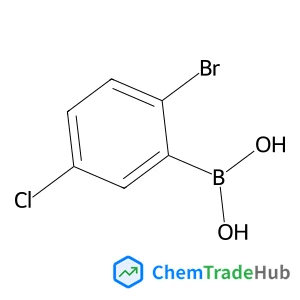
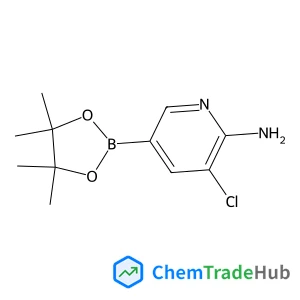
3-Chloro-5-(4,4,5,5-tetramethyl-1,3,2-dioxaborolan-2-yl)-2-pyridinamine
CAS号:
1032758-99-8
分子式:
C11H16BClN2O2
推荐供应商





免责声明
本页面提供的学术期刊信息仅供参考和研究使用。我们与任何期刊出版商均无关联,也不处理投稿事宜。如有投稿相关咨询,请直接联系相关期刊出版商。
如发现页面信息有误,请发送邮件至 support@chemtradehub.com 联系我们。我们将及时核实并处理您的问题。