



Femtosecond infrared spectroscopy of chlorophyll f-containing photosystem I
文献信息
发布日期
2018-12-10
DOI
10.1039/C8CP05627G
影响因子
3.676
作者
Noura Zamzam, Marius Kaucikas, Dennis J. Nürnberg, A. William Rutherford, Jasper J. van Thor
查看原文
摘要
The recent discovery of extremely red-shifted chlorophyll f pigments in both photosystem I (PSI) and photosystem II has led to the conclusion that chlorophyll f plays a role not only in the energy transfer, but also in the charge separation processes [Nürnberg et al., Science, 2018, 360, 1210–1213]. We have employed ultrafast transient infrared absorption spectroscopy to study the contribution of far-red light absorbing chlorophyll f to energy transfer and charge separation processes in far-red light-grown PSI (FRL-PSI) from the cyanobacterium Chroococcidiopsis thermalis PCC 7203. We compare the kinetics and spectra of FRL-grown PSI excited at 670 nm and 740 nm wavelengths to those of white light-grown PSI (WL-PSI) obtained at 675 nm excitation. We report a fast decay of excited state features of chlorophyll a and complete energy transfer from chlorophyll a to chlorophyll f in FRL-PSI upon 670 nm excitation, as indicated by a frequency shift in a carbonyl absorption band occurring within a 1 ps timescale. While the WL-PSI measurements support the assignment of initial charge separation to A−1+˙A0−˙ [Di Donato et al., Biochemistry, 2011, 50, 480–490] from the kinetics of a distinct cation feature at 1710 cm−1, in the case of FRL-PSI, small features at 1715 cm−1 from the chlorophyll cation are present from sub-ps delays instead, supporting the replacement of the A−1 pigment with chlorophyll f. Comparisons of nanosecond spectra show that charge separation proceeds with 740 nm excitation, which selectively excites chlorophyll f, and modifications in specific carbonyl absorption bands assigned to P700+˙ minus P700 and A1−˙ minus A1 indicate dielectric differences of FRL-PSI compared to WL-PSI in one or both of the two electron transfer branches of FRL-PSI.
相关文献
2,2′-Disubstituted F12binaphthyl derivatives: stannanes, boranes, and (R)-F12BINOL
Darryl J. Morrison, Susanne D. Riegel, Warren E. Piers, Masood Parvez, Robert McDonald
2006-06-19
Communication
DOI: 10.1039/B605716K
A phase separable polycarbonate polymerization catalyst
Chayanant Hongfa, Jianhua Tian, Jeremy Andreatta, Donald J. Darensbourg, David E. Bergbreiter
2007-12-17
Communication
DOI: 10.1039/B711861A
Stereoselective coordination of ditopic phospholyl-azahelicenes: a novel approach towards structural diversity in chiral π-conjugated assemblies
Wenting Shen, Sébastien Graule, Jeanne Crassous, Christophe Lescop, Heinz Gornitzka, Régis Réau
2007-12-18
Communication
DOI: 10.1039/B714340K
Biomimetic synthesis of marine sponge metabolite spiculoic acid A and establishment of the absolute configuration of the natural product
James E. D. Kirkham, Victor Lee, Jack E. Baldwin
2006-06-12
Communication
DOI: 10.1039/B607035C
Hydrogen adsorption in microporous hypercrosslinked polymers
Jun-Young Lee, Colin D. Wood, Darren Bradshaw, Matthew J. Rosseinsky, Andrew I. Cooper
2006-05-19
Communication
DOI: 10.1039/B604625H
“Click”-functionalization of conducting poly(3,4-ethylenedioxythiophene) (PEDOT)
Hang-Beom Bu, Günther Götz, Egon Reinold, Astrid Vogt, Sylvia Schmid, Raúl Blanco, Jose L. Segura, Peter Bäuerle
2008-01-16
Communication
DOI: 10.1039/B718077B
Hybrid ceramic nanosieves: stabilizing nanopores with organic links
Ashima Sah, Robert Kreiter, Dave H. A. Blank, Jaap F. Vente, Johan E. ten Elshof
2008-02-01
Communication
DOI: 10.1039/B718082A
Towards technomimetic spoked wheels: dynamic hexakis-heteroleptic coordination at a hexakis-terpyridine scaffold
Michael Schmittel, Prasenjit Mal
2008-01-09
Communication
DOI: 10.1039/B718185J
2-D Self-assembly of the bis(phthalocyaninato)terbium(iii) single-molecule magnet studied by scanning tunnelling microscopy
Jordi Gómez-Segura, Ismael Díez-Pérez, Naoto Ishikawa, Motohiro Nakano, Jaume Veciana, Daniel Ruiz-Molina
2006-06-15
Communication
DOI: 10.1039/B606276H
您可能还喜欢
化合物问答
4,5-二甲基-2-硝基苯甲酸(CAS号:4315-14-4)的市场或研究趋势如何?
4,5-二甲基-2-硝基苯甲酸主要应用于制药、染料和农药等行业。由于其潜在的毒性,其市场趋势可能受到法规限制和环保考量的影响,推动了替代产品的研发。在研究领域,...
4315-14-44,5-Dimethyl-2-nitro...
化合物问答
处理直接黑22(CAS号:6473-13-8)时应注意哪些实验室安全事项?
处理直接黑22时应穿戴适当的个人防护装备(PPE),包括实验服、手套、护目镜和口罩。操作应在通风橱内进行,以避免吸入有害气体。如果发生泄漏,应立即清理,并使用大...
6473-13-82-Naphthalenesulfoni...
化合物问答
处理2,1,3-苯并噻二唑-4-基异氰酸酯(CAS号:342411-14-7)时应注意哪些实验室安全事项?
处理2,1,3-苯并噻二唑-4-基异氰酸酯时应注意以下安全事项:穿戴个人防护装备,如实验室外套、防护眼镜和手套;在通风橱中操作,确保良好的通风;保持实验室环境干...
342411-14-74-Isocyanato-2,1,3-b...
化合物问答
如何处理含有Δ-8,9-脱氢雌酮(CAS号:204077-66-7)的废料?
含有Δ-8,9-脱氢雌酮的废料需要进行适当的处理以确保环境和人体安全。首先,收集废液并存放于密封容器中,避免泄漏。其次,可以考虑将其转化为无害物质或通过专业处理...
204077-66-7Thioquinapiperifil d...
化合物问答
如何储存5-溴戊酸(CAS号:2067-33-6)?
5-溴戊酸应储存在阴凉、干燥、通风良好的环境中,避免阳光直射。建议在室温(约15-25°C)下保存,保持相对湿度低于60%。应使用密封的玻璃或塑料容器,并远离热...
2067-33-65-Bromopentanoic aci...
化合物问答
4-(甲基亚磺酰基)苯胺(CAS号:22865-62-9)应用于哪些行业?
4-(甲基亚磺酰基)苯胺在医药、聚合物和传感器等领域有一定的应用。在医药方面,它可以用作合成药物的中间体;在聚合物领域,可以作为合成特殊性能高分子材料的单体;在...
22865-62-94-Methylsulfinylanil...
化合物问答
什么是1-(2-FLUOROPHENYL)-5-METHYL-1H-PYRAZOLE-4-CARBOHYDRAZIDE(CAS号:618092-58-3)?
1-(2-氟苯基)-5-甲基-1H-吡唑-4-亚甲基肼是一种有机化合物,其分子式为C9H9FN3O。该化合物具有特定的物理化学性质,如熔点、沸点等,但具体值需查...
618092-58-31-(2-Fluorophenyl)-5...
化合物问答
Dauricumine(CAS号:345641-00-1)通常如何合成?
Dauricumine通常通过复杂的合成路线制备,涉及多个步骤,包括环化、氧化、卤化等反应。合成过程中使用了多种催化剂和试剂,例如金属催化剂、氧化剂等。产率通常...
345641-00-1(1R,1'S,5R,6'S,8'S)-...
化合物问答
5-氰基苯酞(CAS号:82104-74-3)安全吗?
5-氰基苯酞在正常使用条件下相对安全,但其具有一定的毒性,需谨慎操作。在实验或工业应用中,应采取适当的防护措施,如佩戴防护手套、护目镜和实验服,确保通风良好。误...
82104-74-31-Oxo-1,3-dihydro-2-...
化合物问答
2-Methyl-1-(phenylsulfonyl)-1H-pyrrolo[2,3-b]pyridin-5-amine(CAS号:1186502-59-9)安全吗?
该化合物在使用时需要谨慎操作。虽然其毒性和健康风险尚未完全明确,但建议在通风良好的环境中操作,并穿戴适当的个人防护装备,如手套和防护眼镜。
1186502-59-92-Methyl-1-(phenylsu...
来源期刊
Physical Chemistry Chemical Physics

CiteScore:
5.5
自引率:
10.3%
年发文量:
3036
Physical Chemistry Chemical Physics (PCCP) is an international journal co-owned by 19 physical chemistry and physics societies from around the world. This journal publishes original, cutting-edge research in physical chemistry, chemical physics and biophysical chemistry. To be suitable for publication in PCCP, articles must include significant innovation and/or insight into physical chemistry; this is the most important criterion that reviewers and Editors will judge against when evaluating submissions. The journal has a broad scope and welcomes contributions spanning experiment, theory, computation and data science. Topical coverage includes spectroscopy, dynamics, kinetics, statistical mechanics, thermodynamics, electrochemistry, catalysis, surface science, quantum mechanics, quantum computing and machine learning. Interdisciplinary research areas such as polymers and soft matter, materials, nanoscience, energy, surfaces/interfaces, and biophysical chemistry are welcomed if they demonstrate significant innovation and/or insight into physical chemistry. Joined experimental/theoretical studies are particularly appreciated when complementary and based on up-to-date approaches.
推荐化合物
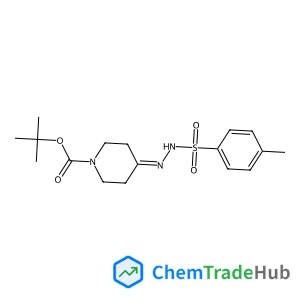
tert-Butyl 4-(2-(p-Tolylsulfonyl)hydrazono)piperidine-1-carboxylate
CAS号:
1046478-89-0
分子式:
C17H25N3O4S
推荐供应商





免责声明
本页面提供的学术期刊信息仅供参考和研究使用。我们与任何期刊出版商均无关联,也不处理投稿事宜。如有投稿相关咨询,请直接联系相关期刊出版商。
如发现页面信息有误,请发送邮件至 support@chemtradehub.com 联系我们。我们将及时核实并处理您的问题。