


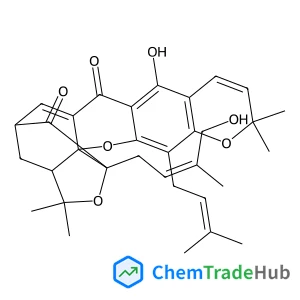
Silver-catalyzed regioselective hydroamination of alkenyl diazoacetates to synthesize γ-amino acid equivalents
文献信息
发布日期
2018-06-06
DOI
10.1039/C8OB00894A
影响因子
3.876
作者
Jun Ueda, Shingo Harada, Hiroki Nakayama
查看原文
摘要
A simple protocol to directly access γ-amino acid derivatives by intermolecular regioselective hydroamination of trichloroethyl alkenyldiazoacetates with carbamate using a silver tetrafluoroborate catalyst is described. Density functional theory (DFT) calculations to analyze the reaction mechanism revealed that multiple attractive interactions occur in a transition state to promote the vinylogous addition of nitrogen nucleophiles.
期刊推荐
Russian Journal of Applied Chemistry
Russian Journal of General Chemistry
Organic Process Research & Development
New Journal of Chemistry
Acta Materialia
Chemistry Education Research and Practice
Crystallography Reports
Journal of Natural Medicines
Journal of Saudi Chemical Society
Journal of Peptide Science
相关文献
How many bound valence states does the C60− anion have?
Shachar Klaiman, Lorenz S. Cederbaum
2016-03-24
Communication
DOI: 10.1039/C6CP00667A
Monte-Carlo modelling of nano-material photocatalysis: bridging photocatalytic activity and microscopic charge kinetics
2016-04-11
Paper
DOI: 10.1039/C6CP01065B
Novel scroll peapod produced by spontaneous scrolling of graphene onto fullerene string
Shuqiong Xu, Hongjin Fu, Chengmao Zhang, Zonglei Gu, Danhui Zhang
2016-03-14
Paper
DOI: 10.1039/C6CP00385K
Glass polymorphism in glycerol–water mixtures: I. A computer simulation study
David A. Jahn, Jessina Wong, Johannes Bachler, Thomas Loerting
2016-03-17
Paper
DOI: 10.1039/C6CP00075D
Quantum chemical MP2 results on some hydrates of cytosine: binding sites, energies and the first hydration shell
Géza Fogarasi, Péter G. Szalay
2015-10-12
Paper
DOI: 10.1039/C5CP04563K
Nonlinear optical chromophores based on Dewar's rules: enhancement of electro-optic activity by introducing heteroatoms into the donor or bridge
Shuhui Bo, Xinhou Liu
2015-10-07
Paper
DOI: 10.1039/C5CP04959H
Generalized Muller–Kern formula for equilibrium thickness of a wetting layer with respect to the dependence of the surface energy of island facets on the thickness of the 2D layer
Kirill A. Lozovoy, Andrey P. Kokhanenko, Alexander V. Voitsekhovskii
2015-10-26
Paper
DOI: 10.1039/C5CP05192D
Fine-tuning of microsolvation and hydrogen bond interaction regulates substrate channelling in the course of flavonoid biosynthesis
Julien Diharce, Jérôme Golebiowski, Sébastien Fiorucci, Serge Antonczak
2016-03-14
Paper
DOI: 10.1039/C5CP05059F
Zeta potential-assisted sorption of uranyl tricarbonate complex from aqueous solution by polyamidoxime-functionalized colloidal particles
Lixia Zhang, Li Huang, Zehua Zeng, Jun Qian
2016-04-25
Paper
DOI: 10.1039/C6CP01234E
Reproducible, stable and fast electrochemical activity from easy to make graphene on copper electrodes
Zachary P. L. Laker, Jonathan P. Rourke, Neil R. Wilson
2015-09-17
Paper
DOI: 10.1039/C5CP04070A
您可能还喜欢
化合物问答
(5-氨基吡唑-3-基)乙酸(CAS号:174891-10-2)的物理化学性质是什么?
(5-氨基吡唑-3-基)乙酸是一种无色至白色固体,分子量为174.15 g/mol。它在水中具有较好的溶解性,在有机溶剂中的溶解度较低。该化合物具有较好的反应活...
174891-10-2(3-Amino-1H-pyrazol-...
化合物问答
3-氟-4,5-二氯苯胺(CAS号:35754-38-2)适用哪些法规指南?
3-氟-4,5-二氯苯胺受到多项法规指南的约束,包括但不限于GHS(全球化学品统一分类和标签制度)的危险分类标准、欧盟的REACH法规(注册、评估、授权和限制)...
35754-38-23,4-Dichloro-5-fluor...
化合物问答
什么是(R)-(+)-2,2',6,6'-四甲氧基-4,4'-联(二(3,5-二甲苯基基)膦基)-3,3'-二联吡啶(CAS号:442905-33-1)?
这是一种有机化合物,化学名为(R)-(+)-2,2',6,6'-四甲氧基-4,4'-联(二(3,5-二甲苯基基)膦基)-3,3'-二联吡啶,CAS号为44290...
442905-33-14,4'-Bis[bis(3,5-dim...
化合物问答
1-氨基-2-氰基萘(CAS号:3100-67-2)应用于哪些行业?
1-氨基-2-氰基萘在医药、聚合物、传感器和半导体等行业中有应用。在医药领域,它可用作中间体合成某些药物。在聚合物行业,它可以用于制备具有特定性能的聚合物。此外...
3100-67-21-Amino-2-naphthonit...
化合物问答
如何处理含有1-溴-4-(异丙氧基甲基)苯(CAS号:98446-84-5)的废料?
处理含1-溴-4-(异丙氧基甲基)苯的废料时,首先应确保废液收集在防渗漏的容器中,避免泄露。然后,可以考虑采用化学降解法或物理吸附法进行处理。在特定条件下,可通...
98446-84-51-Bromo-4-(isopropox...
化合物问答
6-Chloro-8-(trifluoromethyl)chroman-4-one(CAS号:1344889-75-3)的主要用途是什么?
6-氯-8-三氟甲基-2,3-二氢-4H-色喃-4-酮主要用于有机合成中的中间体,也可作为研究试剂使用。
1344889-75-36-Chloro-8-(trifluor...
化合物问答
7-乙氧基-2-萘酚(CAS号:57944-44-2)通常如何合成?
7-乙氧基-2-萘酚通常通过N-乙氧基化反应合成,首先将2-萘酚与乙醇钠在乙醇中反应生成7-乙氧基-2-萘酚钠盐,再通过酸化进一步得到7-乙氧基-2-萘酚。该合...
57944-44-27-Ethoxy-2-naphthol
化合物问答
4-(1,1-二氧硫代吗啉)丁醇(CAS号:59801-41-1)适用哪些法规指南?
该化合物需遵循一系列的法规指南,包括但不限于GHS全球统一分类和标签制度,其分类可能包括易燃液体和可能危害水生环境。在欧洲,还需遵循REACH法规,确保物质和混...
59801-41-14-(4-Hydroxybutyl)th...
化合物问答
4-甲氧基苄基叠氮甲酸酯(CAS号:25474-85-5)的物理化学性质是什么?
4-甲氧基苄基叠氮甲酸酯是一种无色液体,具有一定的挥发性。其分子量为198.16,熔点为-69°C,沸点为105°C。该化合物在水中溶解度较低,在有机溶剂如乙醇...
25474-85-54-Methoxybenzyl carb...
化合物问答
如何处理含有4-氯-2-氟嘧啶(CAS号:51422-00-5)的废料?
含有4-氯-2-氟嘧啶的废料应按照危险废物处理。首先,应收集并分类这些废料,避免与其他废物混合。然后,可以采用焚烧处理或者交由专业机构进行处置。在处理过程中,需...
51422-00-54-Chloro-2-fluoropyr...
来源期刊
Organic & Biomolecular Chemistry

CiteScore:
3.4
自引率:
10.3%
年发文量:
1041
Organic & Biomolecular Chemistry (OBC) publishes original and high impact research and reviews in organic chemistry. We welcome research that shows new or significantly improved protocols or methodologies in total synthesis, synthetic methodology or physical and theoretical organic chemistry as well as research that shows a significant advance in the organic chemistry or molecular design aspects of chemical biology, catalysis, supramolecular and macromolecular chemistry, theoretical chemistry, mechanism-oriented physical organic chemistry, medicinal chemistry or natural products. Articles published in the journal should report new work which makes a highly-significant impact in the field. Routine and incremental work is generally not suitable for publication in the journal. More details about key areas of our scope are below. In all cases authors should include in their article clear rationale for why their research has been carried out.
推荐化合物
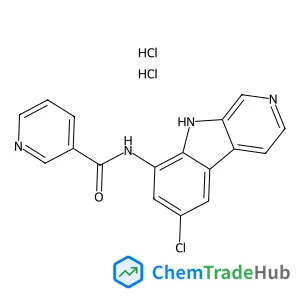
推荐供应商



免责声明
本页面提供的学术期刊信息仅供参考和研究使用。我们与任何期刊出版商均无关联,也不处理投稿事宜。如有投稿相关咨询,请直接联系相关期刊出版商。
如发现页面信息有误,请发送邮件至 support@chemtradehub.com 联系我们。我们将及时核实并处理您的问题。