


Asymmetric iodine catalysis-mediated enantioselective oxidative transformations
文献信息
发布日期
2018-07-13
DOI
10.1039/C8OB01378K
影响因子
3.876
作者
Aurélie Claraz, Géraldine Masson
查看原文
摘要
The implementation of chiral iodine catalysis has tremendously been developed in the field of asymmetric synthesis over the past decade. It enables the stereoselective creation of C–O as well as C–C, C–N and C–X (X = halogen) bonds through oxidative transformations. Thanks to the low toxicity and ease of handling of iodine compounds, this strategy offers many advantages over classical metal-catalyzed oxidations with chiral ligands. The approaches rely on iodine(I/III) or (−I/+I) catalysis by using a chiral aryliodine or ammonium iodide respectively in combination with a suitable terminal oxidant. As such, the design of iodine compounds with central, axial or even planar chirality has allowed us to achieve high enantioselectivities. The goal of this review is to cover the different chiral iodine compound-catalyzed oxidative transformations including α-functionalization of carbonyl compounds, dearomatization of phenol derivatives and difunctionalization of alkenes which should demonstrate that iodine catalysis has now found its place in the realm of asymmetric organocatalysis.
相关文献
The bioinorganic chemistry and associated immunology of chronic beryllium disease
Brian L. Scott, T. Mark McCleskey, Anu Chaudhary, Elizabeth Hong-Geller, S. Gnanakaran
2008-05-09
Feature Article
DOI: 10.1039/B718746G
Physicochemical properties of highly conductive urea–EtMeImCl melts
Tetsuya Tsuda, Takashi Tomioka, Charles L. Hussey
2008-04-11
Communication
DOI: 10.1039/B802386G
Solvents for ring-closing metathesis reactions
Claire S. Adjiman, Adam J. Clarke, Gregory Cooper, Paul C. Taylor
2008-04-28
Communication
DOI: 10.1039/B802921K
p1,n1 Salts: self-assembled supramolecular structures sequestering racemates. Diastereomeric separation and enantiomeric enrichment of trans-chrysanthemic acid
Goffredo Rosini, Claudia Ayoub, Valerio Borzatta, Andrea Mazzanti, Emanuela Marotta, Paolo Righi
2006-08-21
Communication
DOI: 10.1039/B608405B
Polysilane-supported Pd and Pt nanoparticles as efficient catalysts for organic synthesis
Hidekazu Oyamada, Ryo Akiyama, Hiroyuki Hagio, Takeshi Naito, Shū Kobayashi
2006-09-05
Communication
DOI: 10.1039/B610241G
Gold-catalysed intramolecular trans-allylsilylation of alkynes forming 3-allyl-1-silaindenes
Takanori Matsuda, Sho Kadowaki, Yoshiyuki Yamaguchi, Masahiro Murakami
2008-05-20
Communication
DOI: 10.1039/B804721A
Gold(i)-catalyzed intramolecular hydroamination of unactivated CC bonds with alkylammonium salts
Christopher F. Bender, Ross A. Widenhoefer
2008-05-19
Communication
DOI: 10.1039/B804081H
您可能还喜欢
化合物问答
如何储存1,2-环己二酮环乙缩醛(CAS号:4746-96-7)?
1,2-环己二酮环乙缩醛应储存在阴凉、干燥、通风良好的地方,避免阳光直射。建议使用密封容器保存,并保持环境温度在室温范围内,远离火源和热源。
4746-96-71,4-Dioxaspiro[4.5]d...
化合物问答
Ecopladib(CAS号:381683-92-7)的市场或研究趋势如何?
Ecopladib作为一种新型的药物,主要应用于治疗高胆固醇等疾病。目前,市场和研究趋势显示,Ecopladib因其独特的药理作用而受到关注。随着对心血管疾病治...
381683-92-7Ecopladib
化合物问答
2,3-Dimethyl-3H-imidazo[4,5-c]pyridine(CAS号:52538-09-7)通常如何合成?
2,3-二甲基-3H-咪唑[4,5-c]吡啶通常通过咪唑和2,3-二甲基吡啶的缩合反应合成。具体来说,将咪唑和2,3-二甲基吡啶在适当的溶剂中进行加热或加压反应...
52538-09-72,3-Dimethyl-3H-imid...
化合物问答
2,3,4,5-tetrahydro-1H-3-苯并氮杂环;盐酸盐(CAS号:17379-01-0)的市场或研究趋势如何?
该化合物在药物化学和有机合成中有一定的应用。近年来,随着对新型药物化合物的需求增加,该化合物的研究趋势主要集中在探索其生物活性,尤其是其在神经系统疾病治疗中的潜...
17379-01-02,3,4,5-Tetrahydro-1...
68-90-6(2-Ethyl-1-benzofura...
化合物问答
如何储存盐酸甘氨酸丁酯(CAS号:13048-99-2)?
盐酸甘氨酸丁酯应储存在阴凉、干燥、通风良好的地方,避免阳光直射和高温环境,温度应控制在25℃以下。储存容器应密封,避免与空气中的水分和酸性物质接触,以防发生水解...
13048-99-2Butyl glycinate hydr...
化合物问答
什么是2-Iodo-N,N-dimethylbenzamide(CAS号:54616-46-5)?
2-碘-N,N-二甲基苯胺是一种有机化合物,化学名为2-Iodo-N,N-dimethylbenzamide。其分子式为C<sub>9</sub>H<sub>1...
54616-46-52-Iodo-N,N-dimethylb...
16817-90-6N-Cyclohexylglycinam...
化合物问答
5-溴-2-(4H-1,2,4-三唑-4-基)吡啶(CAS号:959240-99-4)的市场或研究趋势如何?
随着医药、农药和新材料领域的发展,该化合物作为关键中间体的应用日益增多。特别是在药物合成中,由于其独特的化学性质,可以用于合成多种药物分子。未来的研究趋势可能集...
959240-99-45-Bromo-2-(4H-1,2,4-...
化合物问答
2,4-二溴-6-三氟甲基嘧啶(CAS号:785778-00-9)通常如何合成?
2,4-二溴-6-三氟甲基嘧啶通常通过溴化反应合成。首先,将6-三氟甲基嘧啶与溴化剂(如液溴)在适当的溶剂(如二氯甲烷、四氢呋喃)中反应,加入适当的催化剂(如四...
785778-00-92,4-Dibromo-6-(trifl...
来源期刊
Organic & Biomolecular Chemistry

CiteScore:
3.4
自引率:
10.3%
年发文量:
1041
Organic & Biomolecular Chemistry (OBC) publishes original and high impact research and reviews in organic chemistry. We welcome research that shows new or significantly improved protocols or methodologies in total synthesis, synthetic methodology or physical and theoretical organic chemistry as well as research that shows a significant advance in the organic chemistry or molecular design aspects of chemical biology, catalysis, supramolecular and macromolecular chemistry, theoretical chemistry, mechanism-oriented physical organic chemistry, medicinal chemistry or natural products. Articles published in the journal should report new work which makes a highly-significant impact in the field. Routine and incremental work is generally not suitable for publication in the journal. More details about key areas of our scope are below. In all cases authors should include in their article clear rationale for why their research has been carried out.
推荐化合物
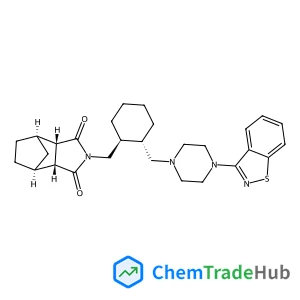
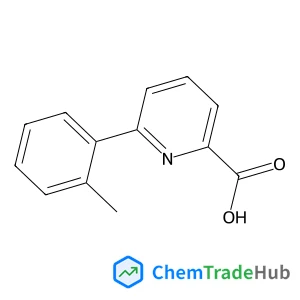
![1-[(4-Methylphenyl)sulfonyl]-3-(4,4,5,5-tetramethyl-1,3,2-dioxaborolan-2-yl)-1H-pyrrolo[2,3-b]pyridine-5-carbonitrile structure](https://cnstatic.chemtradehub.com/structs/143/1434747-57-5-fc0d.webp "1-[(4-Methylphenyl)sulfonyl]-3-(4,4,5,5-tetramethyl-1,3,2-dioxaborolan-2-yl)-1H-pyrrolo[2,3-b]pyridine-5-carbonitrile structure")
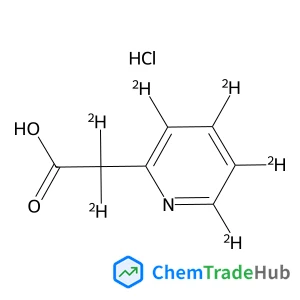
2,2-dideuterio-2-(3,4,5,6-tetradeuterio-2-pyridyl)acetic acid;hydrochloride
CAS号:
1329799-67-8
分子式:
C7H2ClD6NO2
推荐供应商






免责声明
本页面提供的学术期刊信息仅供参考和研究使用。我们与任何期刊出版商均无关联,也不处理投稿事宜。如有投稿相关咨询,请直接联系相关期刊出版商。
如发现页面信息有误,请发送邮件至 support@chemtradehub.com 联系我们。我们将及时核实并处理您的问题。