


Thermo-resettable cross-linked polymers for reusable/removable adhesives
文献信息
发布日期
2018-11-02
DOI
10.1039/C8PY01495G
影响因子
5.582
作者
Sandip Das, Sadaki Samitsu, Yasuyuki Nakamura, Yoshihiro Yamauchi, Debabrata Payra, Kazuaki Kato, Masanobu Naito
查看原文
摘要
Resettable thermosetting adhesive systems have been explored with the help of a thermo-reversible Diels–Alder (DA) reaction between a furan-bearing random copolymer and bismaleimide as a dynamic bond cross-linkage. The obtained adhesive materials exhibited good lap shear strength in the cross-linked state of up to ∼8 MPa. In addition, the bonding/debonding state of the adhesives could be reset by an appropriate choice of thermal treatment.
期刊推荐
Main Group Metal Chemistry
Journal of Physical Organic Chemistry
Heterocyclic Communications
Current Medicinal Chemistry
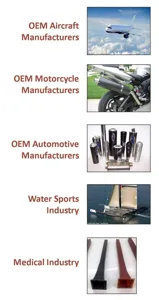
Advanced Composite Materials
Bio-Medical Materials and Engineering
Cement and Concrete Composites
Composite Interfaces
Journal of Computer-Aided Molecular Design
Computational Materials Science
相关文献
Electric field tunable half-metallic characteristic at Fe3O4/BaTiO3 interfaces‡
Xueyao Hou, Xiaocha Wang, Guifeng Chen, Wenbo Mi
2017-01-06
Paper
DOI: 10.1039/C6CP07858C
Interpolated energy densities, correlation indicators and lower bounds from approximations to the strong coupling limit of DFT
Stefan Vuckovic, Tom J. P. Irons, Lucas O. Wagner, Andrew M. Teale, Paola Gori-Giorgi
2017-02-06
Paper
DOI: 10.1039/C6CP08704C
Piezochromism and structural and electronic properties of benz[a]anthracene under pressure
Weizhao Cai, Rong Zhang, Shanti Deemyad
2017-01-31
Paper
DOI: 10.1039/C6CP08171A
Structural and magneto-electronic properties and electric field-mediated effects for transition metal-terminated zigzag h-BN nanoribbons
J. Liu, Z. H. Zhang, P. F. Yuan, Z. Q. Fan
2017-01-04
Paper
DOI: 10.1039/C6CP06909F
Molecular dynamics simulations of the effect of waviness and agglomeration of CNTs on interface strength of thermoset nanocomposites
A. R. Alian, S. A. Meguid
2017-01-13
Paper
DOI: 10.1039/C6CP07464B
Effective pair potential between charged nanoparticles at high volume fractions
Guillaume Bareigts, Christophe Labbez
2017-01-20
Paper
DOI: 10.1039/C6CP08056A
Hydration of the simplest α-keto acid: a rotational spectroscopic and ab initio study of the pyruvic acid–water complex
Elijah G. Schnitzler, Nathan A. Seifert, Supriya Ghosh, Javix Thomas, Yunjie Xu, Wolfgang Jäger
2017-01-17
Paper
DOI: 10.1039/C6CP08741H
Computational prediction of high thermoelectric performance in p-type half-Heusler compounds with low band effective mass
Teng Fang, Shuqi Zheng, Tian Zhou, Lei Yan, Peng Zhang
2017-01-09
Paper
DOI: 10.1039/C6CP07897D
Comparative study of the intermolecular dynamics of imidazolium-based ionic liquids with linear and branched alkyl chains: OHD-RIKES measurements
Lianjie Xue, Fehmi Bardak, George Tamas, Edward L. Quitevis
2017-01-19
Paper
DOI: 10.1039/C6CP08263G
您可能还喜欢
化合物问答
6-氯-2H-1,4-苯并噁嗪-3(4H)-酮(CAS号:7652-29-1)应用于哪些行业?
6-氯-2H-1,4-苯并噁嗪-3(4H)-酮主要应用于医药、农药和聚合物等领域。在医药领域,该化合物可用于合成抗菌药物;在农药领域,可用作杀虫剂的中间体;在聚...
7652-29-16-Chloro-2H-1,4-benz...
化合物问答
活性氧化铝(CAS号:1302-74-5)应用于哪些行业?
活性氧化铝广泛应用于医药、聚合物、传感器、半导体和催化等领域。在医药行业,活性氧化铝用作吸附剂和干燥剂,有助于去除杂质和水分。在聚合物行业,它用作增白剂和抗结块...
1302-74-5aluminum;trihydrate
化合物问答
什么是硅胶(CAS号:112926-00-8)?
硅胶(Silica gel, pptd.,cryst.-free)是一种无定形、多孔的硅酸盐材料,主要成分为二氧化硅(SiO₂)。其结构由硅氧四面体构成,通过酸...
112926-00-8Silica gel, pptd.,cr...
化合物问答
二乙基甲基一氢硅烷(CAS号:760-32-7)的主要用途是什么?
二乙基甲基一氢硅烷主要用于有机合成、表面处理以及作为溶剂。它还被用作合成其他硅烷化合物的原料,以及在涂料、粘合剂和密封剂中的应用。
760-32-7Diethyl(methyl)silan...
化合物问答
在合成中是否有N-花生四烯酰基甘氨酸(CAS号:179113-91-8)的替代品?
在合成过程中,可以考虑使用类似结构的化合物作为替代品,例如N-亚油酰基甘氨酸或N-花生二烯酰基甘氨酸。这些替代品在结构上有类似的双键位置,但可能具有不同的物理化...
179113-91-8Glycine, N-[(5Z,8Z,1...
化合物问答
在合成中是否有1-(4-甲氧基苯基)丙烷-1,2-二酮(CAS号:10557-27-4)的替代品?
在合成过程中,可以考虑使用类似结构的化合物作为替代品,例如1-(3-甲氧基苯基)丙烷-1,2-二酮或1-(4-羟基苯基)丙烷-1,2-二酮。这些替代品具有相似的...
10557-27-41-(4-Methoxyphenyl)p...
化合物问答
N-(4-氨基-1-苄基-3-羟基-5-苯基戊基)-3-甲基-2-(2-氧代四氢嘧啶-1-基)-丁酰胺 5-氧代吡咯烷-2-甲酸(CAS号:192726-06-0)通常如何合成?
该化合物通常通过一系列复杂的有机合成步骤获得。首先,通过芳香族化合物的羟基化反应获得羟基化产物,然后通过酰化反应形成酰胺中间体,最后通过环化反应得到目标产物。常...
192726-06-05-Oxo-L-proline - (2...
化合物问答
(S)-2-氨基-3-喹啉-2-丙酸(CAS号:161513-46-8)的市场或研究趋势如何?
该化合物作为生物活性化合物,尤其是在药物化学领域表现出色。近年来,随着对新型抗炎、抗病毒和抗癌药物的研究增加,其市场和研究趋势持续增长。此外,其在神经科学领域的...
161513-46-8(S)-2-Amino-3-quinol...
化合物问答
核黄素磷酸钠(CAS号:130-40-5)安全吗?
核黄素磷酸钠在常规使用条件下安全,但高剂量可能引起刺激性反应。操作时需佩戴防护手套和护目镜,避免吸入粉尘。若接触皮肤或眼睛,应立即用大量清水冲洗。急救时需根据接...
130-40-5Sodium 1-deoxy-1-(7,...
化合物问答
盐酸丙胺卡因杂质A(EP) 标准品(CAS号:19281-31-3)通常如何合成?
盐酸丙胺卡因杂质A(EP) 标准品可通过重氮化反应和随后的酰胺化反应合成。首先,利用氯化反应将苯环上的氢原子转化为氯原子,然后通过芳香族重氮化反应引入氨基,最后...
19281-31-32-Chloro-N-(2-methyl...
来源期刊
Polymer Chemistry

CiteScore:
8.6
自引率:
7.3%
年发文量:
457
Polymer Chemistry welcomes submissions in all areas of polymer science that have a strong focus on macromolecular chemistry. Manuscripts may cover a broad range of fields, yet no direct application focus is required.
推荐化合物
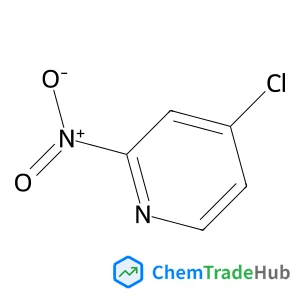
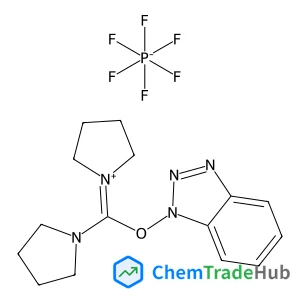
(1H-Benzotriazol-1-yloxy)(di-1-pyrrolidinyl)methylium hexafluorophosphate
CAS号:
105379-24-6
分子式:
C15H21F6N5OP
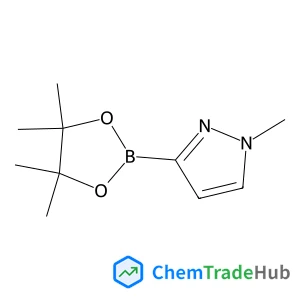
1-Methyl-3-(4,4,5,5-tetramethyl-1,3,2-dioxaborolan-2-yl)-1H-pyrazole
CAS号:
1020174-04-2
分子式:
C10H17BN2O2
推荐供应商





免责声明
本页面提供的学术期刊信息仅供参考和研究使用。我们与任何期刊出版商均无关联,也不处理投稿事宜。如有投稿相关咨询,请直接联系相关期刊出版商。
如发现页面信息有误,请发送邮件至 support@chemtradehub.com 联系我们。我们将及时核实并处理您的问题。