









![Heptadecanoic Acid 3-[2-[4-(6-Fluoro-1,2-benzisoxazol-3-yl)-1-piperidinyl]ethyl]-6,7,8,9-tetrahydro-2-methyl-4-oxo-4H-pyrido[1,2-a]pyrimidin-9-yl Ester structure](https://cnstatic.chemtradehub.com/structs/140/1404053-62-8-9da4.webp "Heptadecanoic Acid 3-[2-[4-(6-Fluoro-1,2-benzisoxazol-3-yl)-1-piperidinyl]ethyl]-6,7,8,9-tetrahydro-2-methyl-4-oxo-4H-pyrido[1,2-a]pyrimidin-9-yl Ester structure")
Construction of J-type aggregates as multi-functional interlayers for nonfullerene polymer solar cells
文献信息
发布日期
2018-10-09
DOI
10.1039/C8QO00934A
影响因子
5.281
作者
Minming Wu, Jiadong Zhou, Yinqi Luo, Nan Zheng, Cong Wang, Linlin Liu, Zengqi Xie, Yuguang Ma
查看原文
摘要
We report a series of conjugated molecules containing an IDT/IDTT core and BI-H/NI-H end groups, which tend to self-assemble to supramolecular J-aggregates either directed by intermolecular multiple hydrogen bondings (IDT-BI-H, IDT-NI-H, IDTT-BI-H) or promoted by π–π interactions between the end groups of the adjacent molecules (IDTT-NI-H), as revealed by single-crystal structure analysis combined with spectroscopy studies. The J-aggregates absorb high energy visible light and convert to low energy delocalized excitons due to the coherent resonance of the transition dipoles of the monomers. The thin films of these J-aggregates are used as interlayers in inverted polymer solar cells between the ZnO layer and the active layers. The delocalized excitons in the J-aggregates transfer more energy to the active layer that compensates for the energy loss caused by the interlayer absorption, which results in quite similar external quantum efficiency (EQE) in the absorption region of the J-aggregates (400–550 nm). Furthermore, some of these J-aggregates show enhanced electron collecting and transporting properties that result in obviously increased EQE in 550–750 nm, which might be attributed to the improved contact between the interlayers and electron acceptor ITIC for similar A–D–A type molecular structures. The results clearly indicate the promising strategy for high performance interlayers by designing J-aggregates of dye molecules.
相关文献
Whole cell environmental biosensor on diamond
Kwok Feng Chong, Kian Ping Loh, Kailian Ang
2008-02-18
Communication
DOI: 10.1039/B719881G
A step out of the lab and into the field: a giant leap from technology to capability
Dominic E. P. Turl, Dan R. W. Wood
2008-01-23
Forum
DOI: 10.1039/B713786A
Droplet detector for the continuous flow luminol–hydrogen peroxide chemiluminescence system
Yaqiong Wen, Hongyan Yuan, Jianfei Mao, Martin M. F. Choi
2008-10-23
Paper
DOI: 10.1039/B812750F
Characterization of non-polar aromatic hydrocarbons in crude oil using atmospheric pressure laser ionization and Fourier transform ion cyclotron resonance mass spectrometry (APLI FT-ICR MS)
Wolfgang Schrader, Saroj K. Panda, Klaus J. Brockmann, Thorsten Benter
2008-03-31
Communication
DOI: 10.1039/B801031E
Rapid and sensitive measurements of nitrate ester explosives using microchip electrophoresis with electrochemical detection
Avi Cagan, Emanuel Carrilho
2008-12-05
Paper
DOI: 10.1039/B813993H
Discrimination of prostate cancer cells and non-malignant cells using secondary ion mass spectrometry
Matthew J. Baker, Michael D. Brown, Ehsan Gazi, John C. Vickerman, Nicholas P. Lockyer
2007-11-30
Communication
DOI: 10.1039/B712853C
您可能还喜欢
化合物问答
什么是3-表南美楝属二醇(CAS号:19942-04-2)?
3-表南美楝属二醇是一种具有特定立体化学结构的化合物,其分子式为C31H52O2,属于甾醇类化合物。它具有光学活性,是一种复杂的有机分子,主要存在于一些植物中。
19942-04-2(3S,5R,8R,9R,10R,13R...
化合物问答
3-羧基-5-碘苯甲酸甲酯(CAS号:50765-22-5)应用于哪些行业?
3-羧基-5-碘苯甲酸甲酯主要应用于医药行业,作为合成某些药物中间体的重要原料。此外,它还可能用于聚合物的改性、传感器的制备以及半导体材料的制备等领域。
50765-22-5Methyl 3-hydroxy-5-i...
化合物问答
什么是3-Bromoindolin-2-one(CAS号:22942-87-6)?
3-Bromoindolin-2-one是一种含有溴代基团的吲哚酮衍生物,分子式为C9H7BrNO。它是一种无色固体,具有一定的挥发性,熔点为158-159°C...
22942-87-63-Bromoindolin-2-one
化合物问答
如何处理含有L-Lysyl-L-phenylalanyl-L-isoleucylglycyl-L-leucyl-L-methioninamide(CAS号:2990-43-4)的废料?
对于含有该化合物的废液,应先进行中和处理,然后根据其毒性和活性选择合适的处置方法。可以考虑焚烧处理或由专业的化学品废物处理公司进行无害化处理。处理过程中需注意环...
2990-43-4L-Lysyl-L-phenylalan...
化合物问答
ANGIOTENSIN 1/2 + A (2 - 8)(CAS号:51833-76-2)的物理化学性质是什么?
ANGIOTENSIN 1/2 + A (2 - 8)是一种蛋白质类化合物,具有典型的蛋白质性质。它的分子量约为5900 Da。该化合物在水中具有一定的溶解性,...
51833-76-2ANGIOTENSIN 1/2 + A ...
化合物问答
如何储存2-甲基硫代嘧啶-5-硼酸频那酯(CAS号:940284-18-4)?
应将该化合物存放在阴凉干燥、通风良好的地方,避免阳光直射。建议将化合物密封保存在避光的、干燥的容器中,远离火源和高温环境。
940284-18-42-(Methylthio)-5-(4,...
化合物问答
什么是苏丹红IV氘代物 标准品(CAS号:1014689-18-9)?
苏丹红IV氘代物 标准品是一种含有氘代标记的苏丹红IV化合物,是一种用于化合物分析、结构确证以及代谢研究的标准物质。
1014689-18-91-[(E)-{2-Methyl-4-[...
化合物问答
(+)-2-Amino-6-propionamido-d3-tetrahydrobenzothiazole(CAS号:1217680-69-7)适用哪些法规指南?
该化合物需要遵循《全球化学品统一分类和标签制度》(GHS)中的分类和标签要求,具体分类需依据其毒性和物理化学性质。此外,还需要符合《欧盟化学品注册、评估、授权和...
1217680-69-7(+)-2-Amino-6-propio...
化合物问答
如何储存2-氨基-2-(2-吡啶)乙酸乙酯(CAS号:55243-15-7)?
2-氨基-2-(2-吡啶)乙酸乙酯应储存于阴凉、干燥、通风良好的环境中,避免高温和光照。应使用密封容器储存,并远离易燃物、氧化剂和其他危险化学品。
55243-15-7Ethyl 2-amino-2-(pyr...
化合物问答
3-羟基-4-甲氧基吡啶-2-羧酸(CAS号:210300-09-7)的主要用途是什么?
3-羟基-4-甲氧基吡啶-2-羧酸主要用于合成其他有机化合物,如药物合成、农药合成和染料合成等。此外,它还可用作中间体和试剂,在化学研究领域也有一定的应用。
210300-09-73-Hydroxy-4-methoxy-...
来源期刊
Organic Chemistry Frontiers
CiteScore:
7.8
自引率:
8.7%
年发文量:
724
Organic Chemistry Frontiers publishes high-quality research from across organic chemistry. Emphases are placed on studies that make significant contributions to the field of organic chemistry by reporting either new or significantly improved protocols or methodologies. Topics include, but are not limited to the following: Organic synthesis Development of synthetic methodologies Catalysis Natural products Functional organic materials Supramolecular and macromolecular chemistry Physical and computational organic chemistry
推荐化合物
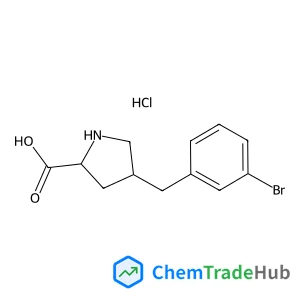
(2S,4R)-4-(3-Bromobenzyl)pyrrolidine-2-carboxylic acid hydrochloride
CAS号:
1049734-10-2
分子式:
C12H15BrClNO2
![(3S,4aS,8aS)-2-[(2R,3S)-3-Amino-2-hydroxy-4-phenylbutyl]-N-(2-methyl-2-propanyl)decahydro-3-isoquinolinecarboxamide structure](https://cnstatic.chemtradehub.com/structs/136/136522-17-3-4d77.webp "(3S,4aS,8aS)-2-[(2R,3S)-3-Amino-2-hydroxy-4-phenylbutyl]-N-(2-methyl-2-propanyl)decahydro-3-isoquinolinecarboxamide structure")
推荐供应商






免责声明
本页面提供的学术期刊信息仅供参考和研究使用。我们与任何期刊出版商均无关联,也不处理投稿事宜。如有投稿相关咨询,请直接联系相关期刊出版商。
如发现页面信息有误,请发送邮件至 support@chemtradehub.com 联系我们。我们将及时核实并处理您的问题。