






A tough and self-healing poly(l-glutamic acid)-based composite hydrogel for tissue engineering
文献信息
发布日期
2018-09-27
DOI
10.1039/C8TB01981A
影响因子
6.331
作者
Weijun Zhang, Kunxi Zhang, Shifeng Yan, Jie Wu, Jingbo Yin
查看原文
摘要
A hydrogel with excellent mechanical properties and self-healing ability provides a promising tool for the repair of load-bearing tissues under a dynamic microenvironment. In this study, poly(L-glutamic acid) (PLGA)-based composite hydrogels with good toughness and self-healing ability were fabricated via filling soft self-healing hydrogels into a tough porous hydrogel skeleton. The PLGA-based tough porous hydrogel skeleton was treated by laser ablation to form a uniform porous structure with 85% porosity and 260 μm pore diameter, and the structure formation was reinforced by the hydrophobic assembly mechanism. The resulting hydrogel skeleton possessed good toughness (maximum compressive stress of 0.51 MPa with strain of 80%) and could fully recover after cyclic compression tests. Furthermore, PLGA-based self-healing hydrogels were fabricated based on a Schiff base reaction, followed by being composited with a tough porous hydrogel skeleton. More importantly, the composite hydrogel exhibited a homogenous interpenetrated structure that inherited mechanical strength and the self-healing ability of the two original compositions. These composite hydrogels exhibited a compressive failure stress of 0.21 MPa at a 63% strain, which was 1.3-fold higher than the value of the original porous hydrogel skeleton at 63% strain. The healing percentage gradually reached 81% within 6 h, indicating the good self-healing efficiency. Furthermore, live/dead staining images revealed that 89% of laden cells remained alive after culture for 7 days. Moreover, the composite hydrogel could self-heal even after cell encapsulation. The developed PLGA-based composite hydrogel will be a promising biomaterial for the repair of load-bearing tissues.
相关文献
Direct access to benzo[b]fluorenes via a gold-catalysed A3-coupling strategy
Danilo M. Lustosa, Patrick Cieslik, Deborah Hartmann, Tim Bruckhoff, Matthias Rudolph, Frank Rominger, A. Stephen K. Hashmi
2019-03-28
Research Article
DOI: 10.1039/C9QO00260J
A copper-catalyzed radical coupling/fragmentation reaction: efficient access to β-oxophosphine oxides
Shangbiao Feng, Jinlai Li, Feifei He, Tao Li, Huilin Li, Xiaolei Wang, Xingang Xie, Xuegong She
2019-02-12
Research Article
DOI: 10.1039/C9QO00006B
Iridium-catalyzed asymmetric hydrogenation of quinazolinones
Guang-Shou Feng, Zi-Biao Zhao, Lei Shi
2019-04-29
Research Article
DOI: 10.1039/C9QO00443B
Copper-promoted dehydrogenative cross-coupling reaction of dialkyl phosphites with sulfoximines
Surabhi Gupta, Siddharth Baranwal, Priyanka Chaudhary, Jeyakumar Kandasamy
2019-05-06
Research Article
DOI: 10.1039/C9QO00469F
Why electrostatically enhanced thiourea is better than Schreiner's thiourea in both catalytic activity and regioselectivity?
Chao-Xian Yan, Rui-Zhi Wu, Ka Lu, Fang-Ling Yang, Xiao-Shan Yang, Rui Wang, Xing Yang, Pan-Pan Zhou, Xiangfeng Shao
2019-04-04
Research Article
DOI: 10.1039/C9QO00251K
Endo/exo binding of alkyl and aryl diammonium ions by cyclopentanocucurbit[6]uril
Yun-Xia Qu, Rui-Lian Lin, Yun-Qian Zhang, Kai-Zhi Zhou, Qing-Di Zhou, Qian-Jiang Zhu, Zhu Tao, Pei-Hua Ma, Jing-Xin Liu, Gang Wei
2017-06-12
Research Article
DOI: 10.1039/C7QO00376E
Application of dialkyl azodicarboxylate frameworks featuring multi-functional properties
Xiao-Wen Zhang, Di Wu, Zheng-Hui Guan, Wen-Bo Liu
2019-04-04
Review Article
DOI: 10.1039/C9QO00017H
First synthesis of orthogonally 1,7-diprotected cyclens
Luciano Lattuada, Giovanni B. Giovenzana
2019-03-20
Research Article
DOI: 10.1039/C9QO00184K
A carbene-catalyzed tandem isomerization/cyclisation strategy: an efficient assembly of benzoxazinones
Ming Lang, Jian Wang
2019-02-25
Research Article
DOI: 10.1039/C9QO00094A
Carboxylate phosphabetaine as a bifunctional organocatalyst for the intramolecular ring opening of oxetane
Dongyang Xu, Hongbo Wei, Yanxia Zhen, Yu-Qi Gao, Ruoxin Li, Xingzhou Li, Yupeng He, Zhong Zhang
2019-04-02
Research Article
DOI: 10.1039/C9QO00304E
您可能还喜欢
化合物问答
4,5-二甲基-2-硝基苯甲酸(CAS号:4315-14-4)的市场或研究趋势如何?
4,5-二甲基-2-硝基苯甲酸主要应用于制药、染料和农药等行业。由于其潜在的毒性,其市场趋势可能受到法规限制和环保考量的影响,推动了替代产品的研发。在研究领域,...
4315-14-44,5-Dimethyl-2-nitro...
化合物问答
处理直接黑22(CAS号:6473-13-8)时应注意哪些实验室安全事项?
处理直接黑22时应穿戴适当的个人防护装备(PPE),包括实验服、手套、护目镜和口罩。操作应在通风橱内进行,以避免吸入有害气体。如果发生泄漏,应立即清理,并使用大...
6473-13-82-Naphthalenesulfoni...
化合物问答
处理2,1,3-苯并噻二唑-4-基异氰酸酯(CAS号:342411-14-7)时应注意哪些实验室安全事项?
处理2,1,3-苯并噻二唑-4-基异氰酸酯时应注意以下安全事项:穿戴个人防护装备,如实验室外套、防护眼镜和手套;在通风橱中操作,确保良好的通风;保持实验室环境干...
342411-14-74-Isocyanato-2,1,3-b...
化合物问答
如何处理含有Δ-8,9-脱氢雌酮(CAS号:204077-66-7)的废料?
含有Δ-8,9-脱氢雌酮的废料需要进行适当的处理以确保环境和人体安全。首先,收集废液并存放于密封容器中,避免泄漏。其次,可以考虑将其转化为无害物质或通过专业处理...
204077-66-7Thioquinapiperifil d...
化合物问答
如何储存5-溴戊酸(CAS号:2067-33-6)?
5-溴戊酸应储存在阴凉、干燥、通风良好的环境中,避免阳光直射。建议在室温(约15-25°C)下保存,保持相对湿度低于60%。应使用密封的玻璃或塑料容器,并远离热...
2067-33-65-Bromopentanoic aci...
化合物问答
4-(甲基亚磺酰基)苯胺(CAS号:22865-62-9)应用于哪些行业?
4-(甲基亚磺酰基)苯胺在医药、聚合物和传感器等领域有一定的应用。在医药方面,它可以用作合成药物的中间体;在聚合物领域,可以作为合成特殊性能高分子材料的单体;在...
22865-62-94-Methylsulfinylanil...
化合物问答
什么是1-(2-FLUOROPHENYL)-5-METHYL-1H-PYRAZOLE-4-CARBOHYDRAZIDE(CAS号:618092-58-3)?
1-(2-氟苯基)-5-甲基-1H-吡唑-4-亚甲基肼是一种有机化合物,其分子式为C9H9FN3O。该化合物具有特定的物理化学性质,如熔点、沸点等,但具体值需查...
618092-58-31-(2-Fluorophenyl)-5...
化合物问答
Dauricumine(CAS号:345641-00-1)通常如何合成?
Dauricumine通常通过复杂的合成路线制备,涉及多个步骤,包括环化、氧化、卤化等反应。合成过程中使用了多种催化剂和试剂,例如金属催化剂、氧化剂等。产率通常...
345641-00-1(1R,1'S,5R,6'S,8'S)-...
化合物问答
5-氰基苯酞(CAS号:82104-74-3)安全吗?
5-氰基苯酞在正常使用条件下相对安全,但其具有一定的毒性,需谨慎操作。在实验或工业应用中,应采取适当的防护措施,如佩戴防护手套、护目镜和实验服,确保通风良好。误...
82104-74-31-Oxo-1,3-dihydro-2-...
化合物问答
2-Methyl-1-(phenylsulfonyl)-1H-pyrrolo[2,3-b]pyridin-5-amine(CAS号:1186502-59-9)安全吗?
该化合物在使用时需要谨慎操作。虽然其毒性和健康风险尚未完全明确,但建议在通风良好的环境中操作,并穿戴适当的个人防护装备,如手套和防护眼镜。
1186502-59-92-Methyl-1-(phenylsu...
来源期刊
Journal of Materials Chemistry B
CiteScore:
12
自引率:
4.9%
年发文量:
831
Journal of Materials Chemistry A, B & C cover high quality studies across all fields of materials chemistry. The journals focus on those theoretical or experimental studies that report new understanding, applications, properties and synthesis of materials. The journals have a strong history of publishing quality reports of interest to interdisciplinary communities and providing an efficient and rigorous service through peer review and publication. The journals are led by an international team of Editors-in-Chief and Associate Editors who are all active researchers in their fields. Journal of Materials Chemistry A, B & C are separated by the intended application of the material studied. Broadly, applications in energy and sustainability are of interest to Journal of Materials Chemistry A, applications in biology and medicine are of interest to Journal of Materials Chemistry B, and applications in optical, magnetic and electronic devices are of interest to Journal of Materials Chemistry C. More than one Journal of Materials Chemistry journal may be suitable for certain fields and researchers are encouraged to submit their paper to the journal that they feel best fits for their particular article. Example topic areas within the scope of Journal of Materials Chemistry B are listed below. This list is neither exhaustive nor exclusive. Antifouling coatings Biocompatible materials Bioelectronics Bioimaging Biomimetics Biomineralisation Bionics Biosensors Diagnostics Drug delivery Gene delivery Immunobiology Nanomedicine Regenerative medicine & Tissue engineering Scaffolds Soft robotics Stem cells Therapeutic devices image block All articles published in Journal of Materials Chemistry B from 2019 onwards will be indexed in MEDLINE®. Articles that primarily focus on providing insight into the underlying science and performance of biomaterials within a biological environment are more suited to our companion journal, Biomaterials Science.
推荐化合物
![(2S)-2-{[(9H-Fluoren-9-ylmethoxy)carbonyl]amino}-4-(methylselanyl)butanoic acid structure](https://cnstatic.chemtradehub.com/structs/121/1217852-49-7-f252.webp "(2S)-2-{[(9H-Fluoren-9-ylmethoxy)carbonyl]amino}-4-(methylselanyl)butanoic acid structure")
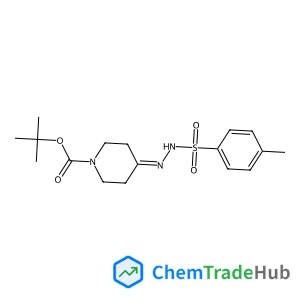
tert-Butyl 4-(2-(p-Tolylsulfonyl)hydrazono)piperidine-1-carboxylate
CAS号:
1046478-89-0
分子式:
C17H25N3O4S
推荐供应商





免责声明
本页面提供的学术期刊信息仅供参考和研究使用。我们与任何期刊出版商均无关联,也不处理投稿事宜。如有投稿相关咨询,请直接联系相关期刊出版商。
如发现页面信息有误,请发送邮件至 support@chemtradehub.com 联系我们。我们将及时核实并处理您的问题。