




A label-free ratiometric fluorescence nanoprobe for ascorbic acid based on redox-modulated dual-emission signals
文献信息
发布日期
2019-04-24
DOI
10.1039/C9AN00288J
影响因子
4.616
作者
Yuhao Sheng, Tingwei Cao, Yan Xiao, Xiuhua Zhang, Shengfu Wang, Zhihong Liu
查看原文
摘要
In this paper, we constructed a label-free ratiometric fluorescence nanoprobe for ascorbic acid (AA) on the basis of the change in dual-emission signals by the specific reaction between cobalt oxyhydroxide (CoOOH) and AA. CoOOH nanoflakes were used as the recognition unit while polymer dots (PFO dots) and gold nanoclusters (AuNCs) served as luminescent units of the nanoprobe. After electrostatic assembly of PFO dots and AuNCs on the surface of CoOOH nanoflakes, the energy transfer between the PFO dots and CoOOH could occur and thereby quench the fluorescence of the PFO dots. When AA was present, CoOOH nanoflakes were reduced to Co2+, resulting in a recovery of the fluorescence of the PFO dots. In the meantime, the generated Co2+ could combine with the surface ligands of AuNCs, accompanied by a reduction in the luminescence intensity of the AuNCs. Therefore, the fluorescence intensity ratio of PFO dots to AuNCs would be related to the concentration of AA. The nanoprobe enabled highly sensitive analysis of AA with a detection limit of 1.9 μM and showed great performance in human serum samples and living cells. This report may not only endow a CoOOH-based nanoprobe with improved ability but also offer a novel strategy for the construction of ratiometric nanoprobes for AA and have potential applications in research into and clinical diagnosis of AA-related diseases.
相关文献
Excited state hydrogen transfer dynamics in phenol–(NH3)2 studied by picosecond UV-near IR-UV time-resolved spectroscopy
Shun-ichi Ishiuchi, Junko Kamizori, Norihiro Tsuji, Makoto Sakai, Mitsuhiko Miyazaki, Claude Dedonder
2020-02-10
Paper
DOI: 10.1039/C9CP06369B
Structural relationships for the design of responsive azobenzene-based lyotropic liquid crystals
Luke W. Giles, Joshua B. Marlow, Calum S. G. Butler, Geosmin A. Turpin, Liliana de Campo, Stephen T. Mudie, Charl F. J. Faul, Rico F. Tabor
2020-01-30
Paper
DOI: 10.1039/C9CP05463D
First-principles comparative study of perfect and defective CsPbX3 (X = Br, I) crystals
R. A. Evarestov, A. Senocrate, R. K. Kremer, J. Maier
2020-01-27
Paper
DOI: 10.1039/C9CP06322F
A phase-field model for the evaporation of thin film mixtures
Olivier J. J. Ronsin, DongJu Jang, Hans-Joachim Egelhaaf
2020-03-05
Paper
DOI: 10.1039/D0CP00214C
Role of ring-enlargement reactions in the formation of aromatic hydrocarbons
Martina Baroncelli, Qian Mao, Simon Galle, Nils Hansen, Heinz Pitsch
2020-02-05
Paper
DOI: 10.1039/C9CP05854K
Interaction of hydantoin with solar wind minority ions: O6+ and He2+
Julie Renoud, Suvasthika Indrajith, Alicja Domaracka, Patrick Rousseau, Patrick Moretto-Capelle, Bernd A. Huber, Jean-Philippe Champeaux
2020-01-28
Paper
DOI: 10.1039/C9CP06230K
Specific ion effects on the enzymatic activity of alcohol dehydrogenase from Saccharomyces cerevisiae
Andrea Salis, Edmond Magner
2020-03-09
Paper
DOI: 10.1039/C9CP06800G
First principles study on hydrogen doping induced metal-to-insulator transition in rare earth nickelates RNiO3 (R = Pr, Nd, Sm, Eu, Gd, Tb, Dy, Yb)
Pilsun Yoo, Peilin Liao
2020-03-10
Paper
DOI: 10.1039/C9CP06522A
您可能还喜欢
化合物问答
(5-氨基吡唑-3-基)乙酸(CAS号:174891-10-2)的物理化学性质是什么?
(5-氨基吡唑-3-基)乙酸是一种无色至白色固体,分子量为174.15 g/mol。它在水中具有较好的溶解性,在有机溶剂中的溶解度较低。该化合物具有较好的反应活...
174891-10-2(3-Amino-1H-pyrazol-...
化合物问答
3-氟-4,5-二氯苯胺(CAS号:35754-38-2)适用哪些法规指南?
3-氟-4,5-二氯苯胺受到多项法规指南的约束,包括但不限于GHS(全球化学品统一分类和标签制度)的危险分类标准、欧盟的REACH法规(注册、评估、授权和限制)...
35754-38-23,4-Dichloro-5-fluor...
化合物问答
什么是(R)-(+)-2,2',6,6'-四甲氧基-4,4'-联(二(3,5-二甲苯基基)膦基)-3,3'-二联吡啶(CAS号:442905-33-1)?
这是一种有机化合物,化学名为(R)-(+)-2,2',6,6'-四甲氧基-4,4'-联(二(3,5-二甲苯基基)膦基)-3,3'-二联吡啶,CAS号为44290...
442905-33-14,4'-Bis[bis(3,5-dim...
化合物问答
1-氨基-2-氰基萘(CAS号:3100-67-2)应用于哪些行业?
1-氨基-2-氰基萘在医药、聚合物、传感器和半导体等行业中有应用。在医药领域,它可用作中间体合成某些药物。在聚合物行业,它可以用于制备具有特定性能的聚合物。此外...
3100-67-21-Amino-2-naphthonit...
化合物问答
如何处理含有1-溴-4-(异丙氧基甲基)苯(CAS号:98446-84-5)的废料?
处理含1-溴-4-(异丙氧基甲基)苯的废料时,首先应确保废液收集在防渗漏的容器中,避免泄露。然后,可以考虑采用化学降解法或物理吸附法进行处理。在特定条件下,可通...
98446-84-51-Bromo-4-(isopropox...
化合物问答
6-Chloro-8-(trifluoromethyl)chroman-4-one(CAS号:1344889-75-3)的主要用途是什么?
6-氯-8-三氟甲基-2,3-二氢-4H-色喃-4-酮主要用于有机合成中的中间体,也可作为研究试剂使用。
1344889-75-36-Chloro-8-(trifluor...
化合物问答
7-乙氧基-2-萘酚(CAS号:57944-44-2)通常如何合成?
7-乙氧基-2-萘酚通常通过N-乙氧基化反应合成,首先将2-萘酚与乙醇钠在乙醇中反应生成7-乙氧基-2-萘酚钠盐,再通过酸化进一步得到7-乙氧基-2-萘酚。该合...
57944-44-27-Ethoxy-2-naphthol
化合物问答
4-(1,1-二氧硫代吗啉)丁醇(CAS号:59801-41-1)适用哪些法规指南?
该化合物需遵循一系列的法规指南,包括但不限于GHS全球统一分类和标签制度,其分类可能包括易燃液体和可能危害水生环境。在欧洲,还需遵循REACH法规,确保物质和混...
59801-41-14-(4-Hydroxybutyl)th...
化合物问答
4-甲氧基苄基叠氮甲酸酯(CAS号:25474-85-5)的物理化学性质是什么?
4-甲氧基苄基叠氮甲酸酯是一种无色液体,具有一定的挥发性。其分子量为198.16,熔点为-69°C,沸点为105°C。该化合物在水中溶解度较低,在有机溶剂如乙醇...
25474-85-54-Methoxybenzyl carb...
化合物问答
如何处理含有4-氯-2-氟嘧啶(CAS号:51422-00-5)的废料?
含有4-氯-2-氟嘧啶的废料应按照危险废物处理。首先,应收集并分类这些废料,避免与其他废物混合。然后,可以采用焚烧处理或者交由专业机构进行处置。在处理过程中,需...
51422-00-54-Chloro-2-fluoropyr...
来源期刊
Analyst

CiteScore:
7.8
自引率:
5.6%
年发文量:
653
Analyst publishes analytical and bioanalytical research that reports premier fundamental discoveries and inventions, and the applications of those discoveries, unconfined by traditional discipline barriers.
推荐化合物
![[3-(2,6-Dichlorophenyl)-5-isopropyl-1,2-oxazol-4-yl]methanol structure](https://cnstatic.chemtradehub.com/structs/278/278597-30-1-5c79.webp "[3-(2,6-Dichlorophenyl)-5-isopropyl-1,2-oxazol-4-yl]methanol structure")
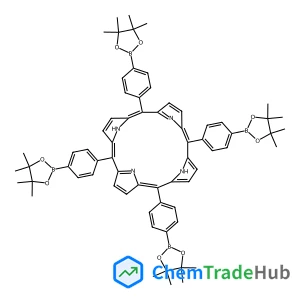
5,10,15,20-tetrakis(4-boronic acid pinacol ester phenyl) porphyrin
CAS号:
1332748-00-1
分子式:
C68H74B4N4O8
推荐供应商




免责声明
本页面提供的学术期刊信息仅供参考和研究使用。我们与任何期刊出版商均无关联,也不处理投稿事宜。如有投稿相关咨询,请直接联系相关期刊出版商。
如发现页面信息有误,请发送邮件至 support@chemtradehub.com 联系我们。我们将及时核实并处理您的问题。