





A metal ion-regulated colorimetric sensor array: discriminating Chinese Baijiu from other beverages
文献信息
发布日期
2019-09-19
DOI
10.1039/C9AY01804B
影响因子
2.896
作者
Jiawei Li, Ping Yang, Jing Zhang, Zhengfan Shui, Danqun Huo, Changjun Hou
查看原文
摘要
The complex and huge Chinese Baijiu market is in need of a quick and accurate detection method to achieve quality control. Herein, we provide a Baijiu colorimetric sensor array based on a metal ion-regulated Au NP aggregation, which can achieve a correct classification of 16 Baijiu samples with different flavors. This is the first time metal ions (Mg2+, Pb2+, Fe2+, and Fe3+) are employed to adjust the microenvironment of a Baijiu colloid for regulating the aggregation of Au NPs in a sensor array. The RGB (the red, green and blue color models) values of the final aggregation of Au NPs were captured as the optical signal for further data processes. The provided Baijiu identification system shows outstanding discrimination performance using pattern recognition and neural networks. Astonishingly, selectivity experiments indicate that our array is able to completely distinguish Baijiu samples from other drinks (e.g., tea samples and a mixture of ethanol and water), showing great potential in practical detection.
相关文献
Water–titanate intercalated nanotubes: fabrication, polarization, and giant dielectric property
Wanbiao Hu, Liping Li, Wenming Tong, Guangshe Li
2010-08-23
Paper
DOI: 10.1039/C0CP00280A
Yttria-zirconia coatings studied by grazing-incidence small-angle X-ray scattering during in situ heating
Kristin Hoydalsvik, Twilight Barnardo, Rudolf Winter, Sylvio Haas, Dragomir Tatchev, Armin Hoell
2010-09-20
Paper
DOI: 10.1039/C0CP00472C
Field-controlled magnetic order with insulator–metal transitions in a periodic Anderson-like organic polymer
L. J. Ding, H. H. Fu
2010-10-29
Paper
DOI: 10.1039/C0CP00185F
Infrared spectroscopic study of the amidation reaction of aminophenyl modified Au surfaces and p-nitrobenzoic acid as model system
Xin Zhang, Guoguang Sun, Karsten Hinrichs, Silvia Janietz, Joerg Rappich
2010-08-25
Communication
DOI: 10.1039/C0CP00058B
A structure–activity relationship for the rate coefficient of H-migration in substituted alkoxy radicals
L. Vereecken, J. Peeters
2010-08-23
Paper
DOI: 10.1039/C0CP00387E
Quantitative SNIFTIRS studies of (bi)sulfate adsorption at the Pt(111)electrode surface‡
Zhangfei Su, Jay Leitch, Vlad Zamlynny, Juan M. Feliu, Jacek Lipkowski
2010-11-02
Paper
DOI: 10.1039/C0CP00860E
The unusual surface chemistry of α-Al2O3 (0001)
Die Yang, Marta Krasowska, Rossen Sedev, John Ralston
2010-09-15
Paper
DOI: 10.1039/C001222J
Pentaatomic planar tetracoordinate carbon molecules [XCAl3]q [(X,q) = (B,−2), (C,−1), (N,0)] with C–X multiple bonding
Zhong-hua Cui, Chang-bin Shao, Si-meng Gao, Yi-hong Ding
2010-09-20
Paper
DOI: 10.1039/C0CP00296H
Boron K4 crystal: a stable chiral three-dimensional sp2 network
Jun Dai, Zhenyu Li, Jinlong Yang
2010-08-31
Communication
DOI: 10.1039/C0CP00735H
您可能还喜欢
化合物问答
什么是2-Bromo-1-(pyrimidin-2-yl)ethanone hydrobromide(CAS号:1588441-02-4)?
2-Bromo-1-(pyrimidin-2-yl)ethanone hydrobromide是一种有机化合物,分子式为C6H5Br2N2O2。它是一种溴代化合...
1588441-02-42-Bromo-1-(2-pyrimid...
化合物问答
在合成中是否有1-正-丁基-3-甲基咪唑鎓三氟甲烷磺酸盐(CAS号:174899-66-2)的替代品?
在合成中,可以考虑使用1-正-丁基-3-甲基咪唑鎓溴酸盐或1-正-丁基-3-甲基咪唑鎓氯酸盐作为替代品。这些化合物在性能上与1-正-丁基-3-甲基咪唑鎓三氟甲烷...
174899-66-21-Butyl-3-methyl-1H-...
化合物问答
2-methyl-5-thiophen-2-ylfuran-3-carboxylic acid(CAS号:651005-90-2)的市场或研究趋势如何?
目前,2-methyl-5-thiophen-2-ylfuran-3-carboxylic acid的研究主要集中在药物化学和新型材料领域。随着生物医药和有机合...
651005-90-22-Methyl-5-(thien-2-...
化合物问答
格列吡嗪杂质H(CAS号:13554-93-3)的主要用途是什么?
格列吡嗪杂质H主要作为药物中间体或副产物存在,并无特定的工业应用。在药物生产中,它可能需要被处理掉以保证最终药物的质量。
13554-93-3Ethyl (2-(4-((cycloh...
化合物问答
如何储存(9ci)-4-甲氧基-1H-苯并咪唑-2-乙腈(CAS号:317817-41-7)?
(9ci)-4-甲氧基-1H-苯并咪唑-2-乙腈应储存在阴凉、干燥、通风良好的地方,避免阳光直射。使用密封的玻璃或塑料容器储存,并确保容器的密封性良好,以防止挥...
317817-41-7(4-Methoxy-1H-benzim...
化合物问答
4,5,9,10-四氢苯芘(CAS号:781-17-9)应用于哪些行业?
4,5,9,10-四氢苯芘在医药行业用于作为某些药物的中间体,在聚合物行业用作添加剂提升材料的热稳定性,在传感器领域作为传感器的敏感材料,在半导体行业中用作掺杂...
781-17-94,5,9,10-Tetrahydrop...
化合物问答
处理叶酸-D4(CAS号:171777-72-3)时应注意哪些实验室安全事项?
处理叶酸-D4时应佩戴个人防护装备(PPE),如手套和实验服。操作应在通风橱内进行,以避免吸入蒸汽或粉尘。如果不慎泄露,应立即用大量清水冲洗,并通知安全人员。参...
171777-72-3Folic Acid-d4
化合物问答
如何处理含有6-溴-2-(三氟乙酰基)-1,2,3,4-四氢异喹啉(CAS号:252331-63-8)的废料?
含有该化合物的废料应收集到专用的容器中,并进行密封以防止挥发和泄漏。在处理前,需进行危险性评估,以确定是否需要进行化学处理。最终处置需遵循当地的危险废物管理规定...
252331-63-81-(6-bromo-3,4-dihyd...
化合物问答
4,5-二氟-2-甲氧基苯甲醛(CAS号:145742-34-3)的主要用途是什么?
4,5-二氟-2-甲氧基苯甲醛主要用作有机合成中的中间体,特别是在制药和农药领域。它可以作为合成其他有机化合物的原料。
145742-34-34,5-difluoro-2-metho...
化合物问答
5-溴-6-三氟甲基吲哚(CAS号:1198475-24-9)安全吗?
5-溴-6-三氟甲基吲哚作为一种化学试剂,具有一定的毒性,需要在通风橱中操作,并采取适当的安全措施以避免吸入、皮肤接触和眼睛刺激。应避免与皮肤和眼睛直接接触,并...
1198475-24-95-bromo-6-(trifluoro...
来源期刊
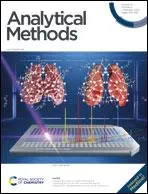
Analytical Methods
CiteScore:
5.1
自引率:
3.7%
年发文量:
655
Analytical Methods welcomes early applications of new analytical and bioanalytical methods and technology demonstrating the potential for societal impact. We require that methods and technology reported in the journal are sufficiently innovative, robust, accurate, and compared to other available methods for the intended application. Developments with interdisciplinary approaches are particularly welcome. Systems should be proven with suitably complex and analytically challenging samples. We encourage developments within, but not limited to, the following technologies and applications: global health, point-of-care and molecular diagnostics biosensors and bioengineering drug development and pharmaceutical analysis applied microfluidics and nanotechnology omics studies, such as proteomics, metabolomics or glycomics environmental, agricultural and food science neuroscience biochemical and clinical analysis forensic analysis industrial process and method development
推荐化合物
推荐供应商




免责声明
本页面提供的学术期刊信息仅供参考和研究使用。我们与任何期刊出版商均无关联,也不处理投稿事宜。如有投稿相关咨询,请直接联系相关期刊出版商。
如发现页面信息有误,请发送邮件至 support@chemtradehub.com 联系我们。我们将及时核实并处理您的问题。