










Ultrafast imaging of laser-controlled non-adiabatic dynamics in NO2 from time-resolved photoelectron emission
文献信息
发布日期
2019-04-08
DOI
10.1039/C9CP00649D
影响因子
3.676
作者
Jesús González-Vázquez, Zdeněk Mašín, Danilo S. Brambila, Alex G. Harvey, Felipe Morales
查看原文
摘要
Time-resolving and controlling coupled electronic and nuclear dynamics at conical intersections on the sub-femtosecond to few-femtosecond time scale is among the challenging goals of attosecond physics. Here we present numerical simulations of time-resolved photoelectron spectroscopy of such dynamics in NO2, where the coupled electron–nuclear motion at the 2A1/2B2 conical intersection is steered on the sub-laser-cycle time scale by a nearly single-cycle, waveform controlled mid-infrared laser pulse. For a rigorous description of the photoionization dynamics, we employ ab initio energy- and geometry-resolved photoionization matrix elements obtained with the multichannel R-matrix method, using a multiconfigurational description of the molecule and a newly developed algorithm to generate photoionization dipoles that are phase consistent on the level of both the neutral and the ionic states. We find that for sufficient molecular alignment, the time- and energy-resolved anisotropy parameters of the photoelectron angular distributions provide a particularly clear picture of both the ultrafast natural molecular dynamics at the conical intersection and its modifications by the control pulse. In particular, changes in the electronic and nuclear configurations induced by the control pulse lead to the appearance of non-vanishing odd anisotropy parameters in the photoelectron spectra. These are absent in the spectra obtained without the control pulse and therefore provide sensitive, background-free diagnostic of the control.
相关文献
Assembly of Zn/Cd coordination polymers containing helixes or polycatenane structures tuned by the tri-pyridyl–bis-amide ligands with different spacer: syntheses, structures, photoluminescent and photocatalytic properties
Xiuli Wang, Jingjing Huang, Lianli Liu, Guocheng Liu, Hongyan Lin, Juwen Zhang, Naili Chen, Yun Qu
2013-01-07
Paper
DOI: 10.1039/C2CE26892B
Strong correlation of the growth mode and electrical properties of BiCuSeO single crystals with growth temperature
Yang-Yang Lv, Bin-Bin Zhang, Fan Zhang, Shuhua Yao, Y. B. Chen, Jian Zhou, Shan-Tao Zhang, Zheng-Bin Gu, Yan-Feng Chen
2015-07-07
Paper
DOI: 10.1039/C5CE01215E
Syntheses of Au–Cu-rich AuAg(AgCl)Cu alloy and Ag–Cu-rich AuAgCu@Cu core–shell and AuAgCu alloy nanoparticles using a polyol method
Mika Matsunaga, Toshitaka Ishizaki, Takamasa Nonaka
2012-03-15
Paper
DOI: 10.1039/C2CE06119H
Carbon capture with polyethylenimine hydrogel beads (PEI HBs)
Xingguang Xu, Bobby Pejcic, Charles Heath, Colin D. Wood
2018-10-24
Paper
DOI: 10.1039/C8TA07760F
A homogeneous digital biosensor for circulating tumor DNA by the enumeration of a dual-color quantum dot complex
Xiaojun Liu, Zhangjian Wu, Xinyi Lin, Wei Bu, Lei Qin, Hongwei Gai
2021-03-18
Paper
DOI: 10.1039/D1AN00299F
Grafting of Gd-DTPA onto MOF-808 to enhance MRI performance for guiding photothermal therapy
Mingjie Jia, Xinyu Yang, Yanan Chen, Meie He, Weixiu Zhou, Jiaomin Lin, Lu An, Shiping Yang
2021-09-15
Paper
DOI: 10.1039/D1TB01596F
The synthesis and electrochemical applications of core–shell MOFs and their derivatives
Zhimin Zhao, Jiawei Ding, Rongmei Zhu, Huan Pang
2019-06-18
Review Article
DOI: 10.1039/C9TA03833G
Rational design of a boron-dipyrromethene-based fluorescent probe for detecting Pd2+ sensitively and selectively in aqueous media
Yannan Li, Li Yang, Mengqi Du, Guanjun Chang
2018-11-21
Paper
DOI: 10.1039/C8AN01155A
Spatial separation of dual-cocatalysts on one-dimensional semiconductors for photocatalytic hydrogen production
Xiaoping Tao, Na Ta, Jianming Li, Xu Jin, Rengui Li, Can Li
2019-06-19
Communication
DOI: 10.1039/C9TA03090E
In situ coating of a continuous mesoporous bimetallic PtRu film on Ni foam: a nanoarchitectured self-standing all-metal mesoporous electrode
Hongjing Wang, Hongjie Yu, Shuli Yin, You Xu, Xiaonian Li, Hairong Xue, Liang Wang
2018-06-02
Paper
DOI: 10.1039/C8TA03413C
您可能还喜欢
化合物问答
什么是2-Bromo-1-(pyrimidin-2-yl)ethanone hydrobromide(CAS号:1588441-02-4)?
2-Bromo-1-(pyrimidin-2-yl)ethanone hydrobromide是一种有机化合物,分子式为C6H5Br2N2O2。它是一种溴代化合...
1588441-02-42-Bromo-1-(2-pyrimid...
化合物问答
在合成中是否有1-正-丁基-3-甲基咪唑鎓三氟甲烷磺酸盐(CAS号:174899-66-2)的替代品?
在合成中,可以考虑使用1-正-丁基-3-甲基咪唑鎓溴酸盐或1-正-丁基-3-甲基咪唑鎓氯酸盐作为替代品。这些化合物在性能上与1-正-丁基-3-甲基咪唑鎓三氟甲烷...
174899-66-21-Butyl-3-methyl-1H-...
化合物问答
2-methyl-5-thiophen-2-ylfuran-3-carboxylic acid(CAS号:651005-90-2)的市场或研究趋势如何?
目前,2-methyl-5-thiophen-2-ylfuran-3-carboxylic acid的研究主要集中在药物化学和新型材料领域。随着生物医药和有机合...
651005-90-22-Methyl-5-(thien-2-...
化合物问答
格列吡嗪杂质H(CAS号:13554-93-3)的主要用途是什么?
格列吡嗪杂质H主要作为药物中间体或副产物存在,并无特定的工业应用。在药物生产中,它可能需要被处理掉以保证最终药物的质量。
13554-93-3Ethyl (2-(4-((cycloh...
化合物问答
如何储存(9ci)-4-甲氧基-1H-苯并咪唑-2-乙腈(CAS号:317817-41-7)?
(9ci)-4-甲氧基-1H-苯并咪唑-2-乙腈应储存在阴凉、干燥、通风良好的地方,避免阳光直射。使用密封的玻璃或塑料容器储存,并确保容器的密封性良好,以防止挥...
317817-41-7(4-Methoxy-1H-benzim...
化合物问答
4,5,9,10-四氢苯芘(CAS号:781-17-9)应用于哪些行业?
4,5,9,10-四氢苯芘在医药行业用于作为某些药物的中间体,在聚合物行业用作添加剂提升材料的热稳定性,在传感器领域作为传感器的敏感材料,在半导体行业中用作掺杂...
781-17-94,5,9,10-Tetrahydrop...
化合物问答
处理叶酸-D4(CAS号:171777-72-3)时应注意哪些实验室安全事项?
处理叶酸-D4时应佩戴个人防护装备(PPE),如手套和实验服。操作应在通风橱内进行,以避免吸入蒸汽或粉尘。如果不慎泄露,应立即用大量清水冲洗,并通知安全人员。参...
171777-72-3Folic Acid-d4
化合物问答
如何处理含有6-溴-2-(三氟乙酰基)-1,2,3,4-四氢异喹啉(CAS号:252331-63-8)的废料?
含有该化合物的废料应收集到专用的容器中,并进行密封以防止挥发和泄漏。在处理前,需进行危险性评估,以确定是否需要进行化学处理。最终处置需遵循当地的危险废物管理规定...
252331-63-81-(6-bromo-3,4-dihyd...
化合物问答
4,5-二氟-2-甲氧基苯甲醛(CAS号:145742-34-3)的主要用途是什么?
4,5-二氟-2-甲氧基苯甲醛主要用作有机合成中的中间体,特别是在制药和农药领域。它可以作为合成其他有机化合物的原料。
145742-34-34,5-difluoro-2-metho...
化合物问答
5-溴-6-三氟甲基吲哚(CAS号:1198475-24-9)安全吗?
5-溴-6-三氟甲基吲哚作为一种化学试剂,具有一定的毒性,需要在通风橱中操作,并采取适当的安全措施以避免吸入、皮肤接触和眼睛刺激。应避免与皮肤和眼睛直接接触,并...
1198475-24-95-bromo-6-(trifluoro...
来源期刊
Physical Chemistry Chemical Physics

CiteScore:
5.5
自引率:
10.3%
年发文量:
3036
Physical Chemistry Chemical Physics (PCCP) is an international journal co-owned by 19 physical chemistry and physics societies from around the world. This journal publishes original, cutting-edge research in physical chemistry, chemical physics and biophysical chemistry. To be suitable for publication in PCCP, articles must include significant innovation and/or insight into physical chemistry; this is the most important criterion that reviewers and Editors will judge against when evaluating submissions. The journal has a broad scope and welcomes contributions spanning experiment, theory, computation and data science. Topical coverage includes spectroscopy, dynamics, kinetics, statistical mechanics, thermodynamics, electrochemistry, catalysis, surface science, quantum mechanics, quantum computing and machine learning. Interdisciplinary research areas such as polymers and soft matter, materials, nanoscience, energy, surfaces/interfaces, and biophysical chemistry are welcomed if they demonstrate significant innovation and/or insight into physical chemistry. Joined experimental/theoretical studies are particularly appreciated when complementary and based on up-to-date approaches.
推荐化合物
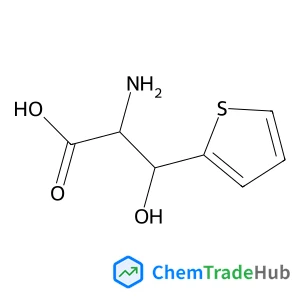
![9,9'-Spirobi[fluoren]-2-amine structure](https://cnstatic.chemtradehub.com/structs/118/118951-68-1-0d14.webp "9,9'-Spirobi[fluoren]-2-amine structure")
推荐供应商




免责声明
本页面提供的学术期刊信息仅供参考和研究使用。我们与任何期刊出版商均无关联,也不处理投稿事宜。如有投稿相关咨询,请直接联系相关期刊出版商。
如发现页面信息有误,请发送邮件至 support@chemtradehub.com 联系我们。我们将及时核实并处理您的问题。