









Delayed vibrational modulation of the solvated GFP chromophore into a conical intersection
文献信息
发布日期
2019-04-22
DOI
10.1039/C9CP01077G
影响因子
3.676
作者
Miles A. Taylor, Cheng Chen
查看原文
摘要
Green fluorescent protein (GFP) has revolutionized bioimaging and life sciences. Its successes have inspired modification of the chromophore structure and environment to tune emission properties, but outside the protein cage, the chromophore is essentially non-fluorescent. In this study, we employ the tunable femtosecond stimulated Raman spectroscopy (FSRS) and transient absorption (TA) to map the energy dissipation pathways of GFP model chromophore (HBDI) in basic aqueous solution. Strategic tuning of the Raman pump to 550 nm exploits the stimulated emission band to enhance excited state vibrational motions as HBDI navigates the non-equilibrium potential energy landscape to pass through a conical intersection. The time-resolved FSRS uncovers prominent anharmonic couplings between a global out-of-plane bending mode of ∼227 cm−1 and two modes at ∼866 and 1572 cm−1 before HBDI reaches the twisted intramolecular charge transfer (TICT) state on the ∼3 ps time scale. Remarkably, the wavelet transform analysis reveals a ∼500 fs delayed onset of the coupling peaks, in correlation with the emergence of an intermediate charge-separated state en route to the TICT state. This mechanism is corroborated by the altered coupling matrix for the HBDI Raman modes in the 50% (v/v) water–glycerol mixture, and a notable lengthening of the picosecond time constant. The real-time molecular “movie” of the general rotor-like HBDI isomerization reaction following photoexcitation represents a significant advance in comprehending the photochemical reaction pathways of the solvated GFP chromophore, therefore providing a crucial foundation to enable rational design of diverse nanomachines from efficient molecular rotors to bright fluorescent probes.
相关文献
A universal nonfullerene electron acceptor matching with different band-gap polymer donors for high-performance polymer solar cells
Zhenghui Luo, Guanghao Li, Wei Gao, Kailong Wu, Zhi-Guo Zhang, Beibei Qiu, Haijun Bin, Lingwei Xue, Feng Liu, Yongfang Li, Chuluo Yang
2018-03-20
Paper
DOI: 10.1039/C7TA11339K
Atomically ultrathin RhCo alloy nanosheet aggregates for efficient water electrolysis in broad pH range
Yue Zhao, Juan Bai, Xin-Ru Wu, Pei Chen, Pu-Jun Jin, Hong-Chang Yao, Yu Chen
2019-06-10
Paper
DOI: 10.1039/C9TA05334D
Carbon-based hydrogels: synthesis and their recent energy applications
Jayakumar Anjali, Vishal K. Jose, Jong-Min Lee
2019-06-17
Review Article
DOI: 10.1039/C9TA02525A
A highly sensitive immunofluorescence sensor based on bicolor upconversion and magnetic separation for simultaneous detection of fumonisin B1 and zearalenone
Xudong Zhao, Yu Wang, Shuang Li, Yingkai Qin, Tie Han, Zhixian Gao, Hui Liu
2021-04-06
Paper
DOI: 10.1039/D1AN00004G
Rapid identification of bacterial mixtures in urine using MALDI-TOF MS-based algorithm profiling coupled with magnetic enrichment
Wenmin Cheng, Haimei Shi, Mengjing Teng, Menghuan Yu, Bin Feng, Chuanfan Ding, Shaoning Yu, Fan Yang
2021-12-10
Paper
DOI: 10.1039/D1AN02098F
Cavity-containing, backbone-rigidified foldamers and macrocycles
Kazuhiro Yamato, Mark Kline, Bing Gong
2012-10-05
Feature Article
DOI: 10.1039/C2CC36391G
Correction: Graphene materials as a superior platform for advanced sensing strategies against gaseous ammonia
Kumar Vikrant, Vanish Kumar, Ki-Hyun Kim
2018-12-21
Correction
DOI: 10.1039/C8TA90287A
Dual-emitting quantum dot nanohybrid for imaging of latent fingerprints: simultaneous identification of individuals and traffic light-type visualization of TNT
Chaoying Xu, Xiandeng Hou, Jing-Juan Xu, Hong-Yuan Chen
2015-05-21
Edge Article
DOI: 10.1039/C5SC01497B
Electrochemical detection of microRNA-21 based on a Au nanoparticle functionalized g-C3N4 nanosheet nanohybrid as a sensing platform and a hybridization chain reaction amplification strategy
Ya Wang, Mengyao Li, Yuzhong Zhang
2021-03-02
Paper
DOI: 10.1039/D1AN00029B
您可能还喜欢
化合物问答
什么是2-Bromo-1-(pyrimidin-2-yl)ethanone hydrobromide(CAS号:1588441-02-4)?
2-Bromo-1-(pyrimidin-2-yl)ethanone hydrobromide是一种有机化合物,分子式为C6H5Br2N2O2。它是一种溴代化合...
1588441-02-42-Bromo-1-(2-pyrimid...
化合物问答
在合成中是否有1-正-丁基-3-甲基咪唑鎓三氟甲烷磺酸盐(CAS号:174899-66-2)的替代品?
在合成中,可以考虑使用1-正-丁基-3-甲基咪唑鎓溴酸盐或1-正-丁基-3-甲基咪唑鎓氯酸盐作为替代品。这些化合物在性能上与1-正-丁基-3-甲基咪唑鎓三氟甲烷...
174899-66-21-Butyl-3-methyl-1H-...
化合物问答
2-methyl-5-thiophen-2-ylfuran-3-carboxylic acid(CAS号:651005-90-2)的市场或研究趋势如何?
目前,2-methyl-5-thiophen-2-ylfuran-3-carboxylic acid的研究主要集中在药物化学和新型材料领域。随着生物医药和有机合...
651005-90-22-Methyl-5-(thien-2-...
化合物问答
格列吡嗪杂质H(CAS号:13554-93-3)的主要用途是什么?
格列吡嗪杂质H主要作为药物中间体或副产物存在,并无特定的工业应用。在药物生产中,它可能需要被处理掉以保证最终药物的质量。
13554-93-3Ethyl (2-(4-((cycloh...
化合物问答
如何储存(9ci)-4-甲氧基-1H-苯并咪唑-2-乙腈(CAS号:317817-41-7)?
(9ci)-4-甲氧基-1H-苯并咪唑-2-乙腈应储存在阴凉、干燥、通风良好的地方,避免阳光直射。使用密封的玻璃或塑料容器储存,并确保容器的密封性良好,以防止挥...
317817-41-7(4-Methoxy-1H-benzim...
化合物问答
4,5,9,10-四氢苯芘(CAS号:781-17-9)应用于哪些行业?
4,5,9,10-四氢苯芘在医药行业用于作为某些药物的中间体,在聚合物行业用作添加剂提升材料的热稳定性,在传感器领域作为传感器的敏感材料,在半导体行业中用作掺杂...
781-17-94,5,9,10-Tetrahydrop...
化合物问答
处理叶酸-D4(CAS号:171777-72-3)时应注意哪些实验室安全事项?
处理叶酸-D4时应佩戴个人防护装备(PPE),如手套和实验服。操作应在通风橱内进行,以避免吸入蒸汽或粉尘。如果不慎泄露,应立即用大量清水冲洗,并通知安全人员。参...
171777-72-3Folic Acid-d4
化合物问答
如何处理含有6-溴-2-(三氟乙酰基)-1,2,3,4-四氢异喹啉(CAS号:252331-63-8)的废料?
含有该化合物的废料应收集到专用的容器中,并进行密封以防止挥发和泄漏。在处理前,需进行危险性评估,以确定是否需要进行化学处理。最终处置需遵循当地的危险废物管理规定...
252331-63-81-(6-bromo-3,4-dihyd...
化合物问答
4,5-二氟-2-甲氧基苯甲醛(CAS号:145742-34-3)的主要用途是什么?
4,5-二氟-2-甲氧基苯甲醛主要用作有机合成中的中间体,特别是在制药和农药领域。它可以作为合成其他有机化合物的原料。
145742-34-34,5-difluoro-2-metho...
化合物问答
5-溴-6-三氟甲基吲哚(CAS号:1198475-24-9)安全吗?
5-溴-6-三氟甲基吲哚作为一种化学试剂,具有一定的毒性,需要在通风橱中操作,并采取适当的安全措施以避免吸入、皮肤接触和眼睛刺激。应避免与皮肤和眼睛直接接触,并...
1198475-24-95-bromo-6-(trifluoro...
来源期刊
Physical Chemistry Chemical Physics

CiteScore:
5.5
自引率:
10.3%
年发文量:
3036
Physical Chemistry Chemical Physics (PCCP) is an international journal co-owned by 19 physical chemistry and physics societies from around the world. This journal publishes original, cutting-edge research in physical chemistry, chemical physics and biophysical chemistry. To be suitable for publication in PCCP, articles must include significant innovation and/or insight into physical chemistry; this is the most important criterion that reviewers and Editors will judge against when evaluating submissions. The journal has a broad scope and welcomes contributions spanning experiment, theory, computation and data science. Topical coverage includes spectroscopy, dynamics, kinetics, statistical mechanics, thermodynamics, electrochemistry, catalysis, surface science, quantum mechanics, quantum computing and machine learning. Interdisciplinary research areas such as polymers and soft matter, materials, nanoscience, energy, surfaces/interfaces, and biophysical chemistry are welcomed if they demonstrate significant innovation and/or insight into physical chemistry. Joined experimental/theoretical studies are particularly appreciated when complementary and based on up-to-date approaches.
推荐化合物
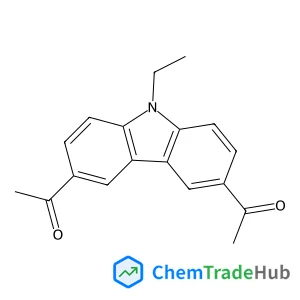
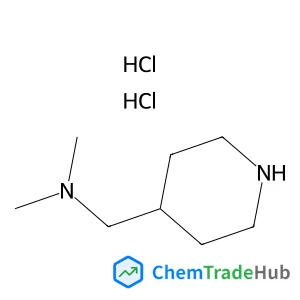
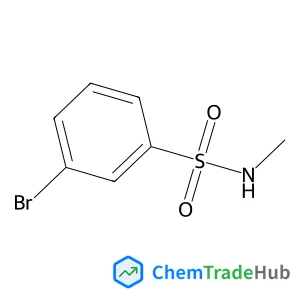
![4-[(1-Methyl-1H-pyrrol-2-yl)methylene]-1,3(2H,4H)-isoquinolinedione structure](https://cnstatic.chemtradehub.com/structs/110/1104546-89-5-a600.webp "4-[(1-Methyl-1H-pyrrol-2-yl)methylene]-1,3(2H,4H)-isoquinolinedione structure")
4-[(1-Methyl-1H-pyrrol-2-yl)methylene]-1,3(2H,4H)-isoquinolinedione
CAS号:
1104546-89-5
分子式:
C15H12N2O2
推荐供应商



免责声明
本页面提供的学术期刊信息仅供参考和研究使用。我们与任何期刊出版商均无关联,也不处理投稿事宜。如有投稿相关咨询,请直接联系相关期刊出版商。
如发现页面信息有误,请发送邮件至 support@chemtradehub.com 联系我们。我们将及时核实并处理您的问题。