




![2-Methyl-2-propanyl 1,6-diazaspiro[3.4]octane-6-carboxylate structure](https://cnstatic.chemtradehub.com/structs/115/1158749-79-1-81ee.webp "2-Methyl-2-propanyl 1,6-diazaspiro[3.4]octane-6-carboxylate structure")
Atomically ultrathin RhCo alloy nanosheet aggregates for efficient water electrolysis in broad pH range
文献信息
发布日期
2019-06-10
DOI
10.1039/C9TA05334D
影响因子
12.732
作者
Yue Zhao, Juan Bai, Xin-Ru Wu, Pei Chen, Pu-Jun Jin, Hong-Chang Yao, Yu Chen
查看原文
摘要
To date, noble metal nanostructures are the most efficient and stable electrocatalysts for water splitting. In this study, ultrathin RhCo alloy nanosheet aggregates (RhCo-ANAs) with atomic thickness (1.3 nm) were synthesized by a high-temperature cyanogel-reduction method. Moreover, the electrocatalytic performance of RhCo-ANAs for water splitting was investigated in acidic, neutral, and alkaline solutions. RhCo-ANAs exhibited higher activity and long-term stability for the anodic oxygen evolution reaction (OER) and cathodic hydrogen evolution reaction (HER) than RuO2 nanoparticle (RuO2-NP) and Pt nanoparticle (Pt-NP) electrocatalysts. In particular, RhCo-ANAs only require the overpotential of 31 and 310 mV at the current density of 10 mA cm−2 for the HER and OER in a neutral solution, respectively. Furthermore, we directly grew RhCo-ANAs on carbon foam (CF) (termed as RhCo-ANAs/CF) with flexible property, which could be directly used as a cathode and an anode electrocatalyst for full water splitting in a two-electrode system. The two-electrode electrolyzer, assembled by RhCo-ANAs/CF as a bifunctional electrocatalyst, can provide the stable 10 mA cm−2 current density at 1.54 V potential in a neutral solution. Importantly, the symmetric RhCo-ANAs/CF‖RhCo-ANAs/CF electrolyzer has outstanding reversible switch ability for the HER and OER, which can complete fifty alternating operation by periodically switching the cathode and anode.
相关文献
Electrochemiluminescent screening for methamphetamine metabolites
Emre Dokuzparmak, Kelly Brown, Lynn Dennany
2021-04-07
Paper
DOI: 10.1039/D1AN00226K
Aerosol-assisted nanostructuring of nickel/cobalt oxide thin films for viable electrochemical hydrazine sensing
Abdul Rehman, Muhammad Ali Ehsan, Adeel Afzal, Asghar Ali, Naseer Iqbal
2021-03-22
Paper
DOI: 10.1039/D1AN00222H
Graphene oxide–polybenzimidazolium nanocomposite anion exchange membranes for electrodialysis
Joseph Baugh, Adetunji Alabi, Ahmed AlHajaj, Linda Zou, Robert A. W. Dryfe
2018-11-08
Paper
DOI: 10.1039/C8TA09160A
The transfer and persistence of metals in latent fingermarks
Rhiannon E. Boseley, Daryl L. Howard, Mark J. Hackett, Simon W. Lewis
2021-12-21
Paper
DOI: 10.1039/D1AN01951A
A paper microfluidic device based colorimetric sensor for the detection and discrimination of elapid versus viper envenomation
Lakshmi Narashimhan Ramana, Santosh S. Mathapati, Nitin Salvi, M. V. Khadilkar, Anita Malhotra, Tarun Kumar Sharma
2021-12-20
Paper
DOI: 10.1039/D1AN01698A
A new synthetic approach to functionalize oxomolybdenum complexes
Zhengguo Lin, Bo Wang, Xiao Feng, Linyuan Fan, Song Yang, Xianqiang Huang, Changwen Hu
2013-07-11
Communication
DOI: 10.1039/C3CE40994E
In situ coating of a continuous mesoporous bimetallic PtRu film on Ni foam: a nanoarchitectured self-standing all-metal mesoporous electrode
Hongjing Wang, Hongjie Yu, Shuli Yin, You Xu, Xiaonian Li, Hairong Xue, Liang Wang
2018-06-02
Paper
DOI: 10.1039/C8TA03413C
Spatial separation of dual-cocatalysts on one-dimensional semiconductors for photocatalytic hydrogen production
Xiaoping Tao, Na Ta, Jianming Li, Xu Jin, Rengui Li, Can Li
2019-06-19
Communication
DOI: 10.1039/C9TA03090E
Symmetry of octa-coordination environment has a substantial influence on dinuclear TbIII triple-decker single-molecule magnets
Keiichi Katoh, Brian K. Breedlove, Masahiro Yamashita
2016-03-29
Edge Article
DOI: 10.1039/C5SC04669F
您可能还喜欢
化合物问答
什么是2-Bromo-1-(pyrimidin-2-yl)ethanone hydrobromide(CAS号:1588441-02-4)?
2-Bromo-1-(pyrimidin-2-yl)ethanone hydrobromide是一种有机化合物,分子式为C6H5Br2N2O2。它是一种溴代化合...
1588441-02-42-Bromo-1-(2-pyrimid...
化合物问答
在合成中是否有1-正-丁基-3-甲基咪唑鎓三氟甲烷磺酸盐(CAS号:174899-66-2)的替代品?
在合成中,可以考虑使用1-正-丁基-3-甲基咪唑鎓溴酸盐或1-正-丁基-3-甲基咪唑鎓氯酸盐作为替代品。这些化合物在性能上与1-正-丁基-3-甲基咪唑鎓三氟甲烷...
174899-66-21-Butyl-3-methyl-1H-...
化合物问答
2-methyl-5-thiophen-2-ylfuran-3-carboxylic acid(CAS号:651005-90-2)的市场或研究趋势如何?
目前,2-methyl-5-thiophen-2-ylfuran-3-carboxylic acid的研究主要集中在药物化学和新型材料领域。随着生物医药和有机合...
651005-90-22-Methyl-5-(thien-2-...
化合物问答
格列吡嗪杂质H(CAS号:13554-93-3)的主要用途是什么?
格列吡嗪杂质H主要作为药物中间体或副产物存在,并无特定的工业应用。在药物生产中,它可能需要被处理掉以保证最终药物的质量。
13554-93-3Ethyl (2-(4-((cycloh...
化合物问答
如何储存(9ci)-4-甲氧基-1H-苯并咪唑-2-乙腈(CAS号:317817-41-7)?
(9ci)-4-甲氧基-1H-苯并咪唑-2-乙腈应储存在阴凉、干燥、通风良好的地方,避免阳光直射。使用密封的玻璃或塑料容器储存,并确保容器的密封性良好,以防止挥...
317817-41-7(4-Methoxy-1H-benzim...
化合物问答
4,5,9,10-四氢苯芘(CAS号:781-17-9)应用于哪些行业?
4,5,9,10-四氢苯芘在医药行业用于作为某些药物的中间体,在聚合物行业用作添加剂提升材料的热稳定性,在传感器领域作为传感器的敏感材料,在半导体行业中用作掺杂...
781-17-94,5,9,10-Tetrahydrop...
化合物问答
处理叶酸-D4(CAS号:171777-72-3)时应注意哪些实验室安全事项?
处理叶酸-D4时应佩戴个人防护装备(PPE),如手套和实验服。操作应在通风橱内进行,以避免吸入蒸汽或粉尘。如果不慎泄露,应立即用大量清水冲洗,并通知安全人员。参...
171777-72-3Folic Acid-d4
化合物问答
如何处理含有6-溴-2-(三氟乙酰基)-1,2,3,4-四氢异喹啉(CAS号:252331-63-8)的废料?
含有该化合物的废料应收集到专用的容器中,并进行密封以防止挥发和泄漏。在处理前,需进行危险性评估,以确定是否需要进行化学处理。最终处置需遵循当地的危险废物管理规定...
252331-63-81-(6-bromo-3,4-dihyd...
化合物问答
4,5-二氟-2-甲氧基苯甲醛(CAS号:145742-34-3)的主要用途是什么?
4,5-二氟-2-甲氧基苯甲醛主要用作有机合成中的中间体,特别是在制药和农药领域。它可以作为合成其他有机化合物的原料。
145742-34-34,5-difluoro-2-metho...
化合物问答
5-溴-6-三氟甲基吲哚(CAS号:1198475-24-9)安全吗?
5-溴-6-三氟甲基吲哚作为一种化学试剂,具有一定的毒性,需要在通风橱中操作,并采取适当的安全措施以避免吸入、皮肤接触和眼睛刺激。应避免与皮肤和眼睛直接接触,并...
1198475-24-95-bromo-6-(trifluoro...
来源期刊
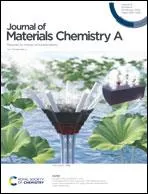
Journal of Materials Chemistry A
CiteScore:
19.5
自引率:
4.7%
年发文量:
2211
Journal of Materials Chemistry A, B & C cover high quality studies across all fields of materials chemistry. The journals focus on those theoretical or experimental studies that report new understanding, applications, properties and synthesis of materials. The journals have a strong history of publishing quality reports of interest to interdisciplinary communities and providing an efficient and rigorous service through peer review and publication. The journals are led by an international team of Editors-in-Chief and Associate Editors who are all active researchers in their fields. Journal of Materials Chemistry A, B & C are separated by the intended application of the material studied. Broadly, applications in energy and sustainability are of interest to Journal of Materials Chemistry A, applications in biology and medicine are of interest to Journal of Materials Chemistry B, and applications in optical, magnetic and electronic devices are of interest to Journal of Materials Chemistry C. More than one Journal of Materials Chemistry journal may be suitable for certain fields and researchers are encouraged to submit their paper to the journal that they feel best fits for their particular article. Example topic areas within the scope of Journal of Materials Chemistry A are listed below. This list is neither exhaustive nor exclusive. Artificial photosynthesis Batteries Carbon dioxide conversion Catalysis Fuel cells Gas capture/separation/storage Green/sustainable materials Hydrogen generation Hydrogen storage Photocatalysis Photovoltaics Self-cleaning materials Self-healing materials Sensors Supercapacitors Thermoelectrics Water splitting Water treatment
推荐化合物
![2-(Methylsulfonyl)-2,4,5,6-tetrahydropyrrolo[3,4-c]pyrazole structure](https://cnstatic.chemtradehub.com/structs/122/1226781-80-1-09d5.webp "2-(Methylsulfonyl)-2,4,5,6-tetrahydropyrrolo[3,4-c]pyrazole structure")
推荐供应商





免责声明
本页面提供的学术期刊信息仅供参考和研究使用。我们与任何期刊出版商均无关联,也不处理投稿事宜。如有投稿相关咨询,请直接联系相关期刊出版商。
如发现页面信息有误,请发送邮件至 support@chemtradehub.com 联系我们。我们将及时核实并处理您的问题。