


Photon management properties of Yb-doped SnO2 nanoparticles synthesized by the sol–gel technique
文献信息
发布日期
2019-09-11
DOI
10.1039/C9CP01993F
影响因子
3.676
作者
Karima Bouras, Guy Schmerber, Damien Aureau, Hervé Rinnert, Jean-Luc Rehspringer, Dris Ihiawakrim, Aziz Dinia, Abdelilah Slaoui, Silviu Colis
查看原文
摘要
SnO2 is a transparent large band gap semiconductor, particularly interesting for optoelectronic and photovoltaic devices, mainly because its conduction can be easily tuned by doping or by modulating the amount of oxygen vacancies. Besides, rare earth doping was successfully exploited for up conversion properties. Here we report on the functionalization of SnO2 nanoparticles with optically active Yb3+ ions using the sol–gel method, which allows UV to NIR spectral (down) conversion. As starting solutions we used stable non-alkoxide metal–organic compounds, which is rather uncommon. Transmission electron microscopy analysis demonstrated the formation of small well-crystallized nanoparticles while X-ray photoelectron spectroscopy measurements have revealed that the Yb is well inserted in the host matrix and has a 3+ valence state. All nanoparticles present large absorption in the UV-visible range (250 to 550 nm) and a band gap that decreases down to 2.72 eV upon doping. The UV energy converted into NIR on the basis of efficient energy transfer from SnO2 to the Yb3+ ions ranges between 250 and 400 nm. Reference undoped SnO2 nanoparticles with a mean size of 20 nm allow converting UV light into broad visible emission centered at 650 nm. The incorporation of up to 3.5 at% of Yb3+ ions into the SnO2 host matrix results in a spectacular decrease of the nanoparticle size down to 6.6 nm. This allowed also the shift of the photoluminescence to NIR in the 970–1050 nm range. The energy level structure of Yb3+ in SnO2 was successfully determined from the deconvolution of the Yb emission. This emission is significantly enhanced by increasing the doping level. All optical measurements suggest that these nanoparticles can be efficiently used as down-shifting converters.
期刊推荐
Crystallography Reports

Organic Process Research & Development

Chemical Communications

New Journal of Chemistry

Current Opinion in Solid State & Materials Science

Journal of Peptide Science

Russian Journal of Applied Chemistry

Acta Materialia

Russian Journal of Bioorganic Chemistry

Saudi Pharmaceutical Journal
相关文献
A microwave molecular solution based approach towards high-κ-tantalum(v)oxide nanoparticles: synthesis, dielectric properties and electron paramagnetic resonance spectroscopic studies of their defect chemistry
R. C. Hoffmann, M. Kaloumenos, D. Spiehl, E. Erdem, S. Repp, S. Weber, J. J. Schneider
2015-11-03
Paper
DOI: 10.1039/C5CP05166E
Enhanced field-emission of silver nanoparticle–graphene oxide decorated ZnO nanowire arrays
Guojing Wang, Jiecui Liao, Chienhua Chen, Shasha Lv, Chuanqing Shi
2015-11-02
Paper
DOI: 10.1039/C5CP05036G
Physicochemical perspectives (aggregation, structure and dynamics) of interaction between pluronic (L31) and surfactant (SDS)
G. K. S. Prameela, B. V. N. Phani Kumar, A. Pan, V. K. Aswal, J. Subramanian, A. B. Mandal, S. P. Moulik
2015-10-13
Paper
DOI: 10.1039/C5CP04910E
Spatial frequency heterodyne imaging of aqueous phase transitions inside multi-walled carbon nanotubes
F. M. Schunk, D. Rand, C. Rose-Petruck
2015-10-26
Paper
DOI: 10.1039/C5CP04508H
Reactive symbol sequences for a model of hydrogen combustion
Mohammad Alaghemandi
2015-11-26
Paper
DOI: 10.1039/C5CP05125H
Self-assembly of block copolymers on lithographically patterned template with ordered posts
Dan Xu, Yao-Hong Xue, Yan-Bo Sun
2015-11-03
Paper
DOI: 10.1039/C5CP05449D
Measurement and modelling of reactive transport in geological barriers for nuclear waste containment
Qingrong Xiong, Claudia Joseph, Katja Schmeide, Andrey P. Jivkov
2015-10-26
Paper
DOI: 10.1039/C5CP05243B
Adsorption of O2 on anionic silver clusters: spins and electron binding energies dominate in the range up to nano sizes
Jun Ma, Xizi Cao, Xiaopeng Xing, Xuefeng Wang, Joel H. Parks
2015-11-12
Paper
DOI: 10.1039/C5CP06116D
Probing the dynamics of highly excited toluene on the fs timescale
C. C. Papadopoulou, S. Kaziannis, C. Kosmidis
2015-11-12
Paper
DOI: 10.1039/C5CP04346H
您可能还喜欢
化合物问答
(3-氨苯基)环丙基甲酮(CAS号:162174-75-6)的主要用途是什么?
(3-氨苯基)环丙基甲酮主要用于合成化学中间体,特别是在药物化学领域作为原料。它还可以用于有机合成反应中,作为催化剂或反应物。
162174-75-6(3-Aminophenyl)(cycl...
化合物问答
如何储存亚胺菌(CAS号:136470-79-6)?
亚胺菌应储存在干燥、阴凉处,避免直接暴露于光线下。建议使用密封容器储存,防止吸潮和污染。具体的储存条件应参考产品的安全数据表(MSDS)或药品说明书。
136470-79-6Abacavir EP Impurity...
化合物问答
2-氯-2,2-二氟乙酰胺(CAS号:354-28-9)应用于哪些行业?
2-氯-2,2-二氟乙酰胺在医药、聚合物、传感器、半导体等领域有广泛应用。在医药领域,它作为中间体用于合成其他药物;在聚合物领域,用作聚合引发剂或稳定剂;在传感...
354-28-92-Chloro-2,2-difluor...
化合物问答
处理4-甲基-3-硝基-1,1-联苯(CAS号:53812-68-3)时应注意哪些实验室安全事项?
在处理4-甲基-3-硝基-1,1-联苯时,应佩戴手套、护目镜和实验室外套等个人防护装备(PPE),确保在通风橱中操作以减少吸入风险。若发生泄露,应立即使用沙子或...
53812-68-34'-Methyl-3-nitro-1,...
化合物问答
(2S)-羟基(苯基)乙酸 (2R)-N-苄基-1-(4-甲氧基苯基)丙-2-胺盐(CAS号:188690-84-8)应用于哪些行业?
该化合物广泛应用于医药、聚合物和半导体行业。在医药领域,它是某些药物中间体的重要组成部分;在聚合物领域,可用作增塑剂;在半导体行业,可用于制造光刻胶。
188690-84-8Benzeneacetic acid, ...
化合物问答
在合成中是否有芬苯哒唑砜-D3标准品(CAS号:1228182-49-7)的替代品?
芬苯哒唑砜-D3标准品的替代品可能包括类似的苯并咪唑类化合物,如芬苯哒唑本身或其非同位素标记版本。这些替代品在结构上与芬苯哒唑砜-D3相似,但在具体应用中需进行...
1228182-49-7(~2~H_3_)Methyl [5-(...
化合物问答
2-氟-4-硝基苯乙酸(CAS号:315228-19-4)通常如何合成?
2-氟-4-硝基苯乙酸可以通过一系列化学反应合成,通常是从4-氟苯胺开始,首先进行硝化反应生成4-氟-2-硝基苯胺,然后进行乙酰化反应得到目标产物。具体的合成步...
315228-19-42-(2-fluoro-4-nitrop...
化合物问答
2-氟-4-甲氧基苯乙酸(CAS号:883531-28-0)通常如何合成?
2-氟-4-甲氧基苯乙酸通常通过将4-甲氧基苯乙酸与氟化试剂(如氟化氰)反应来合成。反应通常在无水条件下进行,使用催化剂如六氟磷酸锂或四氟硼酸锂以提高选择性和产...
883531-28-02-Fluoro-4-methoxyph...
化合物问答
什么是4SC 202;4SC202(CAS号:1186222-89-8)?
4SC 202;4SC202是一种化学化合物,其化学名称为(2E)-N-(2-氨基苯基)-3-(1-{[4-(1-甲基-1H-吡唑-4-基)苯基]磺酰基}-1H...
1186222-89-8(2E)-N-(2-Aminopheny...
132980-99-53,5-Difluorobenzamid...
来源期刊
Physical Chemistry Chemical Physics

CiteScore:
5.5
自引率:
10.3%
年发文量:
3036
Physical Chemistry Chemical Physics (PCCP) is an international journal co-owned by 19 physical chemistry and physics societies from around the world. This journal publishes original, cutting-edge research in physical chemistry, chemical physics and biophysical chemistry. To be suitable for publication in PCCP, articles must include significant innovation and/or insight into physical chemistry; this is the most important criterion that reviewers and Editors will judge against when evaluating submissions. The journal has a broad scope and welcomes contributions spanning experiment, theory, computation and data science. Topical coverage includes spectroscopy, dynamics, kinetics, statistical mechanics, thermodynamics, electrochemistry, catalysis, surface science, quantum mechanics, quantum computing and machine learning. Interdisciplinary research areas such as polymers and soft matter, materials, nanoscience, energy, surfaces/interfaces, and biophysical chemistry are welcomed if they demonstrate significant innovation and/or insight into physical chemistry. Joined experimental/theoretical studies are particularly appreciated when complementary and based on up-to-date approaches.
推荐化合物
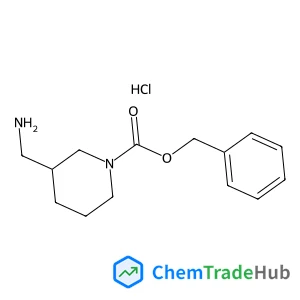
![Benzyl spiro[indole-3,4'-piperidine]-1(2H)-carboxylate hydrochloride (1:1) structure](https://cnstatic.chemtradehub.com/structs/159/159635-46-8-8de0.webp "Benzyl spiro[indole-3,4'-piperidine]-1(2H)-carboxylate hydrochloride (1:1) structure")
Benzyl spiro[indole-3,4'-piperidine]-1(2H)-carboxylate hydrochloride (1:1)
CAS号:
159635-46-8
分子式:
C20H23ClN2O2
推荐供应商




免责声明
本页面提供的学术期刊信息仅供参考和研究使用。我们与任何期刊出版商均无关联,也不处理投稿事宜。如有投稿相关咨询,请直接联系相关期刊出版商。
如发现页面信息有误,请发送邮件至 support@chemtradehub.com 联系我们。我们将及时核实并处理您的问题。