


On the transition from partial wetting to complete wetting of methanol on graphite
文献信息
发布日期
2019-11-18
DOI
10.1039/C9CP05118J
影响因子
3.676
作者
Luisa Prasetyo, Toshihide Horikawa, Naoki Takashima, D. D. Do, D. Nicholson
查看原文
摘要
The transition from partial wetting to complete wetting for methanol adsorbed on a highly graphitized thermal carbon black, Carbopack F, over a range of temperature from the triple point at 185 K to 298 K, was investigated using Monte Carlo simulation and high-resolution experiments. At 190 K, (above the triple point) both the experimental and simulated adsorption isotherms cut the P/P0 axis at a finite loading; a feature of partial wetting that has not been recognized previously in the literature. This occurs because most O- and H-atoms in the second layer of the adsorbate point towards the adsorbent surface to form hydrogen bonds with molecules in the first layer and therefore the interface between the bilayer adsorbed film and the gas phase consists mainly of methyl groups, preventing the system from forming higher layers. At temperatures above 263 K, methanol adsorption increases with pressure and wets the surface as the pressure approaches the bulk coexistence pressure P0. This is because the O–H and O–CH3 bonds of methanol in the region above the second layer have random orientation, and adsorption in higher layers takes place via hydrogen bonding. From extensive simulations of methanol adsorption on adsorbents of different strength over a wide temperature range, a parametric map has been constructed which identifies the regions of non-wetting, partial wetting and complete wetting. For a given surface strength, wetting is favoured at higher temperatures, and at a given temperature there is a transition from non-wetting on weakly adsorbing substrates to either partial wetting or to complete wetting on strong adsorbents at temperatures below or above the roughening temperature Tr of 260 K.
期刊推荐

Journal of the Indian Institute of Science
NDT & E International
Herald of the Russian Academy of Sciences
Journal of Asian Natural Products Research
Acta Metallurgica Sinica-English Letters
Chinese Journal of Chemistry
Cellulose
Heteroatom Chemistry
Medicinal Chemistry Research
Critical Reviews in Solid State and Materials Sciences
相关文献
Flagging up sunburn: a printable, multicomponent, UV-indicator that warns of the approach of erythema
Andrew Mills, Kate McDiarmid, Michael McFarlane, Pauline Grosshans
2009-02-10
Communication
DOI: 10.1039/B900569B
Dye displacement assay for saccharide detection with boronate hydrogels‡
Winson M. J. Ma, Marta P. Pereira Morais, François D’Hooge, Jean M. H. van den Elsen, Jonathan P. L. Cox, Tony D. James, John S. Fossey
2008-12-19
Communication
DOI: 10.1039/B814379J
A robust procedure for the functionalization of gold nanorods and noble metal nanoparticles
Benjamin Thierry, Jane Ng, Tina Krieg, Hans J. Griesser
2009-02-11
Communication
DOI: 10.1039/B820137D
Marriage of porphyrin chemistry with metal-catalysed reactions
Hiroshi Shinokubo, Atsuhiro Osuka
2009-01-14
Feature Article
DOI: 10.1039/B817941G
Unsuspected mesomorphism in “tail-free” cyclopalladated 3,5-disubstituted-2-(2′-pyridyl)pyrroles
Daniela Pucci, Iolinda Aiello, Alessia Aprea, Anna Bellusci, Alessandra Crispini, Mauro Ghedini
2009-02-20
Communication
DOI: 10.1039/B818603K
Switching the photo-induced energy and electron-transfer processes in BODIPY–phthalocyanine conjugates
Jian-Yong Liu, Eugeny A. Ermilov, Beate Röder, Dennis K. P. Ng
2009-01-28
Communication
DOI: 10.1039/B821630D
Intramolecular dimer radical anions of [3n] cyclophanes: transannular distance dependent stabilization energy
Mamoru Fujitsuka, Sachiko Tojo, Teruo Shinmyozu, Tetsuro Majima
2009-02-20
Communication
DOI: 10.1039/B810122A
Glucose sensing via polyanion formation and induced pyrene excimer emission
Cong Yu, Vivian Wing-Wah Yam
2009-02-10
Communication
DOI: 10.1039/B820397K
您可能还喜欢
化合物问答
P11(CAS号:848644-86-0)安全吗?
P11作为一种化学化合物,需要谨慎处理。一般来说,该化合物无毒,但在操作过程中仍需遵循实验室安全规定,避免皮肤接触和吸入。建议在通风良好的环境中操作,并佩戴适当...
848644-86-0L-Histidyl-L-seryl-L...
化合物问答
氨甲环酸杂质C(CAS号:330838-52-3)通常如何合成?
氨甲环酸杂质C通常通过氨甲环酸的衍生物与环己烯进行缩合反应合成。常见的合成方法包括一步合成法和多步合成法,其中多步合成法可以提高产物的选择性和产率。反应通常在无...
330838-52-34-(Aminomethyl)-1-cy...
化合物问答
(±)-茉莉酸(CAS号:221682-41-3)通常如何合成?
(±)-茉莉酸的合成通常采用生物合成或者化学合成的方法。化学合成方法中,可以通过2-戊烯-1-醇与环戊酮的缩合反应,再经过氧化反应得到目标产物。该反应需要温和的...
221682-41-3{3-Oxo-2-[(2E)-2-pen...
化合物问答
(4S,4'S)-2,2'-(1,1-环己烷二基)双(4-异丙基-4,5-二氢-1,3-噁唑)(CAS号:1373357-00-6)安全吗?
(4S,4'S)-2,2'-(1,1-环己烷二基)双(4-异丙基-4,5-二氢-1,3-噁唑)属于有机化合物,应遵循实验室安全规范。在操作时应佩戴适当的个人防护...
1373357-00-6(4S,4'S)-2,2'-(1,1-C...
化合物问答
什么是6-苄氧基-5-甲氧基-2-羧基吲哚(CAS号:2495-92-3)?
6-苄氧基-5-甲氧基-2-羧基吲哚是一种有机化合物,分子式为C16H15NO3。它是一种含有苄氧基、甲氧基和羧基官能团的吲哚衍生物。
2495-92-36-(Benzyloxy)-5-meth...
化合物问答
丙二酸丁酯乙酯(CAS号:17373-84-1)安全吗?
丙二酸丁酯乙酯属于易燃物质,具有一定的毒性。在操作时应佩戴防护眼镜和手套,避免接触皮肤和眼睛。储存时应远离热源和火源,避免阳光直射,以减少火灾和爆炸的风险。
17373-84-1Butyl ethyl malonate
化合物问答
2-碘-3-甲基吡嗪(CAS号:58139-08-5)的市场或研究趋势如何?
2-碘-3-甲基吡嗪作为一种特殊结构的化合物,目前在工业和学术研究中的应用相对有限。然而,随着对特定化学结构及其潜在应用的深入研究,预计未来可能在农药、医药等领...
58139-08-52-Iodo-3-methylpyraz...
化合物问答
千层纸素A-7-0-β-D-葡萄糖醛酸苷甲酯(CAS号:82475-01-2)的物理化学性质是什么?
千层纸素A-7-0-β-D-葡萄糖醛酸苷甲酯是一种白色结晶固体,分子量为616.27 g/mol。该化合物在水中溶解度较低,在有机溶剂中溶解度较高。其反应活性主...
82475-01-25-Hydroxy-8-methoxy-...
化合物问答
什么是7-苄基-4,7-二氮杂螺[2.5]辛烷(CAS号:1222106-45-7)?
7-苄基-4,7-二氮杂螺[2.5]辛烷是一种有机化合物,其结构由一个环状的7-苄基-4,7-二氮杂螺环和一个苯基组成。该化合物的分子式为C14H16N2。它具...
1222106-45-77-Benzyl-4,7-diazasp...
化合物问答
在合成中是否有丁酰胺酸甲酯(CAS号:53171-39-4)的替代品?
丁酰胺酸甲酯的合成中可能的替代品包括其他氨基酸衍生物,如乙酰胺酸甲酯或丙酰胺酸甲酯。这些替代品在某些合成路线中可能更为便利或成本更低。
53171-39-4Methyl 4-amino-4-oxo...
来源期刊
Physical Chemistry Chemical Physics

CiteScore:
5.5
自引率:
10.3%
年发文量:
3036
Physical Chemistry Chemical Physics (PCCP) is an international journal co-owned by 19 physical chemistry and physics societies from around the world. This journal publishes original, cutting-edge research in physical chemistry, chemical physics and biophysical chemistry. To be suitable for publication in PCCP, articles must include significant innovation and/or insight into physical chemistry; this is the most important criterion that reviewers and Editors will judge against when evaluating submissions. The journal has a broad scope and welcomes contributions spanning experiment, theory, computation and data science. Topical coverage includes spectroscopy, dynamics, kinetics, statistical mechanics, thermodynamics, electrochemistry, catalysis, surface science, quantum mechanics, quantum computing and machine learning. Interdisciplinary research areas such as polymers and soft matter, materials, nanoscience, energy, surfaces/interfaces, and biophysical chemistry are welcomed if they demonstrate significant innovation and/or insight into physical chemistry. Joined experimental/theoretical studies are particularly appreciated when complementary and based on up-to-date approaches.
推荐化合物
![2-Azaspiro[4.5]decane-3,8-dione structure](https://cnstatic.chemtradehub.com/structs/914/914780-96-4-e94b.webp "2-Azaspiro[4.5]decane-3,8-dione structure")
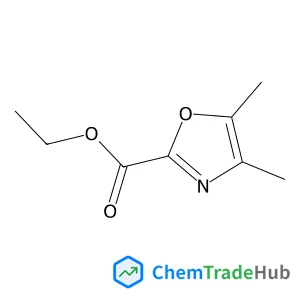
![[3-Fluoro-4-(1-pyrrolidinylcarbonyl)phenyl]boronic acid structure](https://cnstatic.chemtradehub.com/structs/874/874289-09-5-e3d4.webp "[3-Fluoro-4-(1-pyrrolidinylcarbonyl)phenyl]boronic acid structure")
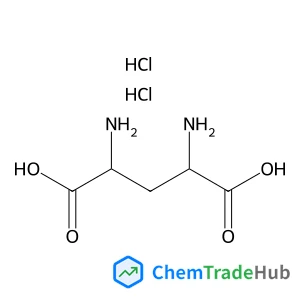
推荐供应商







免责声明
本页面提供的学术期刊信息仅供参考和研究使用。我们与任何期刊出版商均无关联,也不处理投稿事宜。如有投稿相关咨询,请直接联系相关期刊出版商。
如发现页面信息有误,请发送邮件至 support@chemtradehub.com 联系我们。我们将及时核实并处理您的问题。