


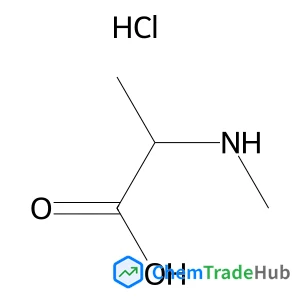
The binding mode of vilazodone in the human serotonin transporter elucidated by ligand docking and molecular dynamics simulations
文献信息
发布日期
2020-01-23
DOI
10.1039/C9CP05764A
影响因子
3.676
作者
Guoxun Zheng, Tingting Fu, Jiajun Hong, Fengcheng Li, Xiaojun Yao, Weiwei Xue
查看原文
摘要
Vilazodone is a novel antidepressant used for the treatment of major depressive disorder (MDD) with a primary action mechanism of inhibiting the human serotonin reuptake transporter (hSERT) and acting as a 5-HT1A receptor partial agonist. The interaction between vilazodone and the 5-HT1A receptor has been reported, however, the binding mode of vilazodone in the hSERT remains elusive. In the current study, to elucidate the molecular mechanism of vilazodone binding in the hSERT, the drug and its five analogs were docked into the hSERT crystal structure as initial conformations and were sampled by 400 ns molecular dynamics (MD) simulations. Through the analysis of the profiles of protein–ligand binding free energies, interaction fingerprints, and conformational rearrangements, the binding mode of vilazodone in the hSERT was revealed. As a result, unlike the classical antidepressants located in the S1 site of the hSERT, vilazodone adopted a linear pose in the binding pocket. Its arylpiperazine fragment occupies the central site (S1) and interacts with Y95, D98, I172, Y176, F335, F341, S438, and T439, while the indole fragment extends to the allosteric site (S2) via interacting with the ionic switch (R104/E403) between the two sites. The new insights obtained are not only helpful in understanding the binding mode of vilazodone in the hSERT, but also provide valuable guidance to the discovery of novel antidepressant drugs.
期刊推荐

Russian Chemical Bulletin
Saudi Pharmaceutical Journal
Nature Medicine
Russian Journal of Organic Chemistry
Russian Journal of Bioorganic Chemistry
Organic Process Research & Development
Russian Journal of Applied Chemistry
Journal of Natural Medicines
Russian Journal of Coordination Chemistry
Current Opinion in Colloid & Interface Science
相关文献
Electronic coherence and the kinetics of inter-complex energy transfer in light-harvesting systems
Pengfei Huo, Thomas F. Miller III
2015-06-01
Paper
DOI: 10.1039/C5CP02517F
Rotational dynamics of organic cations in the CH3NH3PbI3 perovskite
Tianran Chen, Benjamin J. Foley, Madhusudan Tyagi, John R. D. Copley, Joshua J. Choi, Seung-Hun Lee
2015-10-28
Paper
DOI: 10.1039/C5CP05348J
Testing the transferability of a coarse-grained model to intrinsically disordered proteins
Gil O. Rutter, David Quigley, Tiffany R. Walsh
2015-11-05
Paper
DOI: 10.1039/C5CP05652G
Pressure-dependent formation of i-motif and G-quadruplex DNA structures
S. Takahashi
2015-09-03
Paper
DOI: 10.1039/C5CP04727G
DFT-based Green's function pathways model for prediction of bridge-mediated electronic coupling
Laura Berstis, Kim K. Baldridge
2015-04-20
Paper
DOI: 10.1039/C5CP01861G
Electron transfer within a reaction path model calibrated by constrained DFT calculations: application to mixed-valence organic compounds
A. de la Lande, C. Meier
2015-05-18
Paper
DOI: 10.1039/C5CP01194A
Spectroscopic evidence of ‘jumping and pecking’ of cholinium and H-bond enhanced cation–cation interaction in ionic liquids
Anne Knorr, Koichi Fumino, Anne-Marie Bonsa
2015-08-11
Communication
DOI: 10.1039/C5CP03412D
Surface modified multifunctional ZnFe2O4 nanoparticles for hydrophobic and hydrophilic anti-cancer drug molecule loading
Debabrata Maiti, Arindam Saha, Parukuttyamma Sujatha Devi
2015-10-19
Paper
DOI: 10.1039/C5CP05840F
您可能还喜欢
化合物问答
(3-氨苯基)环丙基甲酮(CAS号:162174-75-6)的主要用途是什么?
(3-氨苯基)环丙基甲酮主要用于合成化学中间体,特别是在药物化学领域作为原料。它还可以用于有机合成反应中,作为催化剂或反应物。
162174-75-6(3-Aminophenyl)(cycl...
化合物问答
如何储存亚胺菌(CAS号:136470-79-6)?
亚胺菌应储存在干燥、阴凉处,避免直接暴露于光线下。建议使用密封容器储存,防止吸潮和污染。具体的储存条件应参考产品的安全数据表(MSDS)或药品说明书。
136470-79-6Abacavir EP Impurity...
化合物问答
2-氯-2,2-二氟乙酰胺(CAS号:354-28-9)应用于哪些行业?
2-氯-2,2-二氟乙酰胺在医药、聚合物、传感器、半导体等领域有广泛应用。在医药领域,它作为中间体用于合成其他药物;在聚合物领域,用作聚合引发剂或稳定剂;在传感...
354-28-92-Chloro-2,2-difluor...
化合物问答
处理4-甲基-3-硝基-1,1-联苯(CAS号:53812-68-3)时应注意哪些实验室安全事项?
在处理4-甲基-3-硝基-1,1-联苯时,应佩戴手套、护目镜和实验室外套等个人防护装备(PPE),确保在通风橱中操作以减少吸入风险。若发生泄露,应立即使用沙子或...
53812-68-34'-Methyl-3-nitro-1,...
化合物问答
(2S)-羟基(苯基)乙酸 (2R)-N-苄基-1-(4-甲氧基苯基)丙-2-胺盐(CAS号:188690-84-8)应用于哪些行业?
该化合物广泛应用于医药、聚合物和半导体行业。在医药领域,它是某些药物中间体的重要组成部分;在聚合物领域,可用作增塑剂;在半导体行业,可用于制造光刻胶。
188690-84-8Benzeneacetic acid, ...
化合物问答
在合成中是否有芬苯哒唑砜-D3标准品(CAS号:1228182-49-7)的替代品?
芬苯哒唑砜-D3标准品的替代品可能包括类似的苯并咪唑类化合物,如芬苯哒唑本身或其非同位素标记版本。这些替代品在结构上与芬苯哒唑砜-D3相似,但在具体应用中需进行...
1228182-49-7(~2~H_3_)Methyl [5-(...
化合物问答
2-氟-4-硝基苯乙酸(CAS号:315228-19-4)通常如何合成?
2-氟-4-硝基苯乙酸可以通过一系列化学反应合成,通常是从4-氟苯胺开始,首先进行硝化反应生成4-氟-2-硝基苯胺,然后进行乙酰化反应得到目标产物。具体的合成步...
315228-19-42-(2-fluoro-4-nitrop...
化合物问答
2-氟-4-甲氧基苯乙酸(CAS号:883531-28-0)通常如何合成?
2-氟-4-甲氧基苯乙酸通常通过将4-甲氧基苯乙酸与氟化试剂(如氟化氰)反应来合成。反应通常在无水条件下进行,使用催化剂如六氟磷酸锂或四氟硼酸锂以提高选择性和产...
883531-28-02-Fluoro-4-methoxyph...
化合物问答
什么是4SC 202;4SC202(CAS号:1186222-89-8)?
4SC 202;4SC202是一种化学化合物,其化学名称为(2E)-N-(2-氨基苯基)-3-(1-{[4-(1-甲基-1H-吡唑-4-基)苯基]磺酰基}-1H...
1186222-89-8(2E)-N-(2-Aminopheny...
132980-99-53,5-Difluorobenzamid...
来源期刊
Physical Chemistry Chemical Physics

CiteScore:
5.5
自引率:
10.3%
年发文量:
3036
Physical Chemistry Chemical Physics (PCCP) is an international journal co-owned by 19 physical chemistry and physics societies from around the world. This journal publishes original, cutting-edge research in physical chemistry, chemical physics and biophysical chemistry. To be suitable for publication in PCCP, articles must include significant innovation and/or insight into physical chemistry; this is the most important criterion that reviewers and Editors will judge against when evaluating submissions. The journal has a broad scope and welcomes contributions spanning experiment, theory, computation and data science. Topical coverage includes spectroscopy, dynamics, kinetics, statistical mechanics, thermodynamics, electrochemistry, catalysis, surface science, quantum mechanics, quantum computing and machine learning. Interdisciplinary research areas such as polymers and soft matter, materials, nanoscience, energy, surfaces/interfaces, and biophysical chemistry are welcomed if they demonstrate significant innovation and/or insight into physical chemistry. Joined experimental/theoretical studies are particularly appreciated when complementary and based on up-to-date approaches.
推荐化合物
推荐供应商




免责声明
本页面提供的学术期刊信息仅供参考和研究使用。我们与任何期刊出版商均无关联,也不处理投稿事宜。如有投稿相关咨询,请直接联系相关期刊出版商。
如发现页面信息有误,请发送邮件至 support@chemtradehub.com 联系我们。我们将及时核实并处理您的问题。