


![2-Methyl-2-propanyl [(2S)-1-hydroxy-3-(4-hydroxyphenyl)-2-propanyl]carbamate structure](https://cnstatic.chemtradehub.com/structs/833/83345-46-4-eec2.webp "2-Methyl-2-propanyl [(2S)-1-hydroxy-3-(4-hydroxyphenyl)-2-propanyl]carbamate structure")
Interaction of positronium with dissolved oxygen in liquids‡
文献信息
发布日期
2020-01-29
DOI
10.1039/C9CP06105C
影响因子
3.676
作者
P. S. Stepanov, F. A. Selim, A. V. Bokov, O. V. Ilyukhina, G. Duplâtre
查看原文
摘要
The interaction of positronium (Ps) with molecular oxygen dissolved in liquids is experimentally investigated. Computer software has been developed for fitting the positron annihilation lifetime spectra in liquids using parameters with clear physical meaning: rate constants of the Ps chemical reactions, annihilation rate constants of the different positron states, probability of Ps formation in a quasi-free state, typical formation time of a Ps nanobubble. Such processing of the spectra allowed identification of the dominant interaction of the Ps atom with dissolved oxygen. It turns out to be mainly ortho–para-conversion (Ps → 1/4 p-Ps + 3/4 o-Ps), but not oxidation (Ps + O2 → e+ + O2−). Values of the reaction rate constants are obtained.
期刊推荐

Russian Journal of Applied Chemistry
Russian Journal of Bioorganic Chemistry
Crystallography Reports
Russian Chemical Bulletin

Journal of Peptide Science

Current Opinion in Colloid & Interface Science

Saudi Pharmaceutical Journal

Organic Process Research & Development

Chemistry Education Research and Practice

Russian Journal of Coordination Chemistry
相关文献
A combined computational and experimental investigation of Mg doped α-Fe2O3
Monica Kosa, Hannah Noa Barad, Vijay Singh, David A. Keller, Klimentiy Shimanovich, Sven Rühle, Assaf Y. Anderson, Arie Zaban, Dan Thomas Major
2015-11-23
Paper
DOI: 10.1039/C5CP05987A
Alkali subhalides: high-pressure stability and interplay between metallic and ionic bonds
G. Saleh
2015-12-02
Paper
DOI: 10.1039/C5CP06026E
Long term puzzles of the CH and CD energetics and related phenomena revisited; solutions sought through REMPI-photofragmentations of bromomethanes
Arnar Hafliðason, Huasheng Wang, Ágúst Kvaran
2015-12-09
Paper
DOI: 10.1039/C5CP06097D
Vibronic couplings and coherent electron transfer in bridged systems
Raffaele Borrelli, Amedeo Capobianco, Alessandro Landi, Andrea Peluso
2015-06-30
Paper
DOI: 10.1039/C5CP01190F
Spectroscopic evidence of ‘jumping and pecking’ of cholinium and H-bond enhanced cation–cation interaction in ionic liquids
Anne Knorr, Koichi Fumino, Anne-Marie Bonsa
2015-08-11
Communication
DOI: 10.1039/C5CP03412D
S-doped mesoporous nanocomposite of HTiNbO5 nanosheets and TiO2 nanoparticles with enhanced visible light photocatalytic activity
Ruirui Han, Hongmei Ji, Tao Sun, Jin Zhao, Ningna Chen, Jing Chen, Xuefeng Guo, Wenhua Hou, Weiping Ding
2015-11-23
Paper
DOI: 10.1039/C5CP06555K
Inorganic–organic solar cells based on quaternary sulfide as absorber materials
Tiantian Hong, Zhifeng Liu, Weiguo Yan, Junqi Liu, Xueqi Zhang
2015-10-29
Communication
DOI: 10.1039/C5CP05742F
Interactions of hydrogen with the iron and iron carbide interfaces: a ReaxFF molecular dynamics study
Chenyu Zou, Sumathy Raman
2015-11-18
Paper
DOI: 10.1039/C5CP06108C
The role of copper in the thermal conductivity of thermoelectric oxychalcogenides: do lone pairs matter?
P. Vaqueiro, R. A. R. Al Orabi, G. Guélou, A. V. Powell, R. I. Smith, J.-P. Song, D. Wee, M. Fornari
2015-11-06
Paper
DOI: 10.1039/C5CP06192J
Unraveling the interplay between hydrogen bonding and rotational energy barrier to fine-tune the properties of triazine molecular glasses
Audrey Laventure, Guillaume De Grandpré, Armand Soldera, Olivier Lebel, Christian Pellerin
2015-12-07
Paper
DOI: 10.1039/C5CP06630A
您可能还喜欢
化合物问答
(3-氨苯基)环丙基甲酮(CAS号:162174-75-6)的主要用途是什么?
(3-氨苯基)环丙基甲酮主要用于合成化学中间体,特别是在药物化学领域作为原料。它还可以用于有机合成反应中,作为催化剂或反应物。
162174-75-6(3-Aminophenyl)(cycl...
化合物问答
如何储存亚胺菌(CAS号:136470-79-6)?
亚胺菌应储存在干燥、阴凉处,避免直接暴露于光线下。建议使用密封容器储存,防止吸潮和污染。具体的储存条件应参考产品的安全数据表(MSDS)或药品说明书。
136470-79-6Abacavir EP Impurity...
化合物问答
2-氯-2,2-二氟乙酰胺(CAS号:354-28-9)应用于哪些行业?
2-氯-2,2-二氟乙酰胺在医药、聚合物、传感器、半导体等领域有广泛应用。在医药领域,它作为中间体用于合成其他药物;在聚合物领域,用作聚合引发剂或稳定剂;在传感...
354-28-92-Chloro-2,2-difluor...
化合物问答
处理4-甲基-3-硝基-1,1-联苯(CAS号:53812-68-3)时应注意哪些实验室安全事项?
在处理4-甲基-3-硝基-1,1-联苯时,应佩戴手套、护目镜和实验室外套等个人防护装备(PPE),确保在通风橱中操作以减少吸入风险。若发生泄露,应立即使用沙子或...
53812-68-34'-Methyl-3-nitro-1,...
化合物问答
(2S)-羟基(苯基)乙酸 (2R)-N-苄基-1-(4-甲氧基苯基)丙-2-胺盐(CAS号:188690-84-8)应用于哪些行业?
该化合物广泛应用于医药、聚合物和半导体行业。在医药领域,它是某些药物中间体的重要组成部分;在聚合物领域,可用作增塑剂;在半导体行业,可用于制造光刻胶。
188690-84-8Benzeneacetic acid, ...
化合物问答
在合成中是否有芬苯哒唑砜-D3标准品(CAS号:1228182-49-7)的替代品?
芬苯哒唑砜-D3标准品的替代品可能包括类似的苯并咪唑类化合物,如芬苯哒唑本身或其非同位素标记版本。这些替代品在结构上与芬苯哒唑砜-D3相似,但在具体应用中需进行...
1228182-49-7(~2~H_3_)Methyl [5-(...
化合物问答
2-氟-4-硝基苯乙酸(CAS号:315228-19-4)通常如何合成?
2-氟-4-硝基苯乙酸可以通过一系列化学反应合成,通常是从4-氟苯胺开始,首先进行硝化反应生成4-氟-2-硝基苯胺,然后进行乙酰化反应得到目标产物。具体的合成步...
315228-19-42-(2-fluoro-4-nitrop...
化合物问答
2-氟-4-甲氧基苯乙酸(CAS号:883531-28-0)通常如何合成?
2-氟-4-甲氧基苯乙酸通常通过将4-甲氧基苯乙酸与氟化试剂(如氟化氰)反应来合成。反应通常在无水条件下进行,使用催化剂如六氟磷酸锂或四氟硼酸锂以提高选择性和产...
883531-28-02-Fluoro-4-methoxyph...
化合物问答
什么是4SC 202;4SC202(CAS号:1186222-89-8)?
4SC 202;4SC202是一种化学化合物,其化学名称为(2E)-N-(2-氨基苯基)-3-(1-{[4-(1-甲基-1H-吡唑-4-基)苯基]磺酰基}-1H...
1186222-89-8(2E)-N-(2-Aminopheny...
132980-99-53,5-Difluorobenzamid...
来源期刊
Physical Chemistry Chemical Physics

CiteScore:
5.5
自引率:
10.3%
年发文量:
3036
Physical Chemistry Chemical Physics (PCCP) is an international journal co-owned by 19 physical chemistry and physics societies from around the world. This journal publishes original, cutting-edge research in physical chemistry, chemical physics and biophysical chemistry. To be suitable for publication in PCCP, articles must include significant innovation and/or insight into physical chemistry; this is the most important criterion that reviewers and Editors will judge against when evaluating submissions. The journal has a broad scope and welcomes contributions spanning experiment, theory, computation and data science. Topical coverage includes spectroscopy, dynamics, kinetics, statistical mechanics, thermodynamics, electrochemistry, catalysis, surface science, quantum mechanics, quantum computing and machine learning. Interdisciplinary research areas such as polymers and soft matter, materials, nanoscience, energy, surfaces/interfaces, and biophysical chemistry are welcomed if they demonstrate significant innovation and/or insight into physical chemistry. Joined experimental/theoretical studies are particularly appreciated when complementary and based on up-to-date approaches.
推荐化合物
![Benzyl spiro[indole-3,4'-piperidine]-1(2H)-carboxylate hydrochloride (1:1) structure](https://cnstatic.chemtradehub.com/structs/159/159635-46-8-8de0.webp "Benzyl spiro[indole-3,4'-piperidine]-1(2H)-carboxylate hydrochloride (1:1) structure")
Benzyl spiro[indole-3,4'-piperidine]-1(2H)-carboxylate hydrochloride (1:1)
CAS号:
159635-46-8
分子式:
C20H23ClN2O2
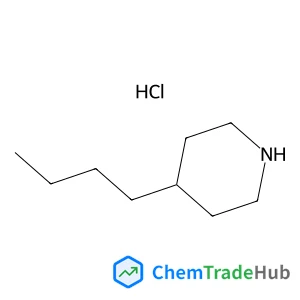
推荐供应商





免责声明
本页面提供的学术期刊信息仅供参考和研究使用。我们与任何期刊出版商均无关联,也不处理投稿事宜。如有投稿相关咨询,请直接联系相关期刊出版商。
如发现页面信息有误,请发送邮件至 support@chemtradehub.com 联系我们。我们将及时核实并处理您的问题。