







Identification of MsrA homologues for the preparation of (R)-sulfoxides at high substrate concentrations
文献信息
发布日期
2019-03-04
DOI
10.1039/C9OB00384C
影响因子
3.876
作者
Yuanmei Wen, Liaotian Peng, Xiaoling Cheng
查看原文
摘要
Here we report a methionine sulfoxide reductase A (MsrA) homologue with extremely high substrate tolerance and a wide substrate scope for the biocatalytic preparation of enantiopure sulfoxides. This MsrA homologue which was obtained from Pseudomonas alcaliphila (named paMsrA) showed good activity and enantioselectivity towards a series of aryl methyl/ethyl sulfoxides 1a–1k, with electron-withdrawing or electron-donating substituents at the aromatic ring. Chiral sulfoxides in the R configuration were prepared with approximately 50% of yield and up to 99% enantiomeric excess through the asymmetric reductive resolution of racemic sulfoxide catalyzed by the recombinant paMsrA protein. More importantly, kinetic resolution has been successfully accomplished with high enantioselectivity (E > 200) at initial substrate concentrations up to 320 mM (approximately 45 g L−1), which represents a great improvement in the aspect of the substrate concentration for the biocatalytic preparation of chiral sulfoxides.
相关文献
A novel combined chemical kinetic and trapping method for probing the relationships between chemical reactivity and interfacial H2O, Br− and H+ ion molarities in CTAB/C12E6 mixed micelles
Laurence S. Romsted, Yongliang Zhang, Xiang Gao, Qing Gu, Changyao Liu
2017-06-12
Paper
DOI: 10.1039/C7CP03413J
Unified elucidation of the entropy-driven and -opposed hydrophobic effects
Masahiro Kinoshita, Tomohiko Hayashi
2017-09-05
Paper
DOI: 10.1039/C7CP05160C
Molecular dynamics investigations of an indicator displacement assay mechanism in a liquid crystal sensor
Qingyu Liu, Fang Zuo, Zhigang Zhao, Junxian Chen, Dingguo Xu
2017-08-11
Paper
DOI: 10.1039/C7CP02292A
Small gold clusters catalyzing the conversion of glycerol to epichlorohydrin
Anthony M. Pembere, Mengzhou Yang, Zhixun Luo
2017-09-04
Communication
DOI: 10.1039/C7CP05324J
Unravelling hydrogen bonding interactions of tryptamine–water dimer from neutral to cation
Zongyuan Liu, Carl O. Trindle, Quanli Gu, Wei Wu, Peifeng Su
2017-08-04
Paper
DOI: 10.1039/C7CP03491A
Developing an efficient NiCo2S4 cocatalyst for improving the visible light H2 evolution performance of CdS nanoparticles
Junwen Peng, Junli Xu, Zhaoyu Wang, Zhengxin Ding, Sibo Wang
2017-09-11
Paper
DOI: 10.1039/C7CP05147F
Light-induced piston nanoengines: ultrafast shuttling of a styryl dye inside cucurbit[7]uril
Ekaterina Y. Chernikova, Yuri V. Fedorov, Olga A. Fedorova, François Maurel, Gediminas Jonusauskas
2017-09-08
Communication
DOI: 10.1039/C7CP04283C
Exploring coherent electron excitation and migration dynamics by electron diffraction with ultrashort X-ray pulses
Kai-Jun Yuan, André D. Bandrauk
2017-09-14
Communication
DOI: 10.1039/C7CP05067D
Ultrafast dynamics of hemin aggregates
J. A. Dharmadhikari, A. K. Dharmadhikari, S. Mazumdar
2017-09-07
Paper
DOI: 10.1039/C7CP04858K
您可能还喜欢
化合物问答
2-(甲基磺酰基)嘧啶-5-胺(CAS号:56621-92-2)适用哪些法规指南?
该化合物适用的法规指南包括GHS(全球化学品统一分类和标签制度)分类为特定目标器官毒性-单次接触类别3;根据欧盟REACH法规,该化合物需要进行注册和评估;在美...
56621-92-22-(Methylsulfonyl)py...
化合物问答
在合成中是否有4-(4-氯苯基)-1H-咪唑(CAS号:35512-29-9)的替代品?
在合成中,可以考虑使用一些类似的化合物作为4-(4-氯苯基)-1H-咪唑的替代品,如4-(4-溴苯基)-1H-咪唑或4-(4-甲氧基苯基)-1H-咪唑。这些化合...
35512-29-94-(4-Chlorophenyl)-1...
化合物问答
什么是N~2~-甲基丙氨酸酰胺(CAS号:32012-16-1)?
N~2~-甲基丙氨酸酰胺是一种有机化合物,其化学名为2-(Methylamino)propanamide。它是一种酰胺类化合物,分子式为C4H10N2O,相对分...
32012-16-12-(Methylamino)propa...
化合物问答
如何处理含有N-苄基-3-氨基氧杂环丁烷草酸盐(CAS号:1956341-96-0)的废料?
处理含有N-苄基-3-氨基氧杂环丁烷草酸盐(CAS号:1956341-96-0)的废料时,应首先确保遵循相关法规要求,如GHS和REACH等。通常,废液应先进行...
1956341-96-0N-Benzyloxetan-3-ami...
化合物问答
4-bromo-2-chloro-6-methylbenzoic acid(CAS号:877149-07-0)的物理化学性质是什么?
4-溴-2-氯-6-甲基苯甲酸是一种固体化合物,具有较高的熔点和较低的沸点。它的分子量为261.03 g/mol。该化合物在水中几乎不溶,在有机溶剂中溶解度适中...
877149-07-04-Bromo-2-chloro-6-m...
化合物问答
2-[(2,5-二氯-4-嘧啶)氨基]-N-甲基苯甲酰胺(CAS号:761440-08-8)通常如何合成?
该化合物通常通过缩合反应合成,典型的方法是将2,5-二氯嘧啶与N-甲基苯甲酰胺在碱性条件下进行偶联反应。常用的碱包括NaH、LDA等强碱。该合成路线具有较高的选...
761440-08-82-[(2,5-dichloropyri...
4752-10-71,4-Dichlorophthalaz...
化合物问答
在合成中是否有3,5-二溴-4-甲基苯胺(CAS号:13194-73-5)的替代品?
3,5-二溴-4-甲基苯胺在某些合成路线中可能没有直接替代品。然而,在某些应用场景下,可以考虑使用其他类似结构的化合物如3,5-二溴-4-硝基苯胺或3,5-二碘...
13194-73-53,5-Dibromo-4-methyl...
化合物问答
2-氯喹啉-4-羧酸甲酯(CAS号:62482-26-2)的主要用途是什么?
2-氯喹啉-4-羧酸甲酯主要用于有机合成和药物合成领域,作为中间体或原料。它在合成某些药物和染料时具有重要作用。此外,该化合物还可能用于某些特定的化学研究中。
62482-26-2Methyl 2-chloro-4-qu...
化合物问答
i>]吡啶(CAS号:474708-88-8)安全吗?
6-溴-8-氯咪唑[1,2-a]吡啶在操作过程中需要谨慎以确保安全。该化合物具有一定的毒性,吸入其蒸气或粉尘可能导致呼吸道刺激。处理时应佩戴适当的防护装备,如手...
474708-88-86-Bromo-8-chloroimid...
来源期刊
Organic & Biomolecular Chemistry
CiteScore:
3.4
自引率:
10.3%
年发文量:
1041
Organic & Biomolecular Chemistry (OBC) publishes original and high impact research and reviews in organic chemistry. We welcome research that shows new or significantly improved protocols or methodologies in total synthesis, synthetic methodology or physical and theoretical organic chemistry as well as research that shows a significant advance in the organic chemistry or molecular design aspects of chemical biology, catalysis, supramolecular and macromolecular chemistry, theoretical chemistry, mechanism-oriented physical organic chemistry, medicinal chemistry or natural products. Articles published in the journal should report new work which makes a highly-significant impact in the field. Routine and incremental work is generally not suitable for publication in the journal. More details about key areas of our scope are below. In all cases authors should include in their article clear rationale for why their research has been carried out.
推荐化合物
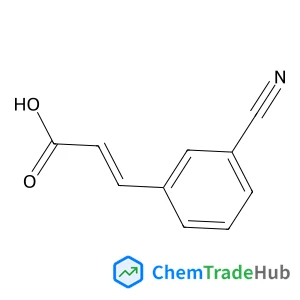
![5-Methoxy-1H-pyrrolo[3,2-b]pyridine structure](https://cnstatic.chemtradehub.com/structs/172/17288-40-3-a8d1.webp "5-Methoxy-1H-pyrrolo[3,2-b]pyridine structure")
推荐供应商




免责声明
本页面提供的学术期刊信息仅供参考和研究使用。我们与任何期刊出版商均无关联,也不处理投稿事宜。如有投稿相关咨询,请直接联系相关期刊出版商。
如发现页面信息有误,请发送邮件至 support@chemtradehub.com 联系我们。我们将及时核实并处理您的问题。