


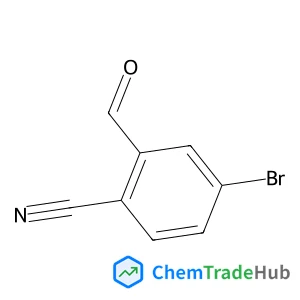
Recent advances in cobalt-catalysed C–H functionalizations
文献信息
发布日期
2019-11-07
DOI
10.1039/C9OB01994D
影响因子
3.876
作者
Alessio Baccalini, Stefania Vergura, Pravas Dolui, Giuseppe Zanoni, Debabrata Maiti
查看原文
摘要
Ready availability, low cost and low toxicity of cobalt salts have redirected the attention of researchers away from noble metals, such as Pd, Rh, and Ir, towards Co in the field of C–H functionalization. In this context, the examples of Co-catalysed functionalization have exponentially grown over the last few decades. This present review focuses on the most recent developments on Co-catalysed C(sp2)–H and C(sp3)–H functionalizations. Included is also a comprehensive overview of enantioselective transformations.
期刊推荐
Organic Process Research & Development
Journal of Peptide Science
Saudi Pharmaceutical Journal
Crystallography Reports
Russian Journal of Bioorganic Chemistry
Journal of Saudi Chemical Society
Current Opinion in Colloid & Interface Science
Russian Chemical Bulletin
Russian Journal of General Chemistry
Acta Materialia
相关文献
Kinetic modelling for the hydrogenolysis of bio-glycerol in the presence of a highly selective Cu–Ni–Al2O3 catalyst in a slurry reactor
Smita Mondal, Himanshu Malviya, Prakash Biswas
2018-12-11
Paper
DOI: 10.1039/C8RE00138C
Single molecule diffusion and its heterogeneity during the bulk radical polymerization of styrene and methyl methacrylate
Beate Stempfle, Maren Dill, Martin J. Winterhalder, Klaus Müllen
2012-06-15
Paper
DOI: 10.1039/C2PY20268A
Facile synthesis of soluble nonlinear polymers with glycogen-like structures and functional properties from “simple” acrylic monomers
Herman H. Y. Sung, Ian D. Williams, Matthew M. F. Yuen
2012-08-24
Paper
DOI: 10.1039/C2PY20485A
Hydrogel/enzyme dots as adaptable tool for non-compartmentalized multi-enzymatic reactions in microfluidic devices
Sebastian Haefner, Toni Heroldt, Martin Peiter, Frank Simon, Andreas Richter, Dietmar Appelhans
2018-11-14
Paper
DOI: 10.1039/C8RE00180D
Schiff's base as a stimuli-responsive linker in polymer chemistry
Yan Xin, Jinying Yuan
2012-06-28
Review Article
DOI: 10.1039/C2PY20290E
pH and enzymatic double-stimuli responsive multi-compartment micelles from supra-amphiphilic polymers
Chao Wang, Yuetong Kang, Kai Liu, Zhibo Li, Zhiqiang Wang, Xi Zhang
2012-06-13
Communication
DOI: 10.1039/C2PY20334K
Low-catalyst concentration atom transfer radical polymerization of a phosphonium salt-type monomer
Yannick P. Borguet, Nicolay V. Tsarevsky
2012-06-21
Paper
DOI: 10.1039/C2PY20303K
“Pushing and pulling” the equilibrium through bubble mediated reactive separation for ethyl acetate production
Fahed Javed, Zufishan Shamair, Shahzad Ali, Ainy Hafeez, Tahir Fazal, William B. Zimmerman, Fahad Rehman
2019-01-16
Paper
DOI: 10.1039/C8RE00328A
Thermoformed fluoropolymer tubing for in-line mixing
Haomiao Zhang, Yi Shen, Andrea Adamo, Klavs F. Jensen
2018-07-18
Paper
DOI: 10.1039/C8RE00112J
您可能还喜欢
化合物问答
2-氨基-2-(5-甲基噻吩-2-基)乙酸(CAS号:89776-66-9)应用于哪些行业?
2-氨基-2-(5-甲基噻吩-2-基)乙酸主要应用于医药、聚合物、传感器和半导体等行业。在医药领域,它作为中间体用于合成各种药物。在聚合物行业,它可以用作稳定剂...
89776-66-9Amino(5-methyl-2-thi...
化合物问答
什么是N-(叔丁氧羰基)-3-碘吲唑(CAS号:290368-00-2)?
N-(叔丁氧羰基)-3-碘吲唑是一种化学化合物,其英文名称为2-Methyl-2-propanyl 3-iodo-1H-indazole-1-carboxyla...
290368-00-22-Methyl-2-propanyl ...
化合物问答
N-芴甲氧羰基-D-谷氨酸(CAS号:104091-09-0)的市场或研究趋势如何?
该化合物作为重要的保护基,广泛应用于生物有机化学合成中,尤其在肽类、蛋白质和寡核苷酸的研究领域。随着合成生物学和药物开发的进展,该化合物的需求持续增长。未来的研...
104091-09-0N-[(9H-Fluoren-9-ylm...
化合物问答
2-乙氧基-1-萘酰氯(CAS号:55150-29-3)的市场或研究趋势如何?
2-乙氧基-1-萘酰氯在研究领域中主要用于合成研究和有机化学反应,随着有机合成技术的发展,其市场应用和研究兴趣可能会有所增长。尤其是在新型药物合成和新材料开发领...
55150-29-32-Ethoxy-1-naphthoyl...
化合物问答
1-甲氧基菜豆素(CAS号:65428-13-9)的主要用途是什么?
1-甲氧基菜豆素主要应用于有机合成、药物化学领域,作为合成其他有机化合物的中间体或前体。此外,由于其特殊的化学性质,也可能用于某些特定的化学研究和实验中。
65428-13-9(6aR,11aR)-1-Methoxy...
化合物问答
small>-2-氨基丁酸(CAS号:106873-99-8)的主要用途是什么?
small>-2-氨基丁酸主要应用于有机合成和化学研究中,作为中间体或试剂使用。此外,它还可能用于某些药物合成过程中。
106873-99-82-Formamidobutanoic ...
化合物问答
什么是5-氨基-2-氯-n-(2-呋喃甲基)苯甲酰胺(CAS号:926216-59-3)?
5-氨基-2-氯-n-(2-呋喃甲基)苯甲酰胺是一种有机化合物,其分子式为C11H9ClN3O。它具有一定的生物活性,在合成化学和药物化学中有一定的应用价值。
926216-59-35-Amino-2-chloro-N-(...
化合物问答
4-(3-溴苯甲酰基)-哌嗪-1-羧酸叔丁酯(CAS号:890153-34-1)适用哪些法规指南?
该化合物根据其化学性质和用途,可能需要符合GHS(全球化学品统一分类和标签制度)的分类标准,包括急性毒性、皮肤腐蚀/刺激、严重眼损伤/眼刺激等类别。此外,根据其...
890153-34-12-Methyl-2-propanyl ...
化合物问答
如何储存(9ci)-2,4-二甲基-1H-吡咯-3-甲腈(CAS号:26187-28-0)?
应将(9ci)-2,4-二甲基-1H-吡咯-3-甲腈存放在阴凉、干燥的地方,避免阳光直射。储存容器应密封良好,防止挥发和污染。建议温度保持在20-25℃之间,湿...
26187-28-02,4-Dimethyl-1H-pyrr...
化合物问答
巨大戟醇-5,20-缩丙酮-3-当归酸酯(CAS号:87980-68-5)通常如何合成?
该化合物通常通过合成当归酸酯的方法制备,具体步骤为将当归酸酯与巨大戟醇-5,20-缩丙酮进行缩合反应,反应条件为温和的酸性环境,通常使用三氟乙酸作为催化剂。该合...
87980-68-5(4S,5S,6R,18R)-5-Hyd...
来源期刊
Organic & Biomolecular Chemistry

CiteScore:
3.4
自引率:
10.3%
年发文量:
1041
Organic & Biomolecular Chemistry (OBC) publishes original and high impact research and reviews in organic chemistry. We welcome research that shows new or significantly improved protocols or methodologies in total synthesis, synthetic methodology or physical and theoretical organic chemistry as well as research that shows a significant advance in the organic chemistry or molecular design aspects of chemical biology, catalysis, supramolecular and macromolecular chemistry, theoretical chemistry, mechanism-oriented physical organic chemistry, medicinal chemistry or natural products. Articles published in the journal should report new work which makes a highly-significant impact in the field. Routine and incremental work is generally not suitable for publication in the journal. More details about key areas of our scope are below. In all cases authors should include in their article clear rationale for why their research has been carried out.
推荐化合物
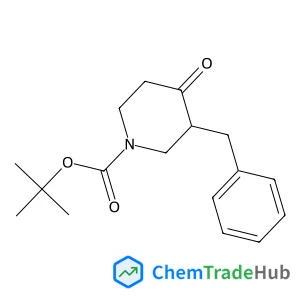
推荐供应商





免责声明
本页面提供的学术期刊信息仅供参考和研究使用。我们与任何期刊出版商均无关联,也不处理投稿事宜。如有投稿相关咨询,请直接联系相关期刊出版商。
如发现页面信息有误,请发送邮件至 support@chemtradehub.com 联系我们。我们将及时核实并处理您的问题。