


Bifunctional squaramide catalyzed stereoselective Mannich reaction of α-azido ketones with isatin-derived ketimines
文献信息
发布日期
2019-12-11
DOI
10.1039/C9OB02208B
影响因子
3.876
作者
Seda Karahan, Cihangir Tanyeli
查看原文
摘要
Asymmetric organocatalytic Mannich reaction of α-azido ketones and N-Boc protected isatin-derived ketimines were investigated for the first time. Examination of both 2-adamantyl and 3,5-bis(trifluoromethyl)aniline substituted quinine-based squaramides afforded chiral Mannich bases with two contiguous stereogenic centers in high yields (up to 97%) and stereoselectivity (up to dr = 24 : 1 syn : anti and 96% ee). Azido and masked amino functionalities of the potent heterocycle precursor adducts were utilized in representative examples.
相关文献
Self-organized defect-rich RuMOx epitaxial layers (M = Mn, Fe, Co, Ni, Cu) for catalytic applications
Risa Ichihashi, Yuta Yamamoto, Kyoichi Sawabe
2023-10-12
Paper
DOI: 10.1039/D3TA05078E
Mechanical disassembly of human picobirnavirus like particles indicates that cargo retention is tuned by the RNA–coat protein interaction
Javier M. Rodríguez
2023-10-05
Communication
DOI: 10.1039/D3NH00195D
Strategy for enhancement of magnesium ion diffusion in a vanadium tetra sulfide-layered structure for rechargeable magnesium batteries
Muhammad Kashif Naseem, Mian Azmat, Changliang Du, Rong Jiang, Hajra, Youqi Zhu, Meishuai Zou, Chuanbao Cao
2023-10-25
Paper
DOI: 10.1039/D3TA04634F
Two-gap topological superconductor LaB2 with high Tc = 30 K
Chin-Hsuan Chen, Ye-Shun Lan, Angus Huang
2023-11-08
Communication
DOI: 10.1039/D3NH00249G
2D-Ti3C2Tx MXene-supported Cu2S nanoflakes for supercapacitors and electrocatalytic oxygen evolution reaction
Debika Gogoi, Rajeshvari Samatbhai Karmur, Narendra Nath Ghosh
2023-10-25
Paper
DOI: 10.1039/D3TA05104H
Ultrahigh-quality graphene resonators by liquid-based strain-engineering
Mario Hofmann, Chi-Te Liang, Ya-Ping Hsieh
2023-11-02
Communication
DOI: 10.1039/D3NH00420A
Phonon vortices at heavy impurities in two-dimensional materials
De-Liang Bao, Mingquan Xu, Ao-Wen Li, Wu Zhou
2023-12-07
Communication
DOI: 10.1039/D3NH00433C
A PEDOT:PSS nanocomposite film doped with black phosphorus modified with silver nanoparticles for wearable photothermoelectric generators
Chia-Hao Tsai, Shih-Hung Tung, Jhih-Min Lin
2023-10-26
Paper
DOI: 10.1039/D3TA05836K
NIR-activated quercetin-based nanogels embedded with CuS nanoclusters for the treatment of drug-resistant biofilms and accelerated chronic wound healing
Amit Nain, Yu-Ting Tseng, Akash Gupta, Yu-Feng Lin, Sangili Arumugam, Yu-Fen Huang
2023-09-19
Communication
DOI: 10.1039/D3NH00275F
Construction of a hierarchical BiOBr/C3N4 S-scheme heterojunction for selective photocatalytic CO2 reduction towards CO
Wei Tao, Qiaoya Tang, Jianqiang Hu, Zhipeng Wang, Baojiang Jiang, Yuting Xiao, Renjie Song, Shien Guo
2023-11-02
Paper
DOI: 10.1039/D3TA05388A
您可能还喜欢
化合物问答
2-氨基-2-(5-甲基噻吩-2-基)乙酸(CAS号:89776-66-9)应用于哪些行业?
2-氨基-2-(5-甲基噻吩-2-基)乙酸主要应用于医药、聚合物、传感器和半导体等行业。在医药领域,它作为中间体用于合成各种药物。在聚合物行业,它可以用作稳定剂...
89776-66-9Amino(5-methyl-2-thi...
化合物问答
什么是N-(叔丁氧羰基)-3-碘吲唑(CAS号:290368-00-2)?
N-(叔丁氧羰基)-3-碘吲唑是一种化学化合物,其英文名称为2-Methyl-2-propanyl 3-iodo-1H-indazole-1-carboxyla...
290368-00-22-Methyl-2-propanyl ...
化合物问答
N-芴甲氧羰基-D-谷氨酸(CAS号:104091-09-0)的市场或研究趋势如何?
该化合物作为重要的保护基,广泛应用于生物有机化学合成中,尤其在肽类、蛋白质和寡核苷酸的研究领域。随着合成生物学和药物开发的进展,该化合物的需求持续增长。未来的研...
104091-09-0N-[(9H-Fluoren-9-ylm...
化合物问答
2-乙氧基-1-萘酰氯(CAS号:55150-29-3)的市场或研究趋势如何?
2-乙氧基-1-萘酰氯在研究领域中主要用于合成研究和有机化学反应,随着有机合成技术的发展,其市场应用和研究兴趣可能会有所增长。尤其是在新型药物合成和新材料开发领...
55150-29-32-Ethoxy-1-naphthoyl...
化合物问答
1-甲氧基菜豆素(CAS号:65428-13-9)的主要用途是什么?
1-甲氧基菜豆素主要应用于有机合成、药物化学领域,作为合成其他有机化合物的中间体或前体。此外,由于其特殊的化学性质,也可能用于某些特定的化学研究和实验中。
65428-13-9(6aR,11aR)-1-Methoxy...
化合物问答
small>-2-氨基丁酸(CAS号:106873-99-8)的主要用途是什么?
small>-2-氨基丁酸主要应用于有机合成和化学研究中,作为中间体或试剂使用。此外,它还可能用于某些药物合成过程中。
106873-99-82-Formamidobutanoic ...
化合物问答
什么是5-氨基-2-氯-n-(2-呋喃甲基)苯甲酰胺(CAS号:926216-59-3)?
5-氨基-2-氯-n-(2-呋喃甲基)苯甲酰胺是一种有机化合物,其分子式为C11H9ClN3O。它具有一定的生物活性,在合成化学和药物化学中有一定的应用价值。
926216-59-35-Amino-2-chloro-N-(...
化合物问答
4-(3-溴苯甲酰基)-哌嗪-1-羧酸叔丁酯(CAS号:890153-34-1)适用哪些法规指南?
该化合物根据其化学性质和用途,可能需要符合GHS(全球化学品统一分类和标签制度)的分类标准,包括急性毒性、皮肤腐蚀/刺激、严重眼损伤/眼刺激等类别。此外,根据其...
890153-34-12-Methyl-2-propanyl ...
化合物问答
如何储存(9ci)-2,4-二甲基-1H-吡咯-3-甲腈(CAS号:26187-28-0)?
应将(9ci)-2,4-二甲基-1H-吡咯-3-甲腈存放在阴凉、干燥的地方,避免阳光直射。储存容器应密封良好,防止挥发和污染。建议温度保持在20-25℃之间,湿...
26187-28-02,4-Dimethyl-1H-pyrr...
化合物问答
巨大戟醇-5,20-缩丙酮-3-当归酸酯(CAS号:87980-68-5)通常如何合成?
该化合物通常通过合成当归酸酯的方法制备,具体步骤为将当归酸酯与巨大戟醇-5,20-缩丙酮进行缩合反应,反应条件为温和的酸性环境,通常使用三氟乙酸作为催化剂。该合...
87980-68-5(4S,5S,6R,18R)-5-Hyd...
来源期刊
Organic & Biomolecular Chemistry
CiteScore:
3.4
自引率:
10.3%
年发文量:
1041
Organic & Biomolecular Chemistry (OBC) publishes original and high impact research and reviews in organic chemistry. We welcome research that shows new or significantly improved protocols or methodologies in total synthesis, synthetic methodology or physical and theoretical organic chemistry as well as research that shows a significant advance in the organic chemistry or molecular design aspects of chemical biology, catalysis, supramolecular and macromolecular chemistry, theoretical chemistry, mechanism-oriented physical organic chemistry, medicinal chemistry or natural products. Articles published in the journal should report new work which makes a highly-significant impact in the field. Routine and incremental work is generally not suitable for publication in the journal. More details about key areas of our scope are below. In all cases authors should include in their article clear rationale for why their research has been carried out.
推荐化合物
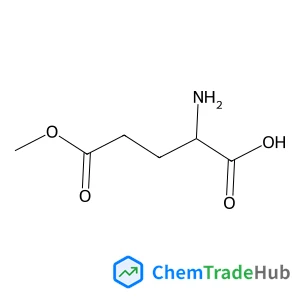
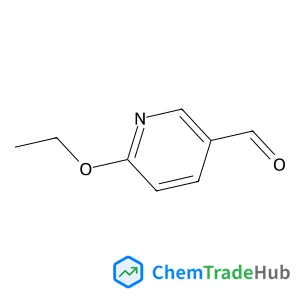
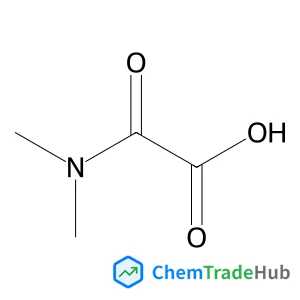
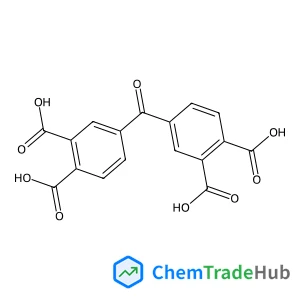
推荐供应商






免责声明
本页面提供的学术期刊信息仅供参考和研究使用。我们与任何期刊出版商均无关联,也不处理投稿事宜。如有投稿相关咨询,请直接联系相关期刊出版商。
如发现页面信息有误,请发送邮件至 support@chemtradehub.com 联系我们。我们将及时核实并处理您的问题。