


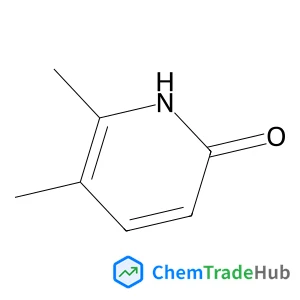
Caerulomycins from Actinoalloteichus cyanogriseus WH1-2216-6: isolation, identification and cytotoxicity
文献信息
发布日期
2019-09-05
DOI
10.1039/C9QO00685K
影响因子
5.281
作者
Mengmeng Lan, Guodong Cui, Hongwei Zhang
查看原文
摘要
Caerulomycins are a family of natural alkaloids featuring a 2,2′-bipyridine nucleus. Since the first example of caerulomycins, caerulomycin A from Streptomyces caeruleus, was reported in 1959, there have been 34 natural caerulomycins from microorganisms reported. The unique structure of caerulomycins and their potential bioactivity, including antifungal activity, cytotoxicity, and immunosuppression, have attracted the interest of both chemists and biologists. Herein, we report 8 new caerulomycins (19–22 and 39–42) as well as 14 known analogues (1–3, 6–9, 16, 18, 24, 25, 27, 29, and 31) from wild-type and mutant Actinoalloteichus cyanogriseus WH1-2216-6. The structures including the absolute configurations were unambiguously elucidated by spectroscopic analysis, X-ray single crystal diffraction, 1-phenyl-3-methyl-5-pyrazolone (PMP)-labeling HPLC analysis, Mosher's method and quantum electronic circular dichroism (ECD) calculation. The cytotoxicity of caerulomycins 1–42 and some previously reported analogues was assayed against six human tumor cell lines and a human normal liver cell line, L-02. Compounds 1, 2, 5, 13, 18, 27, and 39 exhibited moderate to strong cytotoxicity against the tumor cells with IC50 values ranging from 0.1 to 50 μM. The structure and activity relationships (SARs) are also discussed. In addition, the caerulomycin glycosides (29, 34, and 39) showed effective selectivity against HCT-116 cells with low toxicity toward the normal L-02 cell line, indicating their potential use as lead compounds for antitumor drugs.
期刊推荐
Current Opinion in Colloid & Interface Science
Saudi Pharmaceutical Journal
Russian Journal of Applied Chemistry

Chemical Communications
Russian Chemical Bulletin
Journal of Peptide Science
Journal of Natural Medicines
Chemistry Education Research and Practice
Russian Journal of Bioorganic Chemistry
New Journal of Chemistry
相关文献
Boron-based inorganic heterocyclic clusters: electronic structure, chemical bonding, aromaticity, and analogy to hydrocarbons
Lin-Yan Feng, Rui Li, Hua-Jin Zhai
2019-07-04
Perspective
DOI: 10.1039/C9CP03254A
Impact of effective polarisability models on the near-field interaction of dissolved greenhouse gases at ice and air interfaces
Drew F. Parsons, Friedrich Anton Burger, Priyadarshini Thiyam, I. Brevik, Clas Persson
2019-09-16
Paper
DOI: 10.1039/C9CP03165K
Seeking minimum entropy production for a tree-like flow-field in a fuel cell
Marco Sauermoser, Signe Kjelstrup, Bruno G. Pollet, Eirik G. Flekkøy
2020-03-18
Paper
DOI: 10.1039/C9CP05394H
Strain analysis from M-edge resonant inelastic X-ray scattering of nickel oxide films
P. S. Miedema, I. Alonso Calafell, C. Schüßler-Langeheine, M. Beye
2019-09-20
Paper
DOI: 10.1039/C9CP03593A
Sodium-assisted passivation of grain boundaries and defects in Cu2ZnSnSe4 thin films
Juran Kim, Gee Yeong Kim, Trang Thi Thu Nguyen, Seokhyun Yoon, Yoon-Koo Kim, Seung-Yong Lee, Miyoung Kim, Dae-Hyung Cho, Yong-Duck Chung, Je-Ho Lee, Maeng-Je Seong, William Jo
2020-03-11
Paper
DOI: 10.1039/C9CP06537G
BOKEI: Bayesian optimization using knowledge of correlated torsions and expected improvement for conformer generation
Lucian Chan, Geoffrey R. Hutchison, Garrett M. Morris
2020-02-12
Paper
DOI: 10.1039/C9CP06688H
A quantum chemical study of hydrogen adsorption on carbon-supported palladium clusters
Lisa Warczinski, Christof Hättig
2019-09-10
Paper
DOI: 10.1039/C9CP04606B
Molecular dynamics simulation of thermo-mechanical behaviour of elastomer cross-linked via multifunctional zwitterions
Naveed Athir, Ling Shi, Sayyed Asim Ali Shah, Zhiyu Zhang, Jue Cheng, Jun Liu, Junying Zhang
2019-09-08
Paper
DOI: 10.1039/C9CP03221E
Water binding to FeIII hemes studied in a cooled ion trap: characterization of a strong ‘weak’ ligand
Mohammad Aarabi, Satchin Soorkia, Gilles Grégoire, Aurélien de la Lande, Benoît Soep, Reza Omidyan, Niloufar Shafizadeh
2019-09-02
Paper
DOI: 10.1039/C9CP03608C
Pulse radiolysis study on the reactivity of NO3˙ radical toward uranous(iv), hydrazinium nitrate and hydroxyl ammonium nitrate at room temperature and at 45 °C
R. Musat, J. L. Marignier, C. Le Naour, S. Denisov, L. Venault, Ph. Moisy, M. Mostafavi
2020-02-13
Paper
DOI: 10.1039/C9CP07034F
您可能还喜欢
化合物问答
(3-氨苯基)环丙基甲酮(CAS号:162174-75-6)的主要用途是什么?
(3-氨苯基)环丙基甲酮主要用于合成化学中间体,特别是在药物化学领域作为原料。它还可以用于有机合成反应中,作为催化剂或反应物。
162174-75-6(3-Aminophenyl)(cycl...
化合物问答
如何储存亚胺菌(CAS号:136470-79-6)?
亚胺菌应储存在干燥、阴凉处,避免直接暴露于光线下。建议使用密封容器储存,防止吸潮和污染。具体的储存条件应参考产品的安全数据表(MSDS)或药品说明书。
136470-79-6Abacavir EP Impurity...
化合物问答
2-氯-2,2-二氟乙酰胺(CAS号:354-28-9)应用于哪些行业?
2-氯-2,2-二氟乙酰胺在医药、聚合物、传感器、半导体等领域有广泛应用。在医药领域,它作为中间体用于合成其他药物;在聚合物领域,用作聚合引发剂或稳定剂;在传感...
354-28-92-Chloro-2,2-difluor...
化合物问答
处理4-甲基-3-硝基-1,1-联苯(CAS号:53812-68-3)时应注意哪些实验室安全事项?
在处理4-甲基-3-硝基-1,1-联苯时,应佩戴手套、护目镜和实验室外套等个人防护装备(PPE),确保在通风橱中操作以减少吸入风险。若发生泄露,应立即使用沙子或...
53812-68-34'-Methyl-3-nitro-1,...
化合物问答
(2S)-羟基(苯基)乙酸 (2R)-N-苄基-1-(4-甲氧基苯基)丙-2-胺盐(CAS号:188690-84-8)应用于哪些行业?
该化合物广泛应用于医药、聚合物和半导体行业。在医药领域,它是某些药物中间体的重要组成部分;在聚合物领域,可用作增塑剂;在半导体行业,可用于制造光刻胶。
188690-84-8Benzeneacetic acid, ...
化合物问答
在合成中是否有芬苯哒唑砜-D3标准品(CAS号:1228182-49-7)的替代品?
芬苯哒唑砜-D3标准品的替代品可能包括类似的苯并咪唑类化合物,如芬苯哒唑本身或其非同位素标记版本。这些替代品在结构上与芬苯哒唑砜-D3相似,但在具体应用中需进行...
1228182-49-7(~2~H_3_)Methyl [5-(...
化合物问答
2-氟-4-硝基苯乙酸(CAS号:315228-19-4)通常如何合成?
2-氟-4-硝基苯乙酸可以通过一系列化学反应合成,通常是从4-氟苯胺开始,首先进行硝化反应生成4-氟-2-硝基苯胺,然后进行乙酰化反应得到目标产物。具体的合成步...
315228-19-42-(2-fluoro-4-nitrop...
化合物问答
2-氟-4-甲氧基苯乙酸(CAS号:883531-28-0)通常如何合成?
2-氟-4-甲氧基苯乙酸通常通过将4-甲氧基苯乙酸与氟化试剂(如氟化氰)反应来合成。反应通常在无水条件下进行,使用催化剂如六氟磷酸锂或四氟硼酸锂以提高选择性和产...
883531-28-02-Fluoro-4-methoxyph...
化合物问答
什么是4SC 202;4SC202(CAS号:1186222-89-8)?
4SC 202;4SC202是一种化学化合物,其化学名称为(2E)-N-(2-氨基苯基)-3-(1-{[4-(1-甲基-1H-吡唑-4-基)苯基]磺酰基}-1H...
1186222-89-8(2E)-N-(2-Aminopheny...
132980-99-53,5-Difluorobenzamid...
来源期刊
Organic Chemistry Frontiers
CiteScore:
7.8
自引率:
8.7%
年发文量:
724
Organic Chemistry Frontiers publishes high-quality research from across organic chemistry. Emphases are placed on studies that make significant contributions to the field of organic chemistry by reporting either new or significantly improved protocols or methodologies. Topics include, but are not limited to the following: Organic synthesis Development of synthetic methodologies Catalysis Natural products Functional organic materials Supramolecular and macromolecular chemistry Physical and computational organic chemistry
推荐化合物
![Benzyl spiro[indole-3,4'-piperidine]-1(2H)-carboxylate hydrochloride (1:1) structure](https://cnstatic.chemtradehub.com/structs/159/159635-46-8-8de0.webp "Benzyl spiro[indole-3,4'-piperidine]-1(2H)-carboxylate hydrochloride (1:1) structure")
Benzyl spiro[indole-3,4'-piperidine]-1(2H)-carboxylate hydrochloride (1:1)
CAS号:
159635-46-8
分子式:
C20H23ClN2O2
推荐供应商






免责声明
本页面提供的学术期刊信息仅供参考和研究使用。我们与任何期刊出版商均无关联,也不处理投稿事宜。如有投稿相关咨询,请直接联系相关期刊出版商。
如发现页面信息有误,请发送邮件至 support@chemtradehub.com 联系我们。我们将及时核实并处理您的问题。