




N-Directed fluorination of unactivated Csp3–H bonds
文献信息
发布日期
2019-12-16
DOI
10.1039/C9SC04055B
影响因子
9.825
作者
Emily N. Pinter, Jenna E. Bingham, Deyaa I. AbuSalim, Silas P. Cook
查看原文
摘要
Site-selective fluorination of aliphatic C–H bonds remains synthetically challenging. While directed C–H fluorination represents the most promising approach, the limited work conducted to date has enabled just a few functional groups as the arbiters of direction. Leveraging insights gained from both computations and experimentation, we enabled the use of the ubiquitous amine functional group as a handle for the directed C–H fluorination of Csp3–H bonds. By converting primary amines to adamantoyl-based fluoroamides, site-selective C–H fluorination proceeds under the influence of a simple iron catalyst in 20 minutes. Computational studies revealed a unique reaction coordinate for the catalytic process and offer an explanation for the high site selectivity.
相关文献
Old Masters' lead white pigments: investigations of paintings from the 16th to the 17th century using high precision lead isotope abundance ratios
D. Fabian
2005-04-15
Paper
DOI: 10.1039/B418105K
Continuous two-dimensional field-flow fractionation: a novel technique for continuous separation and collection of macromolecules and particles
Pertti Vastamäki, Matti Jussila, Marja-Liisa Riekkola
2005-02-16
Education
DOI: 10.1039/B410046H
Rapid fabrication of poly(dimethylsiloxane)-based microchip capillary electrophoresis devices using CO2laser ablation
Barbara A. Fogarty, Kathleen E. Heppert, Theodore J. Cory, Kalonie R. Hulbutta, R. Scott Martin, Susan M. Lunte
2005-04-25
Paper
DOI: 10.1039/B418299E
Dynamic behavior of metal nanoparticles in MOF materials: analysis with electron microscopy and deep learning
Kirill S. Erokhin, Evgeniy O. Pentsak, Vyacheslav R. Sorokin, Yury V. Agaev, Roman G. Zaytsev, Vera I. Isaeva
2023-08-08
Paper
DOI: 10.1039/D3CP02595K
QCM/HCC as a platform for detecting the binding of warfarin to an immobilized film of human serum albumin
G. Zilberman
2005-08-12
Paper
DOI: 10.1039/B506896G
The STEP method (statistical test of equivalent pathways): application to pharmaceuticals
Mary L. Bandu, Heather Desaire
2005-10-10
Paper
DOI: 10.1039/B510559E
Preconcentration and determination of trace elements with 2,6-diacetylpyridine functionalized Amberlite XAD-4 by flow injection and atomic spectroscopy
Derya Kara, Andrew Fisher, Steve J. Hill
2005-09-09
Paper
DOI: 10.1039/B508841K
Determination of aromatic hydrotropic drugs in pharmaceutical preparations by the surfactant-binding degree method
Ana Pedraza, María Dolores Sicilia, Soledad Rubio, Dolores Pérez-Bendito
2005-05-24
Paper
DOI: 10.1039/B503827H
您可能还喜欢
化合物问答
硅烷偶联剂ZQ-172(CAS号:1067-53-4)的主要用途是什么?
硅烷偶联剂ZQ-172主要用于增强无机填料与有机高分子材料之间的相容性,常见于橡胶、塑料、涂料和胶黏剂等复合体系中。其硅氧烷基团可与玻璃纤维、二氧化硅等无机物表...
1067-53-46-(2-Methoxyethoxy)-...
化合物问答
如何处理含有6-(2,4-二甲氧基苯基)-2-吡啶甲醇(CAS号:887981-31-9)的废料?
对于含有该化合物的废料,首先应收集并分类存放,避免与其它化学品混合。在处理前,需进行必要的检测,确定其含量和性质。随后,可以采用化学氧化、生物降解或物理吸附等方...
887981-31-9[6-(2,4-Dimethoxyphe...
化合物问答
甲砜霉素甘氨酸酯盐酸盐(CAS号:2611-61-2)的物理化学性质是什么?
该化合物为白色或类白色结晶性粉末,不溶于水,溶于乙醇和氯仿。分子量为403.03 g/mol。它具有手性,含有三个手性中心,分别为2S,3R构型。该化合物在酸性...
2611-61-2(2S,3R)-2-[(Dichloro...
化合物问答
如何储存反式-环丙烷-1,2-二胺双盐酸盐(CAS号:3187-76-6)?
反式-环丙烷-1,2-二胺双盐酸盐应存放在阴凉、干燥且通风良好的地方,避免阳光直射。储存容器应密封,以防挥发和受潮。同时,应远离火源和热源,确保储存环境温度不超...
3187-76-6trans-1,2-Diaminocyc...
化合物问答
什么是吩嗪硫酸甲酯(CAS号:299-11-6)?
吩嗪硫酸甲酯是一种有机化合物,化学结构由吩嗪环与甲酯基团构成,分子式为C10H9N2SO4。其为吩嗪类衍生物,具有典型的芳香环结构和酯基官能团,常作为氧化剂或染...
299-11-65-Methylphenazin-5-i...
化合物问答
N1-异丙基二乙烯三胺(CAS号:207399-20-0)的市场或研究趋势如何?
随着绿色化学和环保意识的提高,N1-异丙基二乙烯三胺的研究趋势正向低毒、环保的方向发展。市场趋势方面,由于其在功能性材料、药物合成等领域的需求,预计其市场需求将...
207399-20-0N-(2-Aminoethyl)-N'-...
化合物问答
4,4-Dimethyl-5,6-dihydro-4H-cyclopenta[d][1,3]thiazol-2-amine(CAS号:1182284-47-4)应用于哪些行业?
该化合物在医药、聚合物、传感器和半导体领域有潜在的应用。在医药领域,作为一种新型的噻唑类化合物,它可能具有抗炎、抗病毒等生物活性。在聚合物领域,该化合物可用作增...
1182284-47-44,4-Dimethyl-5,6-dih...
化合物问答
处理5-(PYRIDIN-4-YL)-OXAZOL-2-YLAMINE(CAS号:1014629-83-4)时应注意哪些实验室安全事项?
在处理5-(吡啶-4-基)-2-氧代-1-氧杂环己烷-3-胺时,应佩戴防护眼镜、手套和防护服。实验应在通风橱中进行,以避免吸入有害气体。如果发生泄露,应立即用大...
1014629-83-45-(4-Pyridinyl)-1,3-...
化合物问答
什么是伊托必利N-氧化物(CAS号:141996-98-7)?
伊托必利N-氧化物是一种化学化合物,其分子结构是伊托必利的N位进行氧化处理后的产物。它具有一定的生物活性,主要用于药物研究和开发。
141996-98-7Itopride N-Oxide
化合物问答
氟氯烟酸(CAS号:82671-06-5)安全吗?
氟氯烟酸属于有机氯化物,具有一定的毒性,需谨慎处理。在操作过程中,应佩戴防护手套、护目镜和实验服,避免吸入其粉尘或蒸汽。接触皮肤或眼睛可能导致刺激,应采取适当的...
82671-06-52,6-Dichloro-5-fluor...
来源期刊
Chemical Science

CiteScore:
14.4
自引率:
3.9%
年发文量:
1413
Our journal has a wide-ranging scope which covers the full breadth of the chemical sciences. The research we publish contains the sorts of novel ideas, challenging questions and progressive thinking that bring undiscovered breakthroughs within reach. Your paper could focus on a single area, or cross many. It could be beyond the accepted bounds of the chemical sciences. It might address an immediate challenge, contribute to a future breakthrough or be wholly conceptual. We’re a team from every field of the chemical sciences, and know from experience that breakthroughs that drive the solutions to global challenges can come from anywhere, at any time. You could even start an entirely new area of research. Too bold? Too progressive? No such thing
推荐化合物
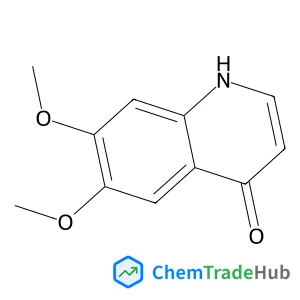
![Sodium (2Z)-7-{[(2R)-2-amino-2-carboxyethyl]sulfanyl}-2-({[(1S)-2,2-dimethylcyclopropyl]carbonyl}amino)-2-heptenoate structure](https://cnstatic.chemtradehub.com/structs/811/81129-83-1-441c.webp "Sodium (2Z)-7-{[(2R)-2-amino-2-carboxyethyl]sulfanyl}-2-({[(1S)-2,2-dimethylcyclopropyl]carbonyl}amino)-2-heptenoate structure")
推荐供应商




免责声明
本页面提供的学术期刊信息仅供参考和研究使用。我们与任何期刊出版商均无关联,也不处理投稿事宜。如有投稿相关咨询,请直接联系相关期刊出版商。
如发现页面信息有误,请发送邮件至 support@chemtradehub.com 联系我们。我们将及时核实并处理您的问题。