


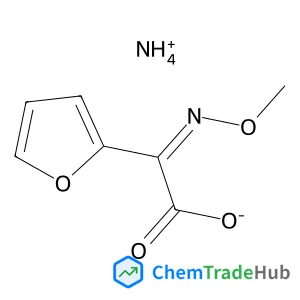
Determination of aromatic hydrotropic drugs in pharmaceutical preparations by the surfactant-binding degree method
文献信息
发布日期
2005-05-24
DOI
10.1039/B503827H
影响因子
4.616
作者
Ana Pedraza, María Dolores Sicilia, Soledad Rubio, Dolores Pérez-Bendito
查看原文
摘要
An aggregation parameter-based analytical approach, the surfactant-dye binding degree (SDBD) method, was used, for the first time, to determine aromatic hydrotropic compounds. The anionic dye Coomassie Brilliant Blue G (CBBG) was used as inductor of didodecyldimethylammonium bromide (DDABr) aggregates, whose formation was monitored from changes in the spectral features of the dye. Interactions between hydrotrope and DDABr molecules resulted in a decrease of the degree of binding of the cationic surfactant to CBBG, which was proportional to the concentration of hydrotrope in the aqueous solution. The CBBG–DDABr–hydrotrope chemical system was found to fit to the mathematical expression previously derived for the determination of amphiphilic compounds. The hydrotrope–surfactant bond strength determined the sensitivity achieved for the determination of hydrotropic compounds, which was highly dependent on the molecular structure of the analyte. The high precision (the relative standard deviation for 7 mg l−1 of salicylic acid was 0.8%), rapidity (measurements were performed in a few minutes) and low cost (in both instrumentation and reactants) of the proposed method, made it especially suitable for quality control. The practical analytical applicability of the SDBD method for the control of hydrotropic drugs in pharmaceutical preparations was demonstrated by quantifying salicylic acid and acetyl salicylic acid in liquid (solutions) and solid (tablets, granulates, unguents, gels and creams) samples, which were directly analyzed after dissolution of the samples.
期刊推荐

Topics in Catalysis

Journal of Asian Natural Products Research
Medicinal Chemistry Research

Biocatalysis and Biotransformation

Bioorganic & Medicinal Chemistry Letters
Critical Reviews in Solid State and Materials Sciences

Chinese Journal of Chemistry
Colloid Journal
NDT & E International

Heteroatom Chemistry
相关文献
A deconvoluted PL approach to probe the charge carrier dynamics of the grain interior and grain boundary of a perovskite film for perovskite solar cell applications
Abdullah Al Mamun, Tanzila Tasnim Ava, Gon Namkoong
2017-03-08
Paper
DOI: 10.1039/C7CP01140G
The effect of interligand energy transfer on the emission spectra of heteroleptic Ir complexes
Yang-Jin Cho, So-Yoen Kim, Ho-Jin Son, Sang Ook Kang
2017-03-02
Paper
DOI: 10.1039/C7CP00500H
Infrared spectra of HSCS+, c-HSCS, and HCS2− produced on electron bombardment of CS2 in solid para-hydrogen
Masashi Tsuge
2017-03-13
Paper
DOI: 10.1039/C7CP00988G
Solid–liquid and liquid–solid transitions in metal nanoparticles
2017-01-23
Paper
DOI: 10.1039/C6CP08606C
Packing energetics determine the folding routes of the RNase-H proteins
Shachi Gosavi
2017-03-10
Paper
DOI: 10.1039/C6CP08940B
A stochastic theoretical approach to study the size-dependent catalytic activity of a metal nanoparticle at the single molecule level
Divya Singh, Srabanti Chaudhury
2017-03-03
Paper
DOI: 10.1039/C6CP07895H
Electronic and relativistic contributions to ion-pairing in polyoxometalate model systems
Dylan J. Sures, Stefano A. Serapian, Károly Kozma, Pedro I. Molina, Carles Bo, May Nyman
2017-03-20
Paper
DOI: 10.1039/C6CP08454K
Simulated photoelectron intensities at the aqueous solution–air interface for flat and cylindrical (microjet) geometries
Giorgia Olivieri, Krista M. Parry, Cedric J. Powell, Douglas J. Tobias, Matthew A. Brown
2017-01-30
Communication
DOI: 10.1039/C6CP07539H
Observation of perpendicular exchange bias in an Ir-doped Fe2O3/Co ultrathin film system
S. Ye, S. P. Pati, Y. Shiokawa, M. Al-Mahdawi, T. Nozaki
2017-02-24
Paper
DOI: 10.1039/C7CP00445A
您可能还喜欢
化合物问答
硅烷偶联剂ZQ-172(CAS号:1067-53-4)的主要用途是什么?
硅烷偶联剂ZQ-172主要用于增强无机填料与有机高分子材料之间的相容性,常见于橡胶、塑料、涂料和胶黏剂等复合体系中。其硅氧烷基团可与玻璃纤维、二氧化硅等无机物表...
1067-53-46-(2-Methoxyethoxy)-...
化合物问答
如何处理含有6-(2,4-二甲氧基苯基)-2-吡啶甲醇(CAS号:887981-31-9)的废料?
对于含有该化合物的废料,首先应收集并分类存放,避免与其它化学品混合。在处理前,需进行必要的检测,确定其含量和性质。随后,可以采用化学氧化、生物降解或物理吸附等方...
887981-31-9[6-(2,4-Dimethoxyphe...
化合物问答
甲砜霉素甘氨酸酯盐酸盐(CAS号:2611-61-2)的物理化学性质是什么?
该化合物为白色或类白色结晶性粉末,不溶于水,溶于乙醇和氯仿。分子量为403.03 g/mol。它具有手性,含有三个手性中心,分别为2S,3R构型。该化合物在酸性...
2611-61-2(2S,3R)-2-[(Dichloro...
化合物问答
如何储存反式-环丙烷-1,2-二胺双盐酸盐(CAS号:3187-76-6)?
反式-环丙烷-1,2-二胺双盐酸盐应存放在阴凉、干燥且通风良好的地方,避免阳光直射。储存容器应密封,以防挥发和受潮。同时,应远离火源和热源,确保储存环境温度不超...
3187-76-6trans-1,2-Diaminocyc...
化合物问答
什么是吩嗪硫酸甲酯(CAS号:299-11-6)?
吩嗪硫酸甲酯是一种有机化合物,化学结构由吩嗪环与甲酯基团构成,分子式为C10H9N2SO4。其为吩嗪类衍生物,具有典型的芳香环结构和酯基官能团,常作为氧化剂或染...
299-11-65-Methylphenazin-5-i...
化合物问答
N1-异丙基二乙烯三胺(CAS号:207399-20-0)的市场或研究趋势如何?
随着绿色化学和环保意识的提高,N1-异丙基二乙烯三胺的研究趋势正向低毒、环保的方向发展。市场趋势方面,由于其在功能性材料、药物合成等领域的需求,预计其市场需求将...
207399-20-0N-(2-Aminoethyl)-N'-...
化合物问答
4,4-Dimethyl-5,6-dihydro-4H-cyclopenta[d][1,3]thiazol-2-amine(CAS号:1182284-47-4)应用于哪些行业?
该化合物在医药、聚合物、传感器和半导体领域有潜在的应用。在医药领域,作为一种新型的噻唑类化合物,它可能具有抗炎、抗病毒等生物活性。在聚合物领域,该化合物可用作增...
1182284-47-44,4-Dimethyl-5,6-dih...
化合物问答
处理5-(PYRIDIN-4-YL)-OXAZOL-2-YLAMINE(CAS号:1014629-83-4)时应注意哪些实验室安全事项?
在处理5-(吡啶-4-基)-2-氧代-1-氧杂环己烷-3-胺时,应佩戴防护眼镜、手套和防护服。实验应在通风橱中进行,以避免吸入有害气体。如果发生泄露,应立即用大...
1014629-83-45-(4-Pyridinyl)-1,3-...
化合物问答
什么是伊托必利N-氧化物(CAS号:141996-98-7)?
伊托必利N-氧化物是一种化学化合物,其分子结构是伊托必利的N位进行氧化处理后的产物。它具有一定的生物活性,主要用于药物研究和开发。
141996-98-7Itopride N-Oxide
化合物问答
氟氯烟酸(CAS号:82671-06-5)安全吗?
氟氯烟酸属于有机氯化物,具有一定的毒性,需谨慎处理。在操作过程中,应佩戴防护手套、护目镜和实验服,避免吸入其粉尘或蒸汽。接触皮肤或眼睛可能导致刺激,应采取适当的...
82671-06-52,6-Dichloro-5-fluor...
来源期刊
Analyst

CiteScore:
7.8
自引率:
5.6%
年发文量:
653
Analyst publishes analytical and bioanalytical research that reports premier fundamental discoveries and inventions, and the applications of those discoveries, unconfined by traditional discipline barriers.
推荐化合物
![Sodium 3-[(E)-(4-anilinophenyl)diazenyl]benzenesulfonate structure](https://cnstatic.chemtradehub.com/structs/587/587-98-4-035f.webp "Sodium 3-[(E)-(4-anilinophenyl)diazenyl]benzenesulfonate structure")

推荐供应商



免责声明
本页面提供的学术期刊信息仅供参考和研究使用。我们与任何期刊出版商均无关联,也不处理投稿事宜。如有投稿相关咨询,请直接联系相关期刊出版商。
如发现页面信息有误,请发送邮件至 support@chemtradehub.com 联系我们。我们将及时核实并处理您的问题。