











An experimental high temperature thermal battery coupled to a low temperature metal hydride for solar thermal energy storage
文献信息
发布日期
2019-11-05
DOI
10.1039/C9SE00538B
影响因子
6.367
作者
Lucas Poupin, Terry D. Humphries, Mark Paskevicius, Craig E. Buckley
查看原文
摘要
Metal hydrides have demonstrated ideal physical properties to be the next generation of thermal batteries for solar thermal power plants. Previous studies have demonstrated that they already operate at the required operational temperature and offer greater energy densities than existing technology. Thermal batteries using metal hydrides need to store hydrogen gas released during charging, and so far, practical demonstrations have employed volumetric storage of gas. This practical study utilises a low temperature metal hydride, titanium manganese hydride (TiMn1.5Hx), to store hydrogen gas, whilst magnesium iron hydride (Mg2FeH6) is used as a high temperature thermal battery. The coupled system is able to achieve consistent energy storage and release cycles. With titanium manganese hydride operating at ambient temperature (20 °C), Mg2FeH6 has to operate between ∼350 °C and ∼500 °C to counteract the pressure hysteresis displayed by TiMn1.5 between hydrogen uptake and release. The results attest the high susceptibility of both materials to thermal issues, such as a requirement for large temperature offsets, in order for the battery to achieve full cycling capacity. An energy density of 1488 kJ kg−1 was experimentally attained for 40 g of Mg2FeH6 with a maximum operating temperature around 520 °C.
相关文献
Efficient production of lactic acid from biomass-derived carbohydrates under synergistic effects of indium and tin in In–Sn-Beta zeolites
Meng Xia, Wenjie Dong, Shaoze Xiao, Wenbo Chen, Minyan Gu, Yalei Zhang
2020-09-08
Paper
DOI: 10.1039/D0SE00798F
Renewable diesel blendstocks and bioprivileged chemicals distilled from algal biocrude oil converted via hydrothermal liquefaction
2020-07-24
Paper
DOI: 10.1039/D0SE00903B
Bifunctional catalytic activity of Ni–Co layered double hydroxide for the electro-oxidation of water and methanol
Komal Patil, Pravin Babar, Dong Min Lee, Vijay Karade, Eunae Jo, Jin Hyeok Kim
2020-08-15
Paper
DOI: 10.1039/D0SE00899K
Sn dendrites for electrocatalytic N2 reduction to NH3 under ambient conditions
Xu Lv, Fengyi Wang, Juan Du, Qian Liu, Yongsong Luo, Siyu Lu, Guang Chen, Shuyan Gao, Baozhan Zheng, Xuping Sun
2020-06-30
Communication
DOI: 10.1039/D0SE00828A
Sustainable production of nano α-Fe2O3/N-doped biochar hybrid nanosheets for supercapacitors
Panyu Li, Hongyang Xie, Xuqian Wang, Yi Xie, Yabo Wang, Yongkui Zhang
2020-06-15
Paper
DOI: 10.1039/D0SE00627K
Increased hydrogen partial pressure suppresses and reverses hydrogen evolution during Pd catalysed electrolysis of CO2
Wim P. M. van Swaaij, Guido Mul, Sascha R. A. Kersten
2020-06-30
Communication
DOI: 10.1039/D0SE00731E
Characterization of ginseng saponins using electrospray mass spectrometry and collision-induced dissociation experiments of metal-attachment ions
Suzanne Z. Ackloo, Richard W. Smith, Johan K. Terlouw, Brian E. McCarry
2000-02-11
Paper
DOI: 10.1039/A908419C
Suppressing intrinsic self-doping of CsPbIBr2 films for high-performance all-inorganic, carbon-based perovskite solar cells
Zeyang Zhang, Weidong Zhu, Dandan Chen, Wenming Chai, Dazheng Chen, He Xi, Jincheng Zhang, Chunfu Zhang, Yue Hao
2020-06-22
Paper
DOI: 10.1039/D0SE00774A
Improving the activity of CoxP nanoparticles for the electrochemical hydrogen evolution by hydrogenation
James Murowchick, Xiaobo Chen
2017-01-05
Communication
DOI: 10.1039/C6SE00058D
Analysis of interaction between the apicomplexan protozoan Toxoplasma gondii and host cells using label-free Raman spectroscopy
Abida Naemat, Hany M. Elsheikha, Alaa Al-sandaqchi, Kenny Kong, Adrian Ghita, Ioan Notingher
2014-11-19
Paper
DOI: 10.1039/C4AN01810A
您可能还喜欢
化合物问答
什么是3-表南美楝属二醇(CAS号:19942-04-2)?
3-表南美楝属二醇是一种具有特定立体化学结构的化合物,其分子式为C31H52O2,属于甾醇类化合物。它具有光学活性,是一种复杂的有机分子,主要存在于一些植物中。
19942-04-2(3S,5R,8R,9R,10R,13R...
化合物问答
3-羧基-5-碘苯甲酸甲酯(CAS号:50765-22-5)应用于哪些行业?
3-羧基-5-碘苯甲酸甲酯主要应用于医药行业,作为合成某些药物中间体的重要原料。此外,它还可能用于聚合物的改性、传感器的制备以及半导体材料的制备等领域。
50765-22-5Methyl 3-hydroxy-5-i...
化合物问答
什么是3-Bromoindolin-2-one(CAS号:22942-87-6)?
3-Bromoindolin-2-one是一种含有溴代基团的吲哚酮衍生物,分子式为C9H7BrNO。它是一种无色固体,具有一定的挥发性,熔点为158-159°C...
22942-87-63-Bromoindolin-2-one
化合物问答
如何处理含有L-Lysyl-L-phenylalanyl-L-isoleucylglycyl-L-leucyl-L-methioninamide(CAS号:2990-43-4)的废料?
对于含有该化合物的废液,应先进行中和处理,然后根据其毒性和活性选择合适的处置方法。可以考虑焚烧处理或由专业的化学品废物处理公司进行无害化处理。处理过程中需注意环...
2990-43-4L-Lysyl-L-phenylalan...
化合物问答
ANGIOTENSIN 1/2 + A (2 - 8)(CAS号:51833-76-2)的物理化学性质是什么?
ANGIOTENSIN 1/2 + A (2 - 8)是一种蛋白质类化合物,具有典型的蛋白质性质。它的分子量约为5900 Da。该化合物在水中具有一定的溶解性,...
51833-76-2ANGIOTENSIN 1/2 + A ...
化合物问答
如何储存2-甲基硫代嘧啶-5-硼酸频那酯(CAS号:940284-18-4)?
应将该化合物存放在阴凉干燥、通风良好的地方,避免阳光直射。建议将化合物密封保存在避光的、干燥的容器中,远离火源和高温环境。
940284-18-42-(Methylthio)-5-(4,...
化合物问答
什么是苏丹红IV氘代物 标准品(CAS号:1014689-18-9)?
苏丹红IV氘代物 标准品是一种含有氘代标记的苏丹红IV化合物,是一种用于化合物分析、结构确证以及代谢研究的标准物质。
1014689-18-91-[(E)-{2-Methyl-4-[...
化合物问答
(+)-2-Amino-6-propionamido-d3-tetrahydrobenzothiazole(CAS号:1217680-69-7)适用哪些法规指南?
该化合物需要遵循《全球化学品统一分类和标签制度》(GHS)中的分类和标签要求,具体分类需依据其毒性和物理化学性质。此外,还需要符合《欧盟化学品注册、评估、授权和...
1217680-69-7(+)-2-Amino-6-propio...
化合物问答
如何储存2-氨基-2-(2-吡啶)乙酸乙酯(CAS号:55243-15-7)?
2-氨基-2-(2-吡啶)乙酸乙酯应储存于阴凉、干燥、通风良好的环境中,避免高温和光照。应使用密封容器储存,并远离易燃物、氧化剂和其他危险化学品。
55243-15-7Ethyl 2-amino-2-(pyr...
化合物问答
3-羟基-4-甲氧基吡啶-2-羧酸(CAS号:210300-09-7)的主要用途是什么?
3-羟基-4-甲氧基吡啶-2-羧酸主要用于合成其他有机化合物,如药物合成、农药合成和染料合成等。此外,它还可用作中间体和试剂,在化学研究领域也有一定的应用。
210300-09-73-Hydroxy-4-methoxy-...
来源期刊
推荐化合物
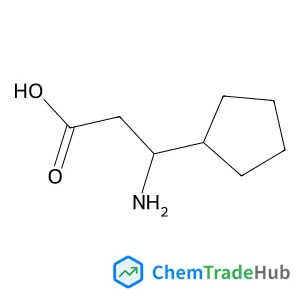
![4-Fluoro-2-(4-{[(3S,4R)-4-(2-hydroxy-2-propanyl)-3-pyrrolidinyl]amino}-6,7-dimethoxy-2-quinazolinyl)phenol hydrochloride (1:1) structure](https://cnstatic.chemtradehub.com/structs/143/1431697-96-9-619c.webp "4-Fluoro-2-(4-{[(3S,4R)-4-(2-hydroxy-2-propanyl)-3-pyrrolidinyl]amino}-6,7-dimethoxy-2-quinazolinyl)phenol hydrochloride (1:1) structure")
推荐供应商


免责声明
本页面提供的学术期刊信息仅供参考和研究使用。我们与任何期刊出版商均无关联,也不处理投稿事宜。如有投稿相关咨询,请直接联系相关期刊出版商。
如发现页面信息有误,请发送邮件至 support@chemtradehub.com 联系我们。我们将及时核实并处理您的问题。