






![2-Azaspiro[4.5]decane-3,8-dione structure](https://cnstatic.chemtradehub.com/structs/914/914780-96-4-e94b.webp "2-Azaspiro[4.5]decane-3,8-dione structure")
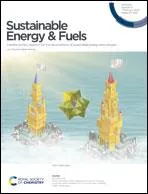
Unlocking the potential of BECCS with indigenous sources of biomass at a national scale
文献信息
发布日期
2019-09-23
DOI
10.1039/C9SE00609E
影响因子
6.367
作者
Piera Patrizio, Florian Kraxner
查看原文
摘要
Bioenergy with carbon capture and storage (BECCS) could play a large role in meeting the 1.5 °C targets, but faces well-documented controversy in terms of land-use concerns, competition with food production, and cost. This study presents a bottom-up assessment of the scale at which BECCS plants – biomass pulverised combustion plants (“BECCS” in this study) and bioenergy combustion in combined heat and power plants (BE-CHP-CCS) – can be sustainably deployed to meet national carbon dioxide removal (CDR) targets, considering the use of both primary and secondary (waste-derived) biomass. This paper also presents a comprehensive, harmonised data set, which enables others to build upon this work. Land availability for biomass cultivation, processing, and conversion is quantified based on a land-use analysis, avoiding all competition with land used for food production, human habitation, and other protected areas. We find that secondary biomass sources provide a valuable supplement to primary biomass, augmenting indigenous biomass supplies. In initial phases of deployment, we observe that infrastructure is initially clustered near cities, and other sources of low cost, secondary biomass, but as CDR targets are increased and indigenous secondary biomass supplies are exhausted, infrastructure begins to move closer to potential biomass planting areas with higher yield. In minimising the cost of CDR on a cost per net tonne CO2 removed basis, we find that the availability of secondary biomass, land availability, and yield are key factors that drive the cost of CDR. Importantly biomass conversion efficiency of a BECCS plant has an inverse effect on CDR costs, with less efficient plants resulting in lower costs compared to their more efficient counterparts. By consuming secondary biomass in BECCS and BE-CHP-CCS plants, the UK is able to be self-sufficient in biomass supply by utilising available indigenous biomass to remove up to 50 MtCO2 per year, though for cost reasons, it may be preferable to import some biomass.
相关文献
Shape-controlled synthesis of single-crystalline anatase TiO2 micro/nanoarchitectures for efficient dye-sensitized solar cells
Cheng Liu, Yi Yang, Jiahong Pan, Jianxi Yao, Linhua Hu
2017-01-12
Paper
DOI: 10.1039/C6SE00041J
Calibration diagnostic and updating strategy based on quantitative modeling of near-infrared spectral residuals
Hua Yu, Gary W. Small
2014-12-04
Paper
DOI: 10.1039/C4AN01849D
An arginine-functionalized stationary phase for hydrophilic interaction liquid chromatography
Shengjie Wu, Feifang Zhang, Ge Jiang, Bingcheng Yang
2015-04-23
Communication
DOI: 10.1039/C5AN00570A
Applications of coherent Raman scattering microscopies to clinical and biological studies
Iwan W. Schie, Christoph Krafft
2015-03-17
Critical Review
DOI: 10.1039/C5AN00178A
Nano-enabled bioanalytical approaches to ultrasensitive detection of low abundance single nucleotide polymorphisms
Yuan Guo, Dejian Zhou
2015-03-12
Minireview
DOI: 10.1039/C4AN02304H
Formation criteria of high efficiency perovskite solar cells under ambient conditions
Clara Aranda, Cesar Cristobal, Cheng Li, Sven Huettner, Antonio Guerrero
2017-02-03
Paper
DOI: 10.1039/C6SE00077K
Magnetic energy harvesting with magnetoelectrics: an emerging technology for self-powered autonomous systems
Venkateswarlu Annapureddy, Haribabu Palneedi, Geon-Tae Hwang, Mahesh Peddigari, Dae-Yong Jeong, Woon-Ha Yoon, Kwang-Ho Kim, Jungho Ryu
2017-10-03
Review Article
DOI: 10.1039/C7SE00403F
A comparative study of undoped, boron-doped, and boron/fluorine dual-doped carbon nanoparticles obtained via solution plasma as catalysts for the oxygen reduction reaction
Chayanaphat Chokradjaroen, Shuhei Kato, Kensuke Fujiwara, Hiroko Watanabe, Takahiro Ishii
2020-06-18
Paper
DOI: 10.1039/D0SE00708K
A sensitive strategy for the fluorescence detection of DNA methyltransferase activity based on the graphene oxide platform and T7 exonuclease-assisted cyclic signal amplification
Yefei Ma, Lini Chen, Liangliang Zhang, Suqi Liao
2015-04-07
Paper
DOI: 10.1039/C5AN00417A
Influence of a compact CdS layer on the photovoltaic performance of perovskite-based solar cells
Jun Wang, Li Liu, Shurong Liu, Lihua Yang, Bowen Zhang, Shuang Feng, Jiandong Yang, Xianwei Meng, Wuyou Fu, Haibin Yang
2017-01-24
Paper
DOI: 10.1039/C6SE00070C
您可能还喜欢
化合物问答
什么是3-表南美楝属二醇(CAS号:19942-04-2)?
3-表南美楝属二醇是一种具有特定立体化学结构的化合物,其分子式为C31H52O2,属于甾醇类化合物。它具有光学活性,是一种复杂的有机分子,主要存在于一些植物中。
19942-04-2(3S,5R,8R,9R,10R,13R...
化合物问答
3-羧基-5-碘苯甲酸甲酯(CAS号:50765-22-5)应用于哪些行业?
3-羧基-5-碘苯甲酸甲酯主要应用于医药行业,作为合成某些药物中间体的重要原料。此外,它还可能用于聚合物的改性、传感器的制备以及半导体材料的制备等领域。
50765-22-5Methyl 3-hydroxy-5-i...
化合物问答
什么是3-Bromoindolin-2-one(CAS号:22942-87-6)?
3-Bromoindolin-2-one是一种含有溴代基团的吲哚酮衍生物,分子式为C9H7BrNO。它是一种无色固体,具有一定的挥发性,熔点为158-159°C...
22942-87-63-Bromoindolin-2-one
化合物问答
如何处理含有L-Lysyl-L-phenylalanyl-L-isoleucylglycyl-L-leucyl-L-methioninamide(CAS号:2990-43-4)的废料?
对于含有该化合物的废液,应先进行中和处理,然后根据其毒性和活性选择合适的处置方法。可以考虑焚烧处理或由专业的化学品废物处理公司进行无害化处理。处理过程中需注意环...
2990-43-4L-Lysyl-L-phenylalan...
化合物问答
ANGIOTENSIN 1/2 + A (2 - 8)(CAS号:51833-76-2)的物理化学性质是什么?
ANGIOTENSIN 1/2 + A (2 - 8)是一种蛋白质类化合物,具有典型的蛋白质性质。它的分子量约为5900 Da。该化合物在水中具有一定的溶解性,...
51833-76-2ANGIOTENSIN 1/2 + A ...
化合物问答
如何储存2-甲基硫代嘧啶-5-硼酸频那酯(CAS号:940284-18-4)?
应将该化合物存放在阴凉干燥、通风良好的地方,避免阳光直射。建议将化合物密封保存在避光的、干燥的容器中,远离火源和高温环境。
940284-18-42-(Methylthio)-5-(4,...
化合物问答
什么是苏丹红IV氘代物 标准品(CAS号:1014689-18-9)?
苏丹红IV氘代物 标准品是一种含有氘代标记的苏丹红IV化合物,是一种用于化合物分析、结构确证以及代谢研究的标准物质。
1014689-18-91-[(E)-{2-Methyl-4-[...
化合物问答
(+)-2-Amino-6-propionamido-d3-tetrahydrobenzothiazole(CAS号:1217680-69-7)适用哪些法规指南?
该化合物需要遵循《全球化学品统一分类和标签制度》(GHS)中的分类和标签要求,具体分类需依据其毒性和物理化学性质。此外,还需要符合《欧盟化学品注册、评估、授权和...
1217680-69-7(+)-2-Amino-6-propio...
化合物问答
如何储存2-氨基-2-(2-吡啶)乙酸乙酯(CAS号:55243-15-7)?
2-氨基-2-(2-吡啶)乙酸乙酯应储存于阴凉、干燥、通风良好的环境中,避免高温和光照。应使用密封容器储存,并远离易燃物、氧化剂和其他危险化学品。
55243-15-7Ethyl 2-amino-2-(pyr...
化合物问答
3-羟基-4-甲氧基吡啶-2-羧酸(CAS号:210300-09-7)的主要用途是什么?
3-羟基-4-甲氧基吡啶-2-羧酸主要用于合成其他有机化合物,如药物合成、农药合成和染料合成等。此外,它还可用作中间体和试剂,在化学研究领域也有一定的应用。
210300-09-73-Hydroxy-4-methoxy-...
来源期刊
推荐化合物
![5-Chloropyrrolo[2,1-f][1,2,4]triazin-4(3H)-one structure](https://cnstatic.chemtradehub.com/structs/888/888720-60-3-4f7c.webp "5-Chloropyrrolo[2,1-f][1,2,4]triazin-4(3H)-one structure")
![N-[2,6-Di(9-anthryl)-4-oxido-8,9,10,11,12,13,14,15-octahydrodinaphtho[2,1-d:1',2'-f][1,3,2]dioxaphosphepin-4-yl]-1,1,1-trifluoromethanesulfonamide structure](https://cnstatic.chemtradehub.com/structs/122/1227374-64-2-cdb5.webp "N-[2,6-Di(9-anthryl)-4-oxido-8,9,10,11,12,13,14,15-octahydrodinaphtho[2,1-d:1',2'-f][1,3,2]dioxaphosphepin-4-yl]-1,1,1-trifluoromethanesulfonamide structure")
推荐供应商





免责声明
本页面提供的学术期刊信息仅供参考和研究使用。我们与任何期刊出版商均无关联,也不处理投稿事宜。如有投稿相关咨询,请直接联系相关期刊出版商。
如发现页面信息有误,请发送邮件至 support@chemtradehub.com 联系我们。我们将及时核实并处理您的问题。