




Lithiophilicity conversion of the Cu surface through facile thermal oxidation: boosting a stable Li–Cu composite anode through melt infusion
文献信息
发布日期
2019-02-06
DOI
10.1039/C9TA00466A
影响因子
12.732
作者
Tianpeng Jiao, Shaoran Yang, Bin Liu, Wenjun Zhang, Kaili Zhang
查看原文
摘要
Introducing porous conductive matrixes as a “host” for metallic lithium (Li) can restrain the growth of Li dendrites and accommodate the volume fluctuation during cycling. These two key factors severely impede the practical application of metallic Li anodes. However, uniformly pre-loading Li into such matrixes remains a great challenge. Herein, a facile thermal oxidation approach was employed to modify the surface of a Cu mesh from being lithiophobic to being lithiophilic. In particular, the Cu mesh was uniformly coated with a layer of CuO after thermal treatment and thus it became lithiophilic due to the strong interaction between CuO and molten Li. Through a melt infusion approach, metallic Li was homogeneously pre-loaded into the Cu mesh which could simultaneously induce a homogeneous distribution of the electrical field and accommodate the volume fluctuation of metallic Li during cycling. As a result, the Li–Cu composite anode demonstrated a stable cycling performance in a symmetric cell (1000 cycles at a current density of 10 mA cm−2) and a full cell paired with Li iron phosphate (90.8 mA h g−1 at 5C after 1000 cycles, 77.6% of initial capacity). Such a facile and cost effective approach provides a solution for the mass production of stable Li anodes with emphasis on lithiophilicity conversion of the surface of Cu.
相关文献
Structural investigations on a linear isolated depsipeptide: the importance of dispersion interactions
A. Stamm, D. Bernhard, M. Gerhards
2016-05-05
Paper
DOI: 10.1039/C6CP01675H
Characterization of water dissociation on α-Al2O3(102): theory and experiment
Jonas Wirth, Harald Kirsch, Sebastian Wlosczyk, Yujin Tong, Peter Saalfrank, R. Kramer Campen
2016-04-18
Paper
DOI: 10.1039/C6CP01397J
Pressure dependent low temperature kinetics for CN + CH3CN: competition between chemical reaction and van der Waals complex formation
Chantal Sleiman, Sergio González, Stephen J. Klippenstein, Dahbia Talbi, Gisèle El Dib, André Canosa
2016-05-10
Paper
DOI: 10.1039/C6CP01982J
Quasiparticle and excitonic gaps of one-dimensional carbon chains
E. Mostaani, N. D. Drummond, C. J. Lambert
2016-04-12
Paper
DOI: 10.1039/C5CP07891A
Low electron-polar optical phonon scattering as a fundamental aspect of carrier mobility in methylammonium lead halide CH3NH3PbI3 perovskites
A. Filippetti, A. Mattoni, C. Caddeo, M. I. Saba, P. Delugas
2016-05-09
Paper
DOI: 10.1039/C6CP01402J
Structural and surface coverage effects on CO oxidation reaction over carbon-supported Pt nanoparticles studied by quadrupole mass spectrometry and diffuse reflectance FTIR spectroscopy
Seng Kian Cheah, Véronique P. Bernardet, Alejandro A. Franco, Olivier Lemaire, Patrick Gelin
2016-05-11
Paper
DOI: 10.1039/C6CP01845A
Spectroscopic observation of nitrogen anions N− in solid matrices
I. B. Bykhalo, A. A. Pelmenev, S. Mao, A. Meraki, P. T. McColgan, D. M. Lee, V. V. Khmelenko
2016-05-18
Paper
DOI: 10.1039/C6CP01080F
Electronic structures of intermolecular hydrogen bond contacts with solute in aqueous solution: glycine as a working prototype
Zijing Lin
2016-05-31
Paper
DOI: 10.1039/C5CP07968C
Redox potentials of aryl derivatives from hybrid functional based first principles molecular dynamics
Xiandong Liu, Xiancai Lu, Mengjia He, Rucheng Wang
2016-05-04
Paper
DOI: 10.1039/C6CP01375A
Correlating structure and electronic band-edge properties in organolead halide perovskites nanoparticles
Qiushi Zhu, Alexander Generalov, Dörthe Haase, Stefan Carlson, Yuran Niu, Jimmy Heimdal, Anders Engdahl, Maria E. Messing, Tonu Pullerits
2016-05-10
Paper
DOI: 10.1039/C6CP01843B
您可能还喜欢
化合物问答
什么是3-表南美楝属二醇(CAS号:19942-04-2)?
3-表南美楝属二醇是一种具有特定立体化学结构的化合物,其分子式为C31H52O2,属于甾醇类化合物。它具有光学活性,是一种复杂的有机分子,主要存在于一些植物中。
19942-04-2(3S,5R,8R,9R,10R,13R...
化合物问答
3-羧基-5-碘苯甲酸甲酯(CAS号:50765-22-5)应用于哪些行业?
3-羧基-5-碘苯甲酸甲酯主要应用于医药行业,作为合成某些药物中间体的重要原料。此外,它还可能用于聚合物的改性、传感器的制备以及半导体材料的制备等领域。
50765-22-5Methyl 3-hydroxy-5-i...
化合物问答
什么是3-Bromoindolin-2-one(CAS号:22942-87-6)?
3-Bromoindolin-2-one是一种含有溴代基团的吲哚酮衍生物,分子式为C9H7BrNO。它是一种无色固体,具有一定的挥发性,熔点为158-159°C...
22942-87-63-Bromoindolin-2-one
化合物问答
如何处理含有L-Lysyl-L-phenylalanyl-L-isoleucylglycyl-L-leucyl-L-methioninamide(CAS号:2990-43-4)的废料?
对于含有该化合物的废液,应先进行中和处理,然后根据其毒性和活性选择合适的处置方法。可以考虑焚烧处理或由专业的化学品废物处理公司进行无害化处理。处理过程中需注意环...
2990-43-4L-Lysyl-L-phenylalan...
化合物问答
ANGIOTENSIN 1/2 + A (2 - 8)(CAS号:51833-76-2)的物理化学性质是什么?
ANGIOTENSIN 1/2 + A (2 - 8)是一种蛋白质类化合物,具有典型的蛋白质性质。它的分子量约为5900 Da。该化合物在水中具有一定的溶解性,...
51833-76-2ANGIOTENSIN 1/2 + A ...
化合物问答
如何储存2-甲基硫代嘧啶-5-硼酸频那酯(CAS号:940284-18-4)?
应将该化合物存放在阴凉干燥、通风良好的地方,避免阳光直射。建议将化合物密封保存在避光的、干燥的容器中,远离火源和高温环境。
940284-18-42-(Methylthio)-5-(4,...
化合物问答
什么是苏丹红IV氘代物 标准品(CAS号:1014689-18-9)?
苏丹红IV氘代物 标准品是一种含有氘代标记的苏丹红IV化合物,是一种用于化合物分析、结构确证以及代谢研究的标准物质。
1014689-18-91-[(E)-{2-Methyl-4-[...
化合物问答
(+)-2-Amino-6-propionamido-d3-tetrahydrobenzothiazole(CAS号:1217680-69-7)适用哪些法规指南?
该化合物需要遵循《全球化学品统一分类和标签制度》(GHS)中的分类和标签要求,具体分类需依据其毒性和物理化学性质。此外,还需要符合《欧盟化学品注册、评估、授权和...
1217680-69-7(+)-2-Amino-6-propio...
化合物问答
如何储存2-氨基-2-(2-吡啶)乙酸乙酯(CAS号:55243-15-7)?
2-氨基-2-(2-吡啶)乙酸乙酯应储存于阴凉、干燥、通风良好的环境中,避免高温和光照。应使用密封容器储存,并远离易燃物、氧化剂和其他危险化学品。
55243-15-7Ethyl 2-amino-2-(pyr...
化合物问答
3-羟基-4-甲氧基吡啶-2-羧酸(CAS号:210300-09-7)的主要用途是什么?
3-羟基-4-甲氧基吡啶-2-羧酸主要用于合成其他有机化合物,如药物合成、农药合成和染料合成等。此外,它还可用作中间体和试剂,在化学研究领域也有一定的应用。
210300-09-73-Hydroxy-4-methoxy-...
来源期刊
Journal of Materials Chemistry A
CiteScore:
19.5
自引率:
4.7%
年发文量:
2211
Journal of Materials Chemistry A, B & C cover high quality studies across all fields of materials chemistry. The journals focus on those theoretical or experimental studies that report new understanding, applications, properties and synthesis of materials. The journals have a strong history of publishing quality reports of interest to interdisciplinary communities and providing an efficient and rigorous service through peer review and publication. The journals are led by an international team of Editors-in-Chief and Associate Editors who are all active researchers in their fields. Journal of Materials Chemistry A, B & C are separated by the intended application of the material studied. Broadly, applications in energy and sustainability are of interest to Journal of Materials Chemistry A, applications in biology and medicine are of interest to Journal of Materials Chemistry B, and applications in optical, magnetic and electronic devices are of interest to Journal of Materials Chemistry C. More than one Journal of Materials Chemistry journal may be suitable for certain fields and researchers are encouraged to submit their paper to the journal that they feel best fits for their particular article. Example topic areas within the scope of Journal of Materials Chemistry A are listed below. This list is neither exhaustive nor exclusive. Artificial photosynthesis Batteries Carbon dioxide conversion Catalysis Fuel cells Gas capture/separation/storage Green/sustainable materials Hydrogen generation Hydrogen storage Photocatalysis Photovoltaics Self-cleaning materials Self-healing materials Sensors Supercapacitors Thermoelectrics Water splitting Water treatment
推荐化合物
![3,7-Di(1,1':3',1''-terphenyl-5'-yl)-10,11,12,13-tetrahydrodiindeno[7,1-de:1',7'-fg][1,3,2]dioxaphosphocin-5-ol 5-oxide structure](https://cnstatic.chemtradehub.com/structs/135/1352810-38-8-3f10.webp "3,7-Di(1,1':3',1''-terphenyl-5'-yl)-10,11,12,13-tetrahydrodiindeno[7,1-de:1',7'-fg][1,3,2]dioxaphosphocin-5-ol 5-oxide structure")
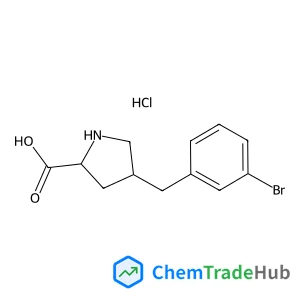
(2S,4R)-4-(3-Bromobenzyl)pyrrolidine-2-carboxylic acid hydrochloride
CAS号:
1049734-10-2
分子式:
C12H15BrClNO2
推荐供应商





免责声明
本页面提供的学术期刊信息仅供参考和研究使用。我们与任何期刊出版商均无关联,也不处理投稿事宜。如有投稿相关咨询,请直接联系相关期刊出版商。
如发现页面信息有误,请发送邮件至 support@chemtradehub.com 联系我们。我们将及时核实并处理您的问题。