


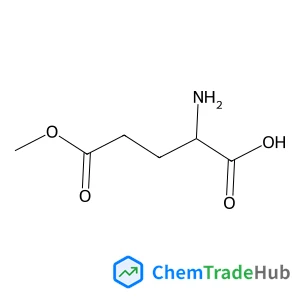
Thermodynamics of mixing methanol with supercritical CO2 as seen from computer simulations and thermodynamic integration
文献信息
发布日期
2020-04-28
DOI
10.1039/D0CP01241F
影响因子
3.676
作者
Réka A. Horváth, George Horvai, Abdenacer Idrissi, Pál Jedlovszky
查看原文
摘要
The changes in extensive thermodynamic quantities, such as volume, energy, Helmholtz free energy and entropy, occurring upon mixing liquid methanol with supercritical CO2, are calculated using Monte Carlo simulations and thermodynamic integration for all eight combinations of four methanol and two CO2 potential models in the entire composition range at 313 K. The obtained results are also compared with experimental data whenever possible. The transition of the system from liquid to a supercritical state is found to occur at this temperature around a CO2 mole fraction value of 0.95 with all model combinations considered. This liquid to supercritical transition is always accompanied by positive Helmholtz free energy of mixing values and, consequently, by the non-miscibility of the two components. Furthermore, both this non-miscibility around the liquid to supercritical transition and also the miscibility of the two components below this transition, in the liquid regime, are found to be primarily of the energetic rather than entropic origin; the entropy of mixing turns out to be very close to zero, and around the liquid to supercritical transition even its qualitative behaviour is strongly model dependent. Finally, it is found that the methanol expansion coefficient is not sensitive to the details of the potential models, and it is always in excellent agreement with the experimental data. On the other hand, both the volume and the energy of mixing depend strongly on the molar volume of neat CO2 in the model being used, and in this respect the TraPPE model of CO2 [J. J. Potoff and J. I. Siepmann, AIChE J., 2001, 47, 1676] performs considerably better than that of Zhang and Duan [Z. Zhang and Z. Duan, J. Chem. Phys., 2005, 122, 214507].
期刊推荐
Russian Journal of General Chemistry
Russian Journal of Applied Chemistry
Current Opinion in Colloid & Interface Science
Russian Journal of Bioorganic Chemistry

Journal of Peptide Science
Crystallography Reports
Saudi Pharmaceutical Journal
Organic Process Research & Development
Russian Journal of Coordination Chemistry

Chemical Communications
相关文献
Schiff's base as a stimuli-responsive linker in polymer chemistry
Yan Xin, Jinying Yuan
2012-06-28
Review Article
DOI: 10.1039/C2PY20290E
Effect of metal chlorides on glucose mutarotation and possible implications on humin formation
Pranav Ramesh, Athanasios Kritikos, George Tsilomelekis
2018-12-10
Communication
DOI: 10.1039/C8RE00233A
Pyrene-based water dispersible orange emitter for one- and two-photon fluorescence cellular imaging
Junlong Geng, Xinhai Zhang, Liping Cai, Dan Ding, Kai Li, Long Wang, Yee-Hing Lai
2012-05-18
Paper
DOI: 10.1039/C2PY20271A
Dynamic supramolecular poly(isobutylene)s for self-healing materials
Florian Herbst, Wolfgang H. Binder
2012-05-25
Paper
DOI: 10.1039/C2PY20265D
Effects of structure-manipulated molecular stacking on solid-state optical properties and device performances
Jianhua Huang, Yan Zhao, Weiwei He, Hui Jia, Zhenhuan Lu, Bo Jiang, Chuanlang Zhan, Qibing Pei, Yunqi Liu, Jiannian Yao
2012-07-10
Paper
DOI: 10.1039/C2PY20406A
Orthogonal self-assembly of stimuli-responsive supramolecular polymers using one-step prepared heterotelechelic building blocks
Richard Hoogenboom, Wolfgang Günther
2012-08-21
Paper
DOI: 10.1039/C2PY20559A
pH and enzymatic double-stimuli responsive multi-compartment micelles from supra-amphiphilic polymers
Chao Wang, Yuetong Kang, Kai Liu, Zhibo Li, Zhiqiang Wang, Xi Zhang
2012-06-13
Communication
DOI: 10.1039/C2PY20334K
A hybrid description and evaluation of oxymethylene dimethyl ethers synthesis based on the endothermic dehydrogenation of methanol
Franz Mantei, Kai Hesterwerth, Eleonora Bargiacchi, Harald Klein, Robin J. White
2018-07-17
Paper
DOI: 10.1039/C8RE00100F
您可能还喜欢
化合物问答
2-氨基-2-(5-甲基噻吩-2-基)乙酸(CAS号:89776-66-9)应用于哪些行业?
2-氨基-2-(5-甲基噻吩-2-基)乙酸主要应用于医药、聚合物、传感器和半导体等行业。在医药领域,它作为中间体用于合成各种药物。在聚合物行业,它可以用作稳定剂...
89776-66-9Amino(5-methyl-2-thi...
化合物问答
什么是N-(叔丁氧羰基)-3-碘吲唑(CAS号:290368-00-2)?
N-(叔丁氧羰基)-3-碘吲唑是一种化学化合物,其英文名称为2-Methyl-2-propanyl 3-iodo-1H-indazole-1-carboxyla...
290368-00-22-Methyl-2-propanyl ...
化合物问答
N-芴甲氧羰基-D-谷氨酸(CAS号:104091-09-0)的市场或研究趋势如何?
该化合物作为重要的保护基,广泛应用于生物有机化学合成中,尤其在肽类、蛋白质和寡核苷酸的研究领域。随着合成生物学和药物开发的进展,该化合物的需求持续增长。未来的研...
104091-09-0N-[(9H-Fluoren-9-ylm...
化合物问答
2-乙氧基-1-萘酰氯(CAS号:55150-29-3)的市场或研究趋势如何?
2-乙氧基-1-萘酰氯在研究领域中主要用于合成研究和有机化学反应,随着有机合成技术的发展,其市场应用和研究兴趣可能会有所增长。尤其是在新型药物合成和新材料开发领...
55150-29-32-Ethoxy-1-naphthoyl...
化合物问答
1-甲氧基菜豆素(CAS号:65428-13-9)的主要用途是什么?
1-甲氧基菜豆素主要应用于有机合成、药物化学领域,作为合成其他有机化合物的中间体或前体。此外,由于其特殊的化学性质,也可能用于某些特定的化学研究和实验中。
65428-13-9(6aR,11aR)-1-Methoxy...
化合物问答
small>-2-氨基丁酸(CAS号:106873-99-8)的主要用途是什么?
small>-2-氨基丁酸主要应用于有机合成和化学研究中,作为中间体或试剂使用。此外,它还可能用于某些药物合成过程中。
106873-99-82-Formamidobutanoic ...
化合物问答
什么是5-氨基-2-氯-n-(2-呋喃甲基)苯甲酰胺(CAS号:926216-59-3)?
5-氨基-2-氯-n-(2-呋喃甲基)苯甲酰胺是一种有机化合物,其分子式为C11H9ClN3O。它具有一定的生物活性,在合成化学和药物化学中有一定的应用价值。
926216-59-35-Amino-2-chloro-N-(...
化合物问答
4-(3-溴苯甲酰基)-哌嗪-1-羧酸叔丁酯(CAS号:890153-34-1)适用哪些法规指南?
该化合物根据其化学性质和用途,可能需要符合GHS(全球化学品统一分类和标签制度)的分类标准,包括急性毒性、皮肤腐蚀/刺激、严重眼损伤/眼刺激等类别。此外,根据其...
890153-34-12-Methyl-2-propanyl ...
化合物问答
如何储存(9ci)-2,4-二甲基-1H-吡咯-3-甲腈(CAS号:26187-28-0)?
应将(9ci)-2,4-二甲基-1H-吡咯-3-甲腈存放在阴凉、干燥的地方,避免阳光直射。储存容器应密封良好,防止挥发和污染。建议温度保持在20-25℃之间,湿...
26187-28-02,4-Dimethyl-1H-pyrr...
化合物问答
巨大戟醇-5,20-缩丙酮-3-当归酸酯(CAS号:87980-68-5)通常如何合成?
该化合物通常通过合成当归酸酯的方法制备,具体步骤为将当归酸酯与巨大戟醇-5,20-缩丙酮进行缩合反应,反应条件为温和的酸性环境,通常使用三氟乙酸作为催化剂。该合...
87980-68-5(4S,5S,6R,18R)-5-Hyd...
来源期刊
Physical Chemistry Chemical Physics

CiteScore:
5.5
自引率:
10.3%
年发文量:
3036
Physical Chemistry Chemical Physics (PCCP) is an international journal co-owned by 19 physical chemistry and physics societies from around the world. This journal publishes original, cutting-edge research in physical chemistry, chemical physics and biophysical chemistry. To be suitable for publication in PCCP, articles must include significant innovation and/or insight into physical chemistry; this is the most important criterion that reviewers and Editors will judge against when evaluating submissions. The journal has a broad scope and welcomes contributions spanning experiment, theory, computation and data science. Topical coverage includes spectroscopy, dynamics, kinetics, statistical mechanics, thermodynamics, electrochemistry, catalysis, surface science, quantum mechanics, quantum computing and machine learning. Interdisciplinary research areas such as polymers and soft matter, materials, nanoscience, energy, surfaces/interfaces, and biophysical chemistry are welcomed if they demonstrate significant innovation and/or insight into physical chemistry. Joined experimental/theoretical studies are particularly appreciated when complementary and based on up-to-date approaches.
推荐化合物
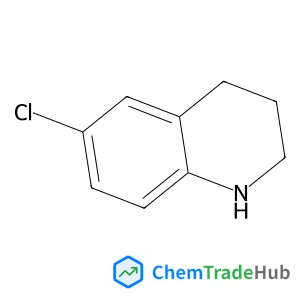
推荐供应商




免责声明
本页面提供的学术期刊信息仅供参考和研究使用。我们与任何期刊出版商均无关联,也不处理投稿事宜。如有投稿相关咨询,请直接联系相关期刊出版商。
如发现页面信息有误,请发送邮件至 support@chemtradehub.com 联系我们。我们将及时核实并处理您的问题。