




![(2E)-3-(3-Chlorophenyl)-N-{2-[4-(methylsulfonyl)-1-piperazinyl]-2-oxoethyl}acrylamide structure](https://cnstatic.chemtradehub.com/structs/250/2505001-54-5-c1e9.webp "(2E)-3-(3-Chlorophenyl)-N-{2-[4-(methylsulfonyl)-1-piperazinyl]-2-oxoethyl}acrylamide structure")
The first molecular characterisation of blue- and red-light photoreceptors from Methylobacterium radiotolerans
文献信息
发布日期
2020-05-12
DOI
10.1039/D0CP02014A
影响因子
3.676
作者
Eleonora Consiglieri, Kai-Hong Zhao, Wolfgang Gärtner, Aba Losi
查看原文
摘要
Methylobacteria are facultative methylotrophic phytosymbionts of great industrial and agronomical interest, and they are considered as opportunistic pathogens posing a health threat to humans. So far only a few reports mention photoreceptor coding sequences in Methylobacteria genomes, but no investigation at the molecular level has been performed yet. We here present comprehensive in silico research into potential photoreceptors in this bacterial phylum and report the photophysical and photochemical characterisation of two representatives of the most widespread photoreceptor classes, a blue-light sensing LOV (light, oxygen, voltage) protein and a red/far red light sensing BphP (biliverdin-binding bacterial phytochrome) from M. radiotolerans JCM 2831. Overall, both proteins undergo the expected light-triggered reactions, but peculiar features were also identified. The LOV protein Mr4511 has an extremely long photocycle and lacks a tryptophan conserved in ca. 75% of LOV domains. Mutation I37V accelerates the photocycle by one order of magnitude, while the Q112W change underscores the ability of tryptophan in this position to perform efficient energy transfer to the flavin chromophore. Time-resolved photoacoustic experiments showed that Mr4511 has a higher triplet quantum yield than other LOV domains and that the formation of the photoproduct results in a volume expansion, in sharp contrast to other LOV proteins. Mr4511 was found to be astonishingly resistant to denaturation by urea, still showing light-triggered reactions after incubation in urea for more than 20 h. The phytochrome MrBphP1 exhibits the so far most red-shifted absorption maxima for its Pr- and Pfr forms (λmax = 707 nm and 764 nm for the Pr and Pfr forms). The light-driven conversions in both directions occur with relatively high quantum yields of 0.2. Transient ns absorption spectroscopy (μs–ms time range) identifies the decay of the instantaneously formed lumi-intermediate, followed by only one additional intermediate before the formation of the respective final photoproducts for Pr-to-Pfr or Pfr-to-Pr photoconversion, in contrast to other BphPs. The relatively simple photoconversion patterns suggest the absence of the shunt pathways reported for other bacterial phytochromes.
相关文献
Porous 3-D honeycomb architecture by self-assembly of helical H-bonded molecular tapes
Arnaud-Pierre Schaffner, Gersande Lena, Solveig Roussel, André Aubry, Jean-Paul Briand, Claude Didierjean, Gilles Guichard
2006-09-11
Communication
DOI: 10.1039/B604747E
Nature of biological water: a femtosecond study
Kankan Bhattacharyya
2008-04-18
Feature Article
DOI: 10.1039/B800278A
Rhodium N-confused porphyrin-catalyzed alkene cyclopropanation
Teppei Niino, Motoki Toganoh, Bruno Andrioletti
2006-09-05
Communication
DOI: 10.1039/B608154A
A two component thermoreversible hydrogel of riboflavin and melamine: Enhancement of photoluminescence in the gel form
Swarup Manna, Abhijit Saha, Arun K. Nandi
2006-08-23
Communication
DOI: 10.1039/B608234C
Enantioselective rhodium-catalyzed addition of arylboronic acids to trifluoromethyl ketones
Sébastien L. X. Martina, Richard B. C. Jagt, Johannes G. de Vries, Ben L. Feringa, Adriaan J. Minnaard
2006-08-22
Communication
DOI: 10.1039/B609453H
A low molecular weight hydrogel which exhibits electroosmotic flow and its use as a bioreactor and for electrochromatography of neutral species
Shaul Mizrahi, Dan Rizkov, Netanel Hayat, Ovadia Lev
2008-04-14
Communication
DOI: 10.1039/B802155D
The bioinorganic chemistry and associated immunology of chronic beryllium disease
Brian L. Scott, T. Mark McCleskey, Anu Chaudhary, Elizabeth Hong-Geller, S. Gnanakaran
2008-05-09
Feature Article
DOI: 10.1039/B718746G
您可能还喜欢
化合物问答
如何储存1,2-环己二酮环乙缩醛(CAS号:4746-96-7)?
1,2-环己二酮环乙缩醛应储存在阴凉、干燥、通风良好的地方,避免阳光直射。建议使用密封容器保存,并保持环境温度在室温范围内,远离火源和热源。
4746-96-71,4-Dioxaspiro[4.5]d...
化合物问答
Ecopladib(CAS号:381683-92-7)的市场或研究趋势如何?
Ecopladib作为一种新型的药物,主要应用于治疗高胆固醇等疾病。目前,市场和研究趋势显示,Ecopladib因其独特的药理作用而受到关注。随着对心血管疾病治...
381683-92-7Ecopladib
化合物问答
2,3-Dimethyl-3H-imidazo[4,5-c]pyridine(CAS号:52538-09-7)通常如何合成?
2,3-二甲基-3H-咪唑[4,5-c]吡啶通常通过咪唑和2,3-二甲基吡啶的缩合反应合成。具体来说,将咪唑和2,3-二甲基吡啶在适当的溶剂中进行加热或加压反应...
52538-09-72,3-Dimethyl-3H-imid...
化合物问答
2,3,4,5-tetrahydro-1H-3-苯并氮杂环;盐酸盐(CAS号:17379-01-0)的市场或研究趋势如何?
该化合物在药物化学和有机合成中有一定的应用。近年来,随着对新型药物化合物的需求增加,该化合物的研究趋势主要集中在探索其生物活性,尤其是其在神经系统疾病治疗中的潜...
17379-01-02,3,4,5-Tetrahydro-1...
68-90-6(2-Ethyl-1-benzofura...
化合物问答
如何储存盐酸甘氨酸丁酯(CAS号:13048-99-2)?
盐酸甘氨酸丁酯应储存在阴凉、干燥、通风良好的地方,避免阳光直射和高温环境,温度应控制在25℃以下。储存容器应密封,避免与空气中的水分和酸性物质接触,以防发生水解...
13048-99-2Butyl glycinate hydr...
化合物问答
什么是2-Iodo-N,N-dimethylbenzamide(CAS号:54616-46-5)?
2-碘-N,N-二甲基苯胺是一种有机化合物,化学名为2-Iodo-N,N-dimethylbenzamide。其分子式为C<sub>9</sub>H<sub>1...
54616-46-52-Iodo-N,N-dimethylb...
16817-90-6N-Cyclohexylglycinam...
化合物问答
5-溴-2-(4H-1,2,4-三唑-4-基)吡啶(CAS号:959240-99-4)的市场或研究趋势如何?
随着医药、农药和新材料领域的发展,该化合物作为关键中间体的应用日益增多。特别是在药物合成中,由于其独特的化学性质,可以用于合成多种药物分子。未来的研究趋势可能集...
959240-99-45-Bromo-2-(4H-1,2,4-...
化合物问答
2,4-二溴-6-三氟甲基嘧啶(CAS号:785778-00-9)通常如何合成?
2,4-二溴-6-三氟甲基嘧啶通常通过溴化反应合成。首先,将6-三氟甲基嘧啶与溴化剂(如液溴)在适当的溶剂(如二氯甲烷、四氢呋喃)中反应,加入适当的催化剂(如四...
785778-00-92,4-Dibromo-6-(trifl...
来源期刊
Physical Chemistry Chemical Physics

CiteScore:
5.5
自引率:
10.3%
年发文量:
3036
Physical Chemistry Chemical Physics (PCCP) is an international journal co-owned by 19 physical chemistry and physics societies from around the world. This journal publishes original, cutting-edge research in physical chemistry, chemical physics and biophysical chemistry. To be suitable for publication in PCCP, articles must include significant innovation and/or insight into physical chemistry; this is the most important criterion that reviewers and Editors will judge against when evaluating submissions. The journal has a broad scope and welcomes contributions spanning experiment, theory, computation and data science. Topical coverage includes spectroscopy, dynamics, kinetics, statistical mechanics, thermodynamics, electrochemistry, catalysis, surface science, quantum mechanics, quantum computing and machine learning. Interdisciplinary research areas such as polymers and soft matter, materials, nanoscience, energy, surfaces/interfaces, and biophysical chemistry are welcomed if they demonstrate significant innovation and/or insight into physical chemistry. Joined experimental/theoretical studies are particularly appreciated when complementary and based on up-to-date approaches.
推荐化合物
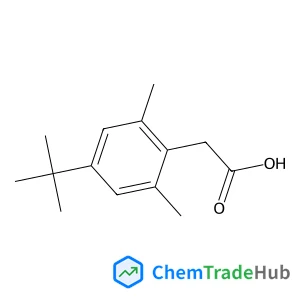
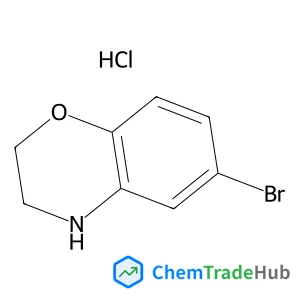
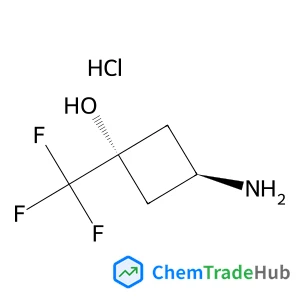
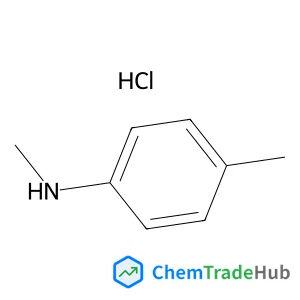
推荐供应商





免责声明
本页面提供的学术期刊信息仅供参考和研究使用。我们与任何期刊出版商均无关联,也不处理投稿事宜。如有投稿相关咨询,请直接联系相关期刊出版商。
如发现页面信息有误,请发送邮件至 support@chemtradehub.com 联系我们。我们将及时核实并处理您的问题。