


Chemical and electronic structures of cobalt oxynitride films deposited by NH3vs. N2 plasma: theory vs. experiment
文献信息
发布日期
2020-10-19
DOI
10.1039/D0CP04168H
影响因子
3.676
作者
Adaeze Osonkie, Veronica Lee, Adeola Oyelade, Maximillian Mrozek-McCourt, Precious Chukwunenye, Teresa D. Golden, Thomas R. Cundari, Jeffry A. Kelber
查看原文
摘要
The chemical structures of Co oxynitrides – in particular, interactions among N and O atoms bonded to the same cobalt – are of great importance for an array of catalytic and materials applications. X-ray diffraction (XRD), core and valence band X-ray photoelectron spectroscopy (XPS) and plane wave density functional theory (DFT) calculations are used to probe chemical and electronic interactions of nitrogen-rich CoO1−xNx (x > 0.7) films deposited on Si(100) using NH3 or N2 plasma-based sputter deposition or surface nitridation. Total energy calculations indicate that the zinc blende (ZB) structure is energetically favored over the rocksalt (RS) structure for x > ∼0.2, with an energy minimum observed in the ZB structure for x ∼ 0.8–0.9. This is in close agreement with XPS-derived film compositions when corrected for surface oxide/hydroxide layers. XRD data indicate that films deposited on Si(100) at room temperature display either a preferred (220) orientation or no diffraction pattern, and are consistent with either rocksalt (RS) or zinc blende (ZB) structure. Comparison between experimental and calculated X-ray excited valence band densities of states – also similar for all films synthesized herein – demonstrates a close agreement with a ZB, but not an RS structure. Core level XPS spectra exhibit systematic differences between films deposited in NH3 vs N2 plasma environments. Films deposited by N2 plasma magnetron sputtering exhibit greater O content as evidenced by systematic shifts in N 1s binding energies. Excellent agreement with experiment for core level binding energies is obtained for DFT calculations based on the ZB structure, but not for the RS structure. The agreement between theory and experiment demonstrates that these N-rich Co oxynitride films exhibit the ZB structure, and forms the basis of a predictive model for understanding how N and O interactions impact the electronic, magnetic and catalytic properties of these materials.
期刊推荐
Current Opinion in Colloid & Interface Science
Russian Journal of Coordination Chemistry

Chemical Communications
Saudi Pharmaceutical Journal
Russian Journal of General Chemistry
Russian Journal of Organic Chemistry
Russian Journal of Bioorganic Chemistry
Crystallography Reports

Journal of Natural Medicines
Russian Journal of Applied Chemistry
相关文献
Hygroscopic and phase transition properties of alkyl aminium sulfates at low relative humidities
Yangxi Chu, Meike Sauerwein
2015-07-08
Paper
DOI: 10.1039/C5CP02404H
Linking surface chemistry to optical properties of semiconductor nanocrystals
Michael M. Krause, Patanjali Kambhampati
2015-06-16
Perspective
DOI: 10.1039/C5CP02173A
An accurate cost effective DFT approach to study the sensing behaviour of polypyrrole towards nitrate ions in gas and aqueous phases
Fatima Wasim, Tariq Mahmood, Khurshid Ayub
2016-06-17
Paper
DOI: 10.1039/C6CP02271E
MnO nanoparticles embedded in a carbon matrix as high performance lithium-ion battery anodes: preparation, microstructure and electrochemistry
Dongming Chen
2016-06-24
Paper
DOI: 10.1039/C6CP01691J
Magnetic susceptibility as a direct measure of oxidation state in LiFePO4 batteries and cyclic water gas shift reactors
Thomas Kadyk, Michael Eikerling
2015-07-01
Paper
DOI: 10.1039/C5CP02977E
Delineating the conformational flexibility of trisaccharides from NMR spectroscopy experiments and computer simulations
Mingjun Yang, Thibault Angles d’Ortoli, Elin Säwén, Göran Widmalm, Alexander D. MacKerell, Jr.
2016-06-16
Paper
DOI: 10.1039/C6CP02970A
Hydrogen-bond acidity of ionic liquids: an extended scale
Filipa Lima, Ana Filipa M. Cláudio, João A. P. Coutinho, Mara G. Freire
2015-06-24
Paper
DOI: 10.1039/C5CP03094C
A self-protection phenomenon in the Nafion membrane when it breathes in methanol-saturated air
Kai Feng, Beibei Tang, Peiyi Wu
2016-06-23
Paper
DOI: 10.1039/C6CP03176E
Intrusion–extrusion spring performance of –COK-14 zeolite enhanced by structural changes
Christine E. A. Kirschhock, Michiel De Prins, Elke Verheijen, Andrey Ryzhikov, T. Jean Daou, Habiba Nouali, Francis Taulelle, Johan A. Martens, Joël Patarin
2016-06-14
Paper
DOI: 10.1039/C6CP03162E
Wurtzite CZTS nanocrystals and phase evolution to kesterite thin film for solar energy harvesting
Mahesh P. Suryawanshi, Seung Wook Shin, Chang Woo Hong, Inyoung Kim, Jong H. Moon, Jae Ho Yun, Jin Hyeok Kim, Sanjay S. Kolekar
2015-06-16
Paper
DOI: 10.1039/C5CP02007G
您可能还喜欢
化合物问答
P11(CAS号:848644-86-0)安全吗?
P11作为一种化学化合物,需要谨慎处理。一般来说,该化合物无毒,但在操作过程中仍需遵循实验室安全规定,避免皮肤接触和吸入。建议在通风良好的环境中操作,并佩戴适当...
848644-86-0L-Histidyl-L-seryl-L...
化合物问答
氨甲环酸杂质C(CAS号:330838-52-3)通常如何合成?
氨甲环酸杂质C通常通过氨甲环酸的衍生物与环己烯进行缩合反应合成。常见的合成方法包括一步合成法和多步合成法,其中多步合成法可以提高产物的选择性和产率。反应通常在无...
330838-52-34-(Aminomethyl)-1-cy...
化合物问答
(±)-茉莉酸(CAS号:221682-41-3)通常如何合成?
(±)-茉莉酸的合成通常采用生物合成或者化学合成的方法。化学合成方法中,可以通过2-戊烯-1-醇与环戊酮的缩合反应,再经过氧化反应得到目标产物。该反应需要温和的...
221682-41-3{3-Oxo-2-[(2E)-2-pen...
化合物问答
(4S,4'S)-2,2'-(1,1-环己烷二基)双(4-异丙基-4,5-二氢-1,3-噁唑)(CAS号:1373357-00-6)安全吗?
(4S,4'S)-2,2'-(1,1-环己烷二基)双(4-异丙基-4,5-二氢-1,3-噁唑)属于有机化合物,应遵循实验室安全规范。在操作时应佩戴适当的个人防护...
1373357-00-6(4S,4'S)-2,2'-(1,1-C...
化合物问答
什么是6-苄氧基-5-甲氧基-2-羧基吲哚(CAS号:2495-92-3)?
6-苄氧基-5-甲氧基-2-羧基吲哚是一种有机化合物,分子式为C16H15NO3。它是一种含有苄氧基、甲氧基和羧基官能团的吲哚衍生物。
2495-92-36-(Benzyloxy)-5-meth...
化合物问答
丙二酸丁酯乙酯(CAS号:17373-84-1)安全吗?
丙二酸丁酯乙酯属于易燃物质,具有一定的毒性。在操作时应佩戴防护眼镜和手套,避免接触皮肤和眼睛。储存时应远离热源和火源,避免阳光直射,以减少火灾和爆炸的风险。
17373-84-1Butyl ethyl malonate
化合物问答
2-碘-3-甲基吡嗪(CAS号:58139-08-5)的市场或研究趋势如何?
2-碘-3-甲基吡嗪作为一种特殊结构的化合物,目前在工业和学术研究中的应用相对有限。然而,随着对特定化学结构及其潜在应用的深入研究,预计未来可能在农药、医药等领...
58139-08-52-Iodo-3-methylpyraz...
化合物问答
千层纸素A-7-0-β-D-葡萄糖醛酸苷甲酯(CAS号:82475-01-2)的物理化学性质是什么?
千层纸素A-7-0-β-D-葡萄糖醛酸苷甲酯是一种白色结晶固体,分子量为616.27 g/mol。该化合物在水中溶解度较低,在有机溶剂中溶解度较高。其反应活性主...
82475-01-25-Hydroxy-8-methoxy-...
化合物问答
什么是7-苄基-4,7-二氮杂螺[2.5]辛烷(CAS号:1222106-45-7)?
7-苄基-4,7-二氮杂螺[2.5]辛烷是一种有机化合物,其结构由一个环状的7-苄基-4,7-二氮杂螺环和一个苯基组成。该化合物的分子式为C14H16N2。它具...
1222106-45-77-Benzyl-4,7-diazasp...
化合物问答
在合成中是否有丁酰胺酸甲酯(CAS号:53171-39-4)的替代品?
丁酰胺酸甲酯的合成中可能的替代品包括其他氨基酸衍生物,如乙酰胺酸甲酯或丙酰胺酸甲酯。这些替代品在某些合成路线中可能更为便利或成本更低。
53171-39-4Methyl 4-amino-4-oxo...
来源期刊
Physical Chemistry Chemical Physics

CiteScore:
5.5
自引率:
10.3%
年发文量:
3036
Physical Chemistry Chemical Physics (PCCP) is an international journal co-owned by 19 physical chemistry and physics societies from around the world. This journal publishes original, cutting-edge research in physical chemistry, chemical physics and biophysical chemistry. To be suitable for publication in PCCP, articles must include significant innovation and/or insight into physical chemistry; this is the most important criterion that reviewers and Editors will judge against when evaluating submissions. The journal has a broad scope and welcomes contributions spanning experiment, theory, computation and data science. Topical coverage includes spectroscopy, dynamics, kinetics, statistical mechanics, thermodynamics, electrochemistry, catalysis, surface science, quantum mechanics, quantum computing and machine learning. Interdisciplinary research areas such as polymers and soft matter, materials, nanoscience, energy, surfaces/interfaces, and biophysical chemistry are welcomed if they demonstrate significant innovation and/or insight into physical chemistry. Joined experimental/theoretical studies are particularly appreciated when complementary and based on up-to-date approaches.
推荐化合物
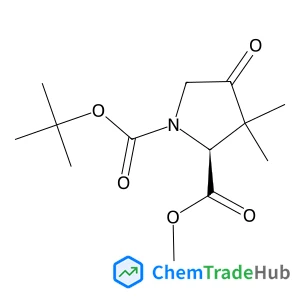
![[3-Fluoro-4-(1-pyrrolidinylcarbonyl)phenyl]boronic acid structure](https://cnstatic.chemtradehub.com/structs/874/874289-09-5-e3d4.webp "[3-Fluoro-4-(1-pyrrolidinylcarbonyl)phenyl]boronic acid structure")
推荐供应商





免责声明
本页面提供的学术期刊信息仅供参考和研究使用。我们与任何期刊出版商均无关联,也不处理投稿事宜。如有投稿相关咨询,请直接联系相关期刊出版商。
如发现页面信息有误,请发送邮件至 support@chemtradehub.com 联系我们。我们将及时核实并处理您的问题。