


![2-(5-Bromo-1H-pyrrolo[2,3-B]pyridin-3-YL)acetic acid structure](https://cnstatic.chemtradehub.com/structs/106/1060795-03-0-0589.webp "2-(5-Bromo-1H-pyrrolo[2,3-B]pyridin-3-YL)acetic acid structure")
Hydrogen-bond acidity of ionic liquids: an extended scale
文献信息
发布日期
2015-06-24
DOI
10.1039/C5CP03094C
影响因子
3.676
作者
Filipa Lima, Ana Filipa M. Cláudio, João A. P. Coutinho, Mara G. Freire
查看原文
摘要
One of the main drawbacks comprising an appropriate selection of ionic liquids (ILs) for a target application is related to the lack of an extended and well-established polarity scale for these neoteric fluids. Albeit considerable progress has been made on identifying chemical structures and factors that influence the polarity of ILs, there still exists a high inconsistency in the experimental values reported by different authors. Furthermore, due to the extremely large number of possible ILs that can be synthesized, the experimental characterization of their polarity is a major limitation when envisaging the choice of an IL with a desired polarity. Therefore, it is of crucial relevance to develop correlation schemes and a priori predictive methods able to forecast the polarity of new (or not yet synthesized) fluids. In this context, and aiming at broadening the experimental polarity scale available for ILs, the solvatochromic Kamlet–Taft parameters of a broad range of bis(trifluoromethylsulfonyl)imide-([NTf2]−)-based fluids were determined. The impact of the IL cation structure on the hydrogen-bond donating ability of the fluid was comprehensively addressed. Based on the large amount of novel experimental values obtained, we then evaluated COSMO-RS, COnductor-like Screening MOdel for Real Solvents, as an alternative tool to estimate the hydrogen-bond acidity of ILs. A three-parameter model based on the cation–anion interaction energies was found to adequately describe the experimental hydrogen-bond acidity or hydrogen-bond donating ability of ILs. The proposed three-parameter model is also shown to present a predictive capacity and to provide novel molecular-level insights into the chemical structure characteristics that influence the acidity of a given IL. It is shown that although the equimolar cation–anion hydrogen-bonding energies (EHB) play the major role, the electrostatic-misfit interactions (EMF) and van der Waals forces (EvdW) also contribute, admittedly in a lower extent, towards the hydrogen-bond acidity of ILs. The new extended scale provided for the hydrogen-bond acidity of ILs is of high value for the design of new ILs for task-specific applications.
期刊推荐

Advanced Engineering Materials
Current Pharmaceutical Biotechnology
Journal of Enzyme inhibition and Medicinal Chemistry

Nature Reviews Drug Discovery
European Journal of Organic Chemistry

Physical Chemistry Chemical Physics
Photochemical & Photobiological Sciences
Lab on a Chip

Green Chemistry
Faraday Discussions
相关文献
Semi-automatic instrumentation for nucleic acid extraction and purification to quantify pathogens on surfaces
Won-Nyoung Lee, Hyun Jin Yoo, Kim Huyen Nguyen, Changyoon Baek, Junhong Min
2019-09-27
Paper
DOI: 10.1039/C9AN00896A
Fluorescence array-based sensing of nitroaromatics using conjugated polyelectrolytes
Yu Zong Chen
2016-05-03
Communication
DOI: 10.1039/C6AN00678G
DNA tetrahedron and star trigon nanostructures for target recycling detection of nucleic acid
Xifeng Chen, Bidou Wang, Guangxing Liu, Yuguo Tang, Peng Miao
2016-05-04
Communication
DOI: 10.1039/C6AN00762G
Approaches towards molecular amplification for sensing
Sean Goggins, Christopher G. Frost
2016-04-14
Critical Review
DOI: 10.1039/C6AN00348F
Electrochemical performance of ruthenium nanoparticles decorated on nitride carbon for non-enzymatic detection of hydrogen peroxide
Xia Cheng, Caili Xu, Qian Chen, Yi Wang, Yun Zhang, Guangyin Fan
2019-09-21
Paper
DOI: 10.1039/C9AN01480B
Addressing the practicalities of anodic stripping voltammetry for heavy metal detection: a tutorial review
Julie V. Macpherson
2019-10-15
Tutorial Review
DOI: 10.1039/C9AN01437C
Mass spectrometric analysis of PTM dynamics using stable isotope labeled metabolic precursors in cell culture
Alienke van Pijkeren, Rainer Bischoff
2019-10-25
Critical Review
DOI: 10.1039/C9AN01258C
A fully battery-powered inexpensive spectrophotometric system for high-sensitivity point-of-care analysis on a microfluidic chip
Maowei Dou, Juan Lopez, Misael Rios, Oscar Garcia, Chuan Xiao, Michael Eastman, XiuJun Li
2016-04-20
Paper
DOI: 10.1039/C6AN00370B
Raman spectroscopy for rapid intra-operative margin analysis of surgically excised tumour specimens
Angela Shore
2019-10-08
Critical Review
DOI: 10.1039/C9AN01163C
您可能还喜欢
化合物问答
P11(CAS号:848644-86-0)安全吗?
P11作为一种化学化合物,需要谨慎处理。一般来说,该化合物无毒,但在操作过程中仍需遵循实验室安全规定,避免皮肤接触和吸入。建议在通风良好的环境中操作,并佩戴适当...
848644-86-0L-Histidyl-L-seryl-L...
化合物问答
氨甲环酸杂质C(CAS号:330838-52-3)通常如何合成?
氨甲环酸杂质C通常通过氨甲环酸的衍生物与环己烯进行缩合反应合成。常见的合成方法包括一步合成法和多步合成法,其中多步合成法可以提高产物的选择性和产率。反应通常在无...
330838-52-34-(Aminomethyl)-1-cy...
化合物问答
(±)-茉莉酸(CAS号:221682-41-3)通常如何合成?
(±)-茉莉酸的合成通常采用生物合成或者化学合成的方法。化学合成方法中,可以通过2-戊烯-1-醇与环戊酮的缩合反应,再经过氧化反应得到目标产物。该反应需要温和的...
221682-41-3{3-Oxo-2-[(2E)-2-pen...
化合物问答
(4S,4'S)-2,2'-(1,1-环己烷二基)双(4-异丙基-4,5-二氢-1,3-噁唑)(CAS号:1373357-00-6)安全吗?
(4S,4'S)-2,2'-(1,1-环己烷二基)双(4-异丙基-4,5-二氢-1,3-噁唑)属于有机化合物,应遵循实验室安全规范。在操作时应佩戴适当的个人防护...
1373357-00-6(4S,4'S)-2,2'-(1,1-C...
化合物问答
什么是6-苄氧基-5-甲氧基-2-羧基吲哚(CAS号:2495-92-3)?
6-苄氧基-5-甲氧基-2-羧基吲哚是一种有机化合物,分子式为C16H15NO3。它是一种含有苄氧基、甲氧基和羧基官能团的吲哚衍生物。
2495-92-36-(Benzyloxy)-5-meth...
化合物问答
丙二酸丁酯乙酯(CAS号:17373-84-1)安全吗?
丙二酸丁酯乙酯属于易燃物质,具有一定的毒性。在操作时应佩戴防护眼镜和手套,避免接触皮肤和眼睛。储存时应远离热源和火源,避免阳光直射,以减少火灾和爆炸的风险。
17373-84-1Butyl ethyl malonate
化合物问答
2-碘-3-甲基吡嗪(CAS号:58139-08-5)的市场或研究趋势如何?
2-碘-3-甲基吡嗪作为一种特殊结构的化合物,目前在工业和学术研究中的应用相对有限。然而,随着对特定化学结构及其潜在应用的深入研究,预计未来可能在农药、医药等领...
58139-08-52-Iodo-3-methylpyraz...
化合物问答
千层纸素A-7-0-β-D-葡萄糖醛酸苷甲酯(CAS号:82475-01-2)的物理化学性质是什么?
千层纸素A-7-0-β-D-葡萄糖醛酸苷甲酯是一种白色结晶固体,分子量为616.27 g/mol。该化合物在水中溶解度较低,在有机溶剂中溶解度较高。其反应活性主...
82475-01-25-Hydroxy-8-methoxy-...
化合物问答
什么是7-苄基-4,7-二氮杂螺[2.5]辛烷(CAS号:1222106-45-7)?
7-苄基-4,7-二氮杂螺[2.5]辛烷是一种有机化合物,其结构由一个环状的7-苄基-4,7-二氮杂螺环和一个苯基组成。该化合物的分子式为C14H16N2。它具...
1222106-45-77-Benzyl-4,7-diazasp...
化合物问答
在合成中是否有丁酰胺酸甲酯(CAS号:53171-39-4)的替代品?
丁酰胺酸甲酯的合成中可能的替代品包括其他氨基酸衍生物,如乙酰胺酸甲酯或丙酰胺酸甲酯。这些替代品在某些合成路线中可能更为便利或成本更低。
53171-39-4Methyl 4-amino-4-oxo...
来源期刊
Physical Chemistry Chemical Physics
CiteScore:
5.5
自引率:
10.3%
年发文量:
3036
Physical Chemistry Chemical Physics (PCCP) is an international journal co-owned by 19 physical chemistry and physics societies from around the world. This journal publishes original, cutting-edge research in physical chemistry, chemical physics and biophysical chemistry. To be suitable for publication in PCCP, articles must include significant innovation and/or insight into physical chemistry; this is the most important criterion that reviewers and Editors will judge against when evaluating submissions. The journal has a broad scope and welcomes contributions spanning experiment, theory, computation and data science. Topical coverage includes spectroscopy, dynamics, kinetics, statistical mechanics, thermodynamics, electrochemistry, catalysis, surface science, quantum mechanics, quantum computing and machine learning. Interdisciplinary research areas such as polymers and soft matter, materials, nanoscience, energy, surfaces/interfaces, and biophysical chemistry are welcomed if they demonstrate significant innovation and/or insight into physical chemistry. Joined experimental/theoretical studies are particularly appreciated when complementary and based on up-to-date approaches.
推荐化合物
![4-Fluoro-2-(4-{[(3S,4R)-4-(2-hydroxy-2-propanyl)-3-pyrrolidinyl]amino}-6,7-dimethoxy-2-quinazolinyl)phenol hydrochloride (1:1) structure](https://cnstatic.chemtradehub.com/structs/143/1431697-96-9-619c.webp "4-Fluoro-2-(4-{[(3S,4R)-4-(2-hydroxy-2-propanyl)-3-pyrrolidinyl]amino}-6,7-dimethoxy-2-quinazolinyl)phenol hydrochloride (1:1) structure")
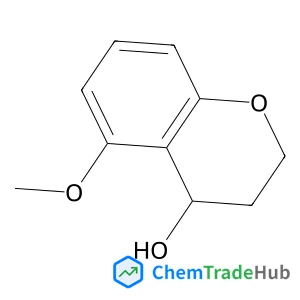
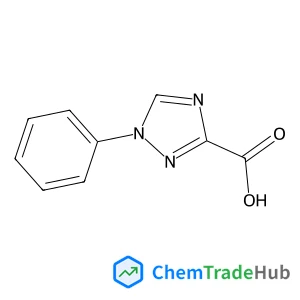
![2-Azaspiro[4.5]decane-3,8-dione structure](https://cnstatic.chemtradehub.com/structs/914/914780-96-4-e94b.webp "2-Azaspiro[4.5]decane-3,8-dione structure")
推荐供应商





免责声明
本页面提供的学术期刊信息仅供参考和研究使用。我们与任何期刊出版商均无关联,也不处理投稿事宜。如有投稿相关咨询,请直接联系相关期刊出版商。
如发现页面信息有误,请发送邮件至 support@chemtradehub.com 联系我们。我们将及时核实并处理您的问题。