



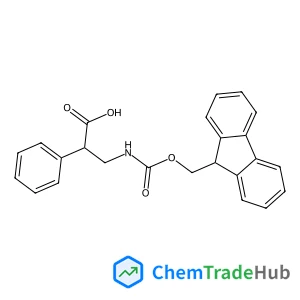
![(2S)-2-{[(9H-Fluoren-9-ylmethoxy)carbonyl]amino}-4-(methylselanyl)butanoic acid structure](https://cnstatic.chemtradehub.com/structs/121/1217852-49-7-f252.webp "(2S)-2-{[(9H-Fluoren-9-ylmethoxy)carbonyl]amino}-4-(methylselanyl)butanoic acid structure")
Tracing the driving forces responsible for the remarkable infectivity of 2019-nCoV: 1. Receptor binding domain in its bound and unbound states
文献信息
发布日期
2020-11-12
DOI
10.1039/D0CP04435K
影响因子
3.676
作者
Miaoren Xia
查看原文
摘要
The pandemic of COVID-19 has posed an urgent need to learn the dynamics of the virus and the mechanism of its contagion of host cells. By means of molecular dynamics simulations, this work addressed the behavior of 2019-nCoV in two aspects: the binding affinity of its receptor binding domain (RBD) with ACE2, and its potential conformation preferences in its unbound state. The results showed that the RBD of 2019-nCov bound much stronger with ACE2 than that of SARS-CoV due to a better organized hydrogen bond network between the former pair with most of the residues at the contact interface sharing the responsibility to hold the pair tightly. This is in contrast to the case of SARS-CoV, which strongly relied on the residues at the ends of the cleft. In its unbound state, the RBD of 2019-nCoV was found to fold part of its receptor binding motif (RBM) into a helical conformation and flip into a concave to minimize its contact with the external environment. This has the biological implication that the virus may achieve higher translational motion in the condensed phase and have a higher chance of survival by avoiding capture by the immune system before reaching its target receptor.
相关文献
Enhanced rate performance and cycling stability of a CoCO3–polypyrrole composite for lithium ion battery anodes
Zhaojun Ding, Bin Yao, Jinkui Feng, Jianxin Zhang
2013-07-16
Paper
DOI: 10.1039/C3TA12227A
Poly(phenylene) block copolymers bearing tri-sulfonated aromatic pendant groups for polymer electrolyte fuel cell applications
Ryousuke Hara, Kangcheng Chen, Nobutaka Endo, Mitsuru Higa, Ken-ichi Okamoto, Lianjun Wang
2013-05-08
Paper
DOI: 10.1039/C3TA11190C
Fibrous polyaniline@manganese oxide nanocomposites as supercapacitor electrode materials and cathode catalysts for improved power production in microbial fuel cells
Sajid Ali Ansari, Nazish Parveen, Thi Hiep Han, Mohammad Omaish Ansari, Moo Hwan Cho
2016-03-11
Paper
DOI: 10.1039/C6CP00159A
Oxidation responsive mono-cleavable amphiphilic di-block polymer micelles labeled with a single diselenide
2013-05-07
Paper
DOI: 10.1039/C3PY00406F
A theoretical study of the reactions of parent and substituted Criegee intermediates with water and the water dimer
Andrew B. Ryzhkov, Parisa A. Ariya
2004-09-02
Paper
DOI: 10.1039/B408414D
Self-assembled hybrid tinphosphonate nanoparticles with bimodal porosity: an insight towards the efficient and selective catalytic process for the synthesis of bioactive 1,4-dihydropyridines under solvent-free conditions
Malay Pramanik, Asim Bhaumik
2013-07-12
Paper
DOI: 10.1039/C3TA12476B
Effects of melt aging and off-stoichiometric melts on CsSrI3:Eu2+ single crystal scintillators
Merry Koschan
2016-02-26
Paper
DOI: 10.1039/C6CP00271D
Industrial feasibility of anodic hydrogen peroxide production through photoelectrochemical water splitting: a techno-economic analysis
Kasper Wenderich, Wouter Kwak, Alexa Grimm, Gert Jan Kramer, Guido Mul, Bastian Mei
2020-04-17
Paper
DOI: 10.1039/D0SE00524J
Zinc oxide heterostructures: advances in devices from self-powered photodetectors to self-charging supercapacitors
Sukanta Nandi, Sumana Kumar, Abha Misra
2021-09-09
Review Article
DOI: 10.1039/D1MA00670C
您可能还喜欢
化合物问答
4,5-二甲基-2-硝基苯甲酸(CAS号:4315-14-4)的市场或研究趋势如何?
4,5-二甲基-2-硝基苯甲酸主要应用于制药、染料和农药等行业。由于其潜在的毒性,其市场趋势可能受到法规限制和环保考量的影响,推动了替代产品的研发。在研究领域,...
4315-14-44,5-Dimethyl-2-nitro...
化合物问答
处理直接黑22(CAS号:6473-13-8)时应注意哪些实验室安全事项?
处理直接黑22时应穿戴适当的个人防护装备(PPE),包括实验服、手套、护目镜和口罩。操作应在通风橱内进行,以避免吸入有害气体。如果发生泄漏,应立即清理,并使用大...
6473-13-82-Naphthalenesulfoni...
化合物问答
处理2,1,3-苯并噻二唑-4-基异氰酸酯(CAS号:342411-14-7)时应注意哪些实验室安全事项?
处理2,1,3-苯并噻二唑-4-基异氰酸酯时应注意以下安全事项:穿戴个人防护装备,如实验室外套、防护眼镜和手套;在通风橱中操作,确保良好的通风;保持实验室环境干...
342411-14-74-Isocyanato-2,1,3-b...
化合物问答
如何处理含有Δ-8,9-脱氢雌酮(CAS号:204077-66-7)的废料?
含有Δ-8,9-脱氢雌酮的废料需要进行适当的处理以确保环境和人体安全。首先,收集废液并存放于密封容器中,避免泄漏。其次,可以考虑将其转化为无害物质或通过专业处理...
204077-66-7Thioquinapiperifil d...
化合物问答
如何储存5-溴戊酸(CAS号:2067-33-6)?
5-溴戊酸应储存在阴凉、干燥、通风良好的环境中,避免阳光直射。建议在室温(约15-25°C)下保存,保持相对湿度低于60%。应使用密封的玻璃或塑料容器,并远离热...
2067-33-65-Bromopentanoic aci...
化合物问答
4-(甲基亚磺酰基)苯胺(CAS号:22865-62-9)应用于哪些行业?
4-(甲基亚磺酰基)苯胺在医药、聚合物和传感器等领域有一定的应用。在医药方面,它可以用作合成药物的中间体;在聚合物领域,可以作为合成特殊性能高分子材料的单体;在...
22865-62-94-Methylsulfinylanil...
化合物问答
什么是1-(2-FLUOROPHENYL)-5-METHYL-1H-PYRAZOLE-4-CARBOHYDRAZIDE(CAS号:618092-58-3)?
1-(2-氟苯基)-5-甲基-1H-吡唑-4-亚甲基肼是一种有机化合物,其分子式为C9H9FN3O。该化合物具有特定的物理化学性质,如熔点、沸点等,但具体值需查...
618092-58-31-(2-Fluorophenyl)-5...
化合物问答
Dauricumine(CAS号:345641-00-1)通常如何合成?
Dauricumine通常通过复杂的合成路线制备,涉及多个步骤,包括环化、氧化、卤化等反应。合成过程中使用了多种催化剂和试剂,例如金属催化剂、氧化剂等。产率通常...
345641-00-1(1R,1'S,5R,6'S,8'S)-...
化合物问答
5-氰基苯酞(CAS号:82104-74-3)安全吗?
5-氰基苯酞在正常使用条件下相对安全,但其具有一定的毒性,需谨慎操作。在实验或工业应用中,应采取适当的防护措施,如佩戴防护手套、护目镜和实验服,确保通风良好。误...
82104-74-31-Oxo-1,3-dihydro-2-...
化合物问答
2-Methyl-1-(phenylsulfonyl)-1H-pyrrolo[2,3-b]pyridin-5-amine(CAS号:1186502-59-9)安全吗?
该化合物在使用时需要谨慎操作。虽然其毒性和健康风险尚未完全明确,但建议在通风良好的环境中操作,并穿戴适当的个人防护装备,如手套和防护眼镜。
1186502-59-92-Methyl-1-(phenylsu...
来源期刊
Physical Chemistry Chemical Physics

CiteScore:
5.5
自引率:
10.3%
年发文量:
3036
Physical Chemistry Chemical Physics (PCCP) is an international journal co-owned by 19 physical chemistry and physics societies from around the world. This journal publishes original, cutting-edge research in physical chemistry, chemical physics and biophysical chemistry. To be suitable for publication in PCCP, articles must include significant innovation and/or insight into physical chemistry; this is the most important criterion that reviewers and Editors will judge against when evaluating submissions. The journal has a broad scope and welcomes contributions spanning experiment, theory, computation and data science. Topical coverage includes spectroscopy, dynamics, kinetics, statistical mechanics, thermodynamics, electrochemistry, catalysis, surface science, quantum mechanics, quantum computing and machine learning. Interdisciplinary research areas such as polymers and soft matter, materials, nanoscience, energy, surfaces/interfaces, and biophysical chemistry are welcomed if they demonstrate significant innovation and/or insight into physical chemistry. Joined experimental/theoretical studies are particularly appreciated when complementary and based on up-to-date approaches.
推荐化合物
推荐供应商


免责声明
本页面提供的学术期刊信息仅供参考和研究使用。我们与任何期刊出版商均无关联,也不处理投稿事宜。如有投稿相关咨询,请直接联系相关期刊出版商。
如发现页面信息有误,请发送邮件至 support@chemtradehub.com 联系我们。我们将及时核实并处理您的问题。