






Revealing the biradicaloid nature inherited in the derivatives of thieno[3,4-c][1,2,5]thiadiazole: a computational study‡
文献信息
发布日期
2020-11-13
DOI
10.1039/D0CP05106C
影响因子
3.676
作者
Anup Thomas, Chenru Ji, B. Siddlingeshwar, Prashant Uday Manohar, Fuming Ying, Wei Wu
查看原文
摘要
Computational studies were performed on non-classical thieno[3,4-c][1,2,5] thiadiazole and its pi donor derivatives (TT dyes) so as to delineate the factors responsible for their near-infrared (NIR) absorption. For all dyes except the unsubstituted bare dye, adiabatic singlet–triplet energy gaps (estimated through the ΔSCF procedure using the B3LYP and M062X DFT methods and SFTDDFT with the 5050 functional) were less than 1eV. Percentage calculations of the biradicaloid character suggested a moderate biradicaloid nature in all derivatives. There was a resemblance between the frontier molecular orbital (MO) picture of the TT bicyclic ring and the degenerate non-bonding molecular orbitals of Trimethyleneethane (TME, a known biradical). Inter-fragment charge transfer analysis revealed not only a considerable donation of charge to the central ring (Acceptor, TT part) but also substantial charge redistribution within the ring itself. From these results, it was inferred that NIR absorption, in these dyes, was due to: (1) a reduced HOMO–LUMO gap (HLG) as a TME biradical substructure forms its chromophoric part; and (2) charge transfer from the donor substituents. The non-bonding nature of the S atom, in the bare dye, with its neighbouring N/C atom (of the highest occupied π-MOs), led to an examination of its electronic structure using the ab initio valence bond method. The relatively large weight and energetic stability of the biradicaloid VB structures compared to those of the ylidic structures clearly disclosed the importance of biradicaloid structures in the overall resonance of the bare dye. Their utility as singlet fission materials was screened using singlet and triplet energy-based molecular structure activity criteria. The results were encouraging, demanding experiments to reaffirm the materials’ usefulness.
相关文献
Rhodium-catalyzed enantioselective desymmetrization of bicyclic hydrazines with alkynylboronic esters
Stefano Crotti, Ferruccio Bertolini, Franco Macchia, Mauro Pineschi
2008-05-08
Communication
DOI: 10.1039/B803693D
Tetrameric molecular bowl assembled from glycoluril building blocks
Neng-Fang She, Xiang-Gao Meng, Meng Gao, An-Xin Wu, Lyle Isaacs
2008-04-04
Communication
DOI: 10.1039/B800785C
Zwitterionicphosphorylcholine as a better ligand for stabilizing large biocompatible gold nanoparticles
Qiao Jin, Jian-Ping Xu, Jian Ji, Jia-Cong Shen
2008-04-22
Communication
DOI: 10.1039/B801959B
Rhenium-based molecular rectangular boxes with large inner cavity and high shape selectivity towards benzene molecule
Rong-Tang Liao, Woei-Chyuan Yang, P. Thanasekaran, Chen-Chuan Tsai, M. Sathiyendiran, Yen-Hsiang Liu, T. Rajendran, Hsiu-Mei Lin, Tien-Wen Tseng, Kuang-Lieh Lu
2008-05-09
Communication
DOI: 10.1039/B802777C
A simple strategy for quantum dot assisted selective detection of cadmium ions
Subhash Banerjee, Soumitra Kar
2008-04-22
Communication
DOI: 10.1039/B803166E
Palladium-catalysed regioselective addition reaction of ethyl phenylphosphinate with terminal acetylenes: ligand- and solvent-dependent regioselectivity‡
Satish Kumar Nune, Masato Tanaka
2007-04-27
Communication
DOI: 10.1039/B703165C
Synthetic studies and biosynthetic speculation on marine alkaloid chartelline
Shigeo Kajii, Toshio Nishikawa, Minoru Isobe
2008-05-09
Communication
DOI: 10.1039/B803797C
Photoluminescence and electroluminescence of hexaphenylsilole are enhanced by pressurization in the solid state
Xing Fan, Jianliang Sun, Fuzhi Wang, Zengze Chu, Ping Wang, Yongqiang Dong, Rongrong Hu, Ben Zhong Tang, Dechun Zou
2008-05-08
Communication
DOI: 10.1039/B803539C
Fabrication of oriented zeolite L monolayers employing luminescent perylenediimide-bridged silsesquioxane precursor as the covalent linker
Huanrong Li, Yige Wang, Wenjun Zhang, Binyuan Liu, Gion Calzaferri
2007-04-27
Communication
DOI: 10.1039/B702175E
您可能还喜欢
化合物问答
4,5-二甲基-2-硝基苯甲酸(CAS号:4315-14-4)的市场或研究趋势如何?
4,5-二甲基-2-硝基苯甲酸主要应用于制药、染料和农药等行业。由于其潜在的毒性,其市场趋势可能受到法规限制和环保考量的影响,推动了替代产品的研发。在研究领域,...
4315-14-44,5-Dimethyl-2-nitro...
化合物问答
处理直接黑22(CAS号:6473-13-8)时应注意哪些实验室安全事项?
处理直接黑22时应穿戴适当的个人防护装备(PPE),包括实验服、手套、护目镜和口罩。操作应在通风橱内进行,以避免吸入有害气体。如果发生泄漏,应立即清理,并使用大...
6473-13-82-Naphthalenesulfoni...
化合物问答
处理2,1,3-苯并噻二唑-4-基异氰酸酯(CAS号:342411-14-7)时应注意哪些实验室安全事项?
处理2,1,3-苯并噻二唑-4-基异氰酸酯时应注意以下安全事项:穿戴个人防护装备,如实验室外套、防护眼镜和手套;在通风橱中操作,确保良好的通风;保持实验室环境干...
342411-14-74-Isocyanato-2,1,3-b...
化合物问答
如何处理含有Δ-8,9-脱氢雌酮(CAS号:204077-66-7)的废料?
含有Δ-8,9-脱氢雌酮的废料需要进行适当的处理以确保环境和人体安全。首先,收集废液并存放于密封容器中,避免泄漏。其次,可以考虑将其转化为无害物质或通过专业处理...
204077-66-7Thioquinapiperifil d...
化合物问答
如何储存5-溴戊酸(CAS号:2067-33-6)?
5-溴戊酸应储存在阴凉、干燥、通风良好的环境中,避免阳光直射。建议在室温(约15-25°C)下保存,保持相对湿度低于60%。应使用密封的玻璃或塑料容器,并远离热...
2067-33-65-Bromopentanoic aci...
化合物问答
4-(甲基亚磺酰基)苯胺(CAS号:22865-62-9)应用于哪些行业?
4-(甲基亚磺酰基)苯胺在医药、聚合物和传感器等领域有一定的应用。在医药方面,它可以用作合成药物的中间体;在聚合物领域,可以作为合成特殊性能高分子材料的单体;在...
22865-62-94-Methylsulfinylanil...
化合物问答
什么是1-(2-FLUOROPHENYL)-5-METHYL-1H-PYRAZOLE-4-CARBOHYDRAZIDE(CAS号:618092-58-3)?
1-(2-氟苯基)-5-甲基-1H-吡唑-4-亚甲基肼是一种有机化合物,其分子式为C9H9FN3O。该化合物具有特定的物理化学性质,如熔点、沸点等,但具体值需查...
618092-58-31-(2-Fluorophenyl)-5...
化合物问答
Dauricumine(CAS号:345641-00-1)通常如何合成?
Dauricumine通常通过复杂的合成路线制备,涉及多个步骤,包括环化、氧化、卤化等反应。合成过程中使用了多种催化剂和试剂,例如金属催化剂、氧化剂等。产率通常...
345641-00-1(1R,1'S,5R,6'S,8'S)-...
化合物问答
5-氰基苯酞(CAS号:82104-74-3)安全吗?
5-氰基苯酞在正常使用条件下相对安全,但其具有一定的毒性,需谨慎操作。在实验或工业应用中,应采取适当的防护措施,如佩戴防护手套、护目镜和实验服,确保通风良好。误...
82104-74-31-Oxo-1,3-dihydro-2-...
化合物问答
2-Methyl-1-(phenylsulfonyl)-1H-pyrrolo[2,3-b]pyridin-5-amine(CAS号:1186502-59-9)安全吗?
该化合物在使用时需要谨慎操作。虽然其毒性和健康风险尚未完全明确,但建议在通风良好的环境中操作,并穿戴适当的个人防护装备,如手套和防护眼镜。
1186502-59-92-Methyl-1-(phenylsu...
来源期刊
Physical Chemistry Chemical Physics

CiteScore:
5.5
自引率:
10.3%
年发文量:
3036
Physical Chemistry Chemical Physics (PCCP) is an international journal co-owned by 19 physical chemistry and physics societies from around the world. This journal publishes original, cutting-edge research in physical chemistry, chemical physics and biophysical chemistry. To be suitable for publication in PCCP, articles must include significant innovation and/or insight into physical chemistry; this is the most important criterion that reviewers and Editors will judge against when evaluating submissions. The journal has a broad scope and welcomes contributions spanning experiment, theory, computation and data science. Topical coverage includes spectroscopy, dynamics, kinetics, statistical mechanics, thermodynamics, electrochemistry, catalysis, surface science, quantum mechanics, quantum computing and machine learning. Interdisciplinary research areas such as polymers and soft matter, materials, nanoscience, energy, surfaces/interfaces, and biophysical chemistry are welcomed if they demonstrate significant innovation and/or insight into physical chemistry. Joined experimental/theoretical studies are particularly appreciated when complementary and based on up-to-date approaches.
推荐化合物
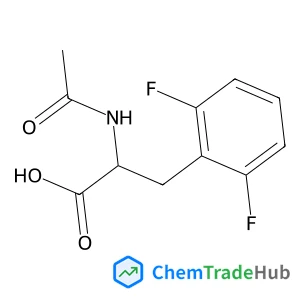
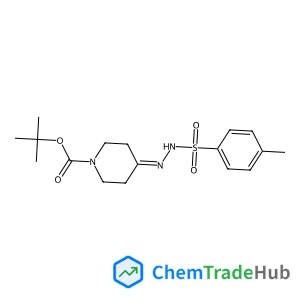
tert-Butyl 4-(2-(p-Tolylsulfonyl)hydrazono)piperidine-1-carboxylate
CAS号:
1046478-89-0
分子式:
C17H25N3O4S
![(2S)-2-{[(9H-Fluoren-9-ylmethoxy)carbonyl]amino}-4-(methylselanyl)butanoic acid structure](https://cnstatic.chemtradehub.com/structs/121/1217852-49-7-f252.webp "(2S)-2-{[(9H-Fluoren-9-ylmethoxy)carbonyl]amino}-4-(methylselanyl)butanoic acid structure")
推荐供应商





免责声明
本页面提供的学术期刊信息仅供参考和研究使用。我们与任何期刊出版商均无关联,也不处理投稿事宜。如有投稿相关咨询,请直接联系相关期刊出版商。
如发现页面信息有误,请发送邮件至 support@chemtradehub.com 联系我们。我们将及时核实并处理您的问题。