


Structural and mechanical parameters of lipid bilayer membranes using a lattice refined self-consistent field theory
文献信息
发布日期
2021-02-08
DOI
10.1039/D0CP05597B
影响因子
3.676
作者
查看原文
摘要
The self-consistent field theory of Scheutjens and Fleer is implemented on a grid with (lattice) sites that are smaller than the segment size. In this quasi lattice-free implementation we consider united atom-like molecular models and study bilayer self-assembly of phospholipids in a selective solvent (water). We find structural as well as mechanical parameters for these bilayers. The mean (κ) and Gaussian () bending moduli, as well as the spontaneous curvature of the monolayer (Jm0), are computed for the first time following a grand canonical ensemble route. Results are in line with previous estimates for mechanical parameters that at the time could not be made following this correct route. This proves that the mean bending modulus is only a very weak function of the membrane tension. We performed a systematic study on the effects of model parameter variations. The mean bending modulus generally grows with increasing bilayer thickness. As expected Jm0 and behave oppositely with respect to each other and for classical phospholipids assumes values near zero. As an example, an increase in the lipophilic to hydrophilic ratio in the lipids, may cause the Gaussian bending rigidity to switch sign from negative to positive, while – not necessarily at the same point – the spontaneous curvature of the monolayer may switch sign from positive to negative. Together with other investigated trends, these results point to mechanisms of how topological phase transitions of the lipid bilayer membranes may be regulated in the biological context, which correlates with known lipid phase behaviour.
期刊推荐

Kinetics and Catalysis
Journal of Medicinal Chemistry

Journal of Organometallic Chemistry

Organic Preparations and Procedures International

Science

European Journal of Wood and Wood Products

Journal of Catalysis

Molecular Pharmacology

Helvetica Chimica Acta

Proceedings of the National Academy of Sciences of the United States of America
相关文献
Photoinduced production of NAD(P)H from an activated fluorescein–DNA monolayer
Heinz-Bernhard Kraatz, Jeremy S. Lee
2004-08-10
Communication
DOI: 10.1039/B406689H
Assembly of large simple 1D and rare polycatenated 3D molecular ladders from T-shaped building blocks containing a new, long N,N′-bidentate ligand
Cheng-Yong Su, Andrea M. Goforth, Mark D. Smith, Hans-Conrad zur Loye
2004-08-20
Communication
DOI: 10.1039/B406126H
A new organic superconductor β-(meso-DMBEDT-TTF)2PF6
Tadashi Kawamoto, Takehiko Mori, Hiroshi Moriyama, Yutaka Nishio, Koji Kajita
2004-09-21
Communication
DOI: 10.1039/B409631B
Novel fullerene–porphyrin–fullerene triad linked by metal axial coordination: Synthesis, X-ray crystal structure, and spectroscopic characterizations of trans-bis([60]fullerenoacetato)tin(iv) porphyrin
Hyun Jung Kim, Ki-Min Park, Seong Keun Kim, Kil Suk Kim, Dongho Kim, Hee-Joon Kim
2004-09-30
Communication
DOI: 10.1039/B411482E
Synthesis of Ag2S quantum dots in water-in-CO2 microemulsions
2004-09-30
Communication
DOI: 10.1039/B410700D
Stereoelective polymerization of d,l-lactide using N-heterocyclic carbene based compounds
Tryg R. Jensen, Laurie E. Breyfogle, Marc A. Hillmyer, William B. Tolman
2004-09-08
Communication
DOI: 10.1039/B405362A
A thermally stable nanoporous nickel 5-sulfoisophthalate; crystal structure and adsorption properties
Dae Sung Kim, Paul M. Forster, Ronan Le Toquin, Anthony K. Cheetham
2004-08-17
Communication
DOI: 10.1039/B408535C
New Pb–Pb bonds: syntheses and molecular structures of hexabiphenyldiplumbane and tri(trisbiphenylplumbyl)plumbate
Yuzhong Wang, Brandon Quillian, Pingrong Wei, Xiao-Juan Yang, Gregory H. Robinson
2004-08-20
Communication
DOI: 10.1039/B408860N
A first oxalamidino complex of samarium via reduction-coupling of carbodiimine: synthesis and molecular structure of [η4-C2(NR)4][(MeC5H4)2Sm(HMPA)]2·2THF (R = Pri, Cy)
Mingyu Deng, Yingmin Yao, Yong Zhang
2004-10-15
Communication
DOI: 10.1039/B410599K
Electrophilicity parameters for σ-complexation by uncharged electron-deficient aromatic and heteroaromatic structures
François Terrier, Régis Goumont, Taoufik Boubaker, Erwin Buncel
2004-09-30
Communication
DOI: 10.1039/B410356D
您可能还喜欢
化合物问答
(5-氨基吡唑-3-基)乙酸(CAS号:174891-10-2)的物理化学性质是什么?
(5-氨基吡唑-3-基)乙酸是一种无色至白色固体,分子量为174.15 g/mol。它在水中具有较好的溶解性,在有机溶剂中的溶解度较低。该化合物具有较好的反应活...
174891-10-2(3-Amino-1H-pyrazol-...
化合物问答
3-氟-4,5-二氯苯胺(CAS号:35754-38-2)适用哪些法规指南?
3-氟-4,5-二氯苯胺受到多项法规指南的约束,包括但不限于GHS(全球化学品统一分类和标签制度)的危险分类标准、欧盟的REACH法规(注册、评估、授权和限制)...
35754-38-23,4-Dichloro-5-fluor...
化合物问答
什么是(R)-(+)-2,2',6,6'-四甲氧基-4,4'-联(二(3,5-二甲苯基基)膦基)-3,3'-二联吡啶(CAS号:442905-33-1)?
这是一种有机化合物,化学名为(R)-(+)-2,2',6,6'-四甲氧基-4,4'-联(二(3,5-二甲苯基基)膦基)-3,3'-二联吡啶,CAS号为44290...
442905-33-14,4'-Bis[bis(3,5-dim...
化合物问答
1-氨基-2-氰基萘(CAS号:3100-67-2)应用于哪些行业?
1-氨基-2-氰基萘在医药、聚合物、传感器和半导体等行业中有应用。在医药领域,它可用作中间体合成某些药物。在聚合物行业,它可以用于制备具有特定性能的聚合物。此外...
3100-67-21-Amino-2-naphthonit...
化合物问答
如何处理含有1-溴-4-(异丙氧基甲基)苯(CAS号:98446-84-5)的废料?
处理含1-溴-4-(异丙氧基甲基)苯的废料时,首先应确保废液收集在防渗漏的容器中,避免泄露。然后,可以考虑采用化学降解法或物理吸附法进行处理。在特定条件下,可通...
98446-84-51-Bromo-4-(isopropox...
化合物问答
6-Chloro-8-(trifluoromethyl)chroman-4-one(CAS号:1344889-75-3)的主要用途是什么?
6-氯-8-三氟甲基-2,3-二氢-4H-色喃-4-酮主要用于有机合成中的中间体,也可作为研究试剂使用。
1344889-75-36-Chloro-8-(trifluor...
化合物问答
7-乙氧基-2-萘酚(CAS号:57944-44-2)通常如何合成?
7-乙氧基-2-萘酚通常通过N-乙氧基化反应合成,首先将2-萘酚与乙醇钠在乙醇中反应生成7-乙氧基-2-萘酚钠盐,再通过酸化进一步得到7-乙氧基-2-萘酚。该合...
57944-44-27-Ethoxy-2-naphthol
化合物问答
4-(1,1-二氧硫代吗啉)丁醇(CAS号:59801-41-1)适用哪些法规指南?
该化合物需遵循一系列的法规指南,包括但不限于GHS全球统一分类和标签制度,其分类可能包括易燃液体和可能危害水生环境。在欧洲,还需遵循REACH法规,确保物质和混...
59801-41-14-(4-Hydroxybutyl)th...
化合物问答
4-甲氧基苄基叠氮甲酸酯(CAS号:25474-85-5)的物理化学性质是什么?
4-甲氧基苄基叠氮甲酸酯是一种无色液体,具有一定的挥发性。其分子量为198.16,熔点为-69°C,沸点为105°C。该化合物在水中溶解度较低,在有机溶剂如乙醇...
25474-85-54-Methoxybenzyl carb...
化合物问答
如何处理含有4-氯-2-氟嘧啶(CAS号:51422-00-5)的废料?
含有4-氯-2-氟嘧啶的废料应按照危险废物处理。首先,应收集并分类这些废料,避免与其他废物混合。然后,可以采用焚烧处理或者交由专业机构进行处置。在处理过程中,需...
51422-00-54-Chloro-2-fluoropyr...
来源期刊
Physical Chemistry Chemical Physics

CiteScore:
5.5
自引率:
10.3%
年发文量:
3036
Physical Chemistry Chemical Physics (PCCP) is an international journal co-owned by 19 physical chemistry and physics societies from around the world. This journal publishes original, cutting-edge research in physical chemistry, chemical physics and biophysical chemistry. To be suitable for publication in PCCP, articles must include significant innovation and/or insight into physical chemistry; this is the most important criterion that reviewers and Editors will judge against when evaluating submissions. The journal has a broad scope and welcomes contributions spanning experiment, theory, computation and data science. Topical coverage includes spectroscopy, dynamics, kinetics, statistical mechanics, thermodynamics, electrochemistry, catalysis, surface science, quantum mechanics, quantum computing and machine learning. Interdisciplinary research areas such as polymers and soft matter, materials, nanoscience, energy, surfaces/interfaces, and biophysical chemistry are welcomed if they demonstrate significant innovation and/or insight into physical chemistry. Joined experimental/theoretical studies are particularly appreciated when complementary and based on up-to-date approaches.
推荐化合物
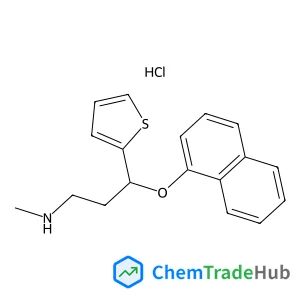
N-Methyl-3-(1-naphthyloxy)-3-(2-thienyl)-1-propanamine hydrochloride (1:1)
CAS号:
1188266-11-6
分子式:
C18H20ClNOS
![N-{15-[(2,5-Dioxo-1-pyrrolidinyl)oxy]-15-oxo-3,6,9,12-tetraoxapentadec-1-yl}-2-(2-propyn-1-yloxy)acetamide structure](https://cnstatic.chemtradehub.com/structs/210/2101206-92-0-2eb5.webp "N-{15-[(2,5-Dioxo-1-pyrrolidinyl)oxy]-15-oxo-3,6,9,12-tetraoxapentadec-1-yl}-2-(2-propyn-1-yloxy)acetamide structure")
推荐供应商




免责声明
本页面提供的学术期刊信息仅供参考和研究使用。我们与任何期刊出版商均无关联,也不处理投稿事宜。如有投稿相关咨询,请直接联系相关期刊出版商。
如发现页面信息有误,请发送邮件至 support@chemtradehub.com 联系我们。我们将及时核实并处理您的问题。