


![N-{15-[(2,5-Dioxo-1-pyrrolidinyl)oxy]-15-oxo-3,6,9,12-tetraoxapentadec-1-yl}-2-(2-propyn-1-yloxy)acetamide structure](https://cnstatic.chemtradehub.com/structs/210/2101206-92-0-2eb5.webp "N-{15-[(2,5-Dioxo-1-pyrrolidinyl)oxy]-15-oxo-3,6,9,12-tetraoxapentadec-1-yl}-2-(2-propyn-1-yloxy)acetamide structure")
Theoretical prediction by DFT and experimental observation of heterocation-doping effects on hydrogen adsorption and migration over the CeO2(111) surface
文献信息
发布日期
2021-01-26
DOI
10.1039/D0CP05752E
影响因子
3.676
作者
Kota Murakami, Yuta Mizutani, Hiroshi Sampei, Atsushi Ishikawa, Yuta Tanaka, Sasuga Hayashi, Sae Doi, Takuma Higo, Hideaki Tsuneki, Hiromi Nakai, Yasushi Sekine
查看原文
摘要
Hydrogen (H) atom adsorption and migration over the CeO2-based materials surface are of great importance because of its wide applications to catalytic reactions and electrochemical devices. Therefore, comprehensive knowledge for controlling the H atom adsorption and migration over CeO2-based materials is crucially important. For controlling H atom adsorption and migration, we investigated irreducible divalent, trivalent, and quadrivalent heterocation-doping effects on H atom adsorption and migration over the CeO2(111) surface using density functional theory (DFT) calculations. Results revealed that the electron-deficient lattice oxygen (Olat) and the flexible CeO2 matrix played key roles in strong adsorption of H atoms. Heterocations with smaller valence and smaller ionic radius induced the electron-deficient Olat. In addition, smaller cation doping enhanced the CeO2 matrix flexibility. Moreover, we confirmed the influence of H atom adsorption controlled by doping on surface proton migration (i.e. surface protonics) and catalytic reaction involving surface protonics (NH3 synthesis in an electric field). Results confirmed clear correlation between H atom adsorption energy and surface protonics.
期刊推荐

European Journal of Wood and Wood Products
Organic Preparations and Procedures International
Israel Journal of Chemistry
Pure and Applied Chemistry

Science Progress
Planta Medica
Fibre Chemistry
Journal of Physics and Chemistry of Solids

Nature
Proceedings of the National Academy of Sciences of the United States of America
相关文献
Dynamic and thermodynamic characteristics associated with the glass transition of amorphous trehalose–water mixtures
Lindong Weng, Gloria D. Elliott
2014-04-25
Paper
DOI: 10.1039/C3CP55418J
Barrierless tautomerization of Criegee intermediates via acid catalysis
2014-09-22
Communication
DOI: 10.1039/C4CP03065F
Ammonia-modified Co(ii) sites in zeolites: IR spectroscopy and spin-resolved charge transfer analysis of NO adsorption complexes
Kinga Góra-Marek, Adam Stępniewski, Mariusz Radoń, Ewa Broclawik
2014-09-11
Paper
DOI: 10.1039/C4CP03350G
Seaurchin-like hierarchical NiCo2O4@NiMoO4 core–shell nanomaterials for high performance supercapacitors
Qiang Zhang, Yanghua Deng, Zhonghua Hu, Yafei Liu, Mingming Yao, Peipei Liu
2014-09-12
Paper
DOI: 10.1039/C4CP02928C
Investigation of the bulk and surface properties of CdSe: insights from theory
Alexandra Szemjonov, Thierry Pauporté, Ilaria Ciofini, Frédéric Labat
2014-09-17
Paper
DOI: 10.1039/C4CP02886D
Capture of heliophobic atoms by 4He nanodroplets: the case of cesium
Antonio Leal, David Mateo, Alberto Hernando, Martí Pi, Manuel Barranco
2014-09-22
Paper
DOI: 10.1039/C4CP03297G
Quasi-perpetual discharge behaviour in p-type Ge–air batteries
Joey D. Ocon, Jin Won Kim, Graniel Harne A. Abrenica, Jae Kwang Lee
2014-06-20
Paper
DOI: 10.1039/C4CP02134G
Complexation of DNA with ruthenium organometallic compounds: the high complexation ratio limit
Stéphane Despax, Fuchao Jia, Michel Pfeffer, Pascal Hébraud
2014-03-28
Paper
DOI: 10.1039/C4CP00726C
您可能还喜欢
化合物问答
(5-氨基吡唑-3-基)乙酸(CAS号:174891-10-2)的物理化学性质是什么?
(5-氨基吡唑-3-基)乙酸是一种无色至白色固体,分子量为174.15 g/mol。它在水中具有较好的溶解性,在有机溶剂中的溶解度较低。该化合物具有较好的反应活...
174891-10-2(3-Amino-1H-pyrazol-...
化合物问答
3-氟-4,5-二氯苯胺(CAS号:35754-38-2)适用哪些法规指南?
3-氟-4,5-二氯苯胺受到多项法规指南的约束,包括但不限于GHS(全球化学品统一分类和标签制度)的危险分类标准、欧盟的REACH法规(注册、评估、授权和限制)...
35754-38-23,4-Dichloro-5-fluor...
化合物问答
什么是(R)-(+)-2,2',6,6'-四甲氧基-4,4'-联(二(3,5-二甲苯基基)膦基)-3,3'-二联吡啶(CAS号:442905-33-1)?
这是一种有机化合物,化学名为(R)-(+)-2,2',6,6'-四甲氧基-4,4'-联(二(3,5-二甲苯基基)膦基)-3,3'-二联吡啶,CAS号为44290...
442905-33-14,4'-Bis[bis(3,5-dim...
化合物问答
1-氨基-2-氰基萘(CAS号:3100-67-2)应用于哪些行业?
1-氨基-2-氰基萘在医药、聚合物、传感器和半导体等行业中有应用。在医药领域,它可用作中间体合成某些药物。在聚合物行业,它可以用于制备具有特定性能的聚合物。此外...
3100-67-21-Amino-2-naphthonit...
化合物问答
如何处理含有1-溴-4-(异丙氧基甲基)苯(CAS号:98446-84-5)的废料?
处理含1-溴-4-(异丙氧基甲基)苯的废料时,首先应确保废液收集在防渗漏的容器中,避免泄露。然后,可以考虑采用化学降解法或物理吸附法进行处理。在特定条件下,可通...
98446-84-51-Bromo-4-(isopropox...
化合物问答
6-Chloro-8-(trifluoromethyl)chroman-4-one(CAS号:1344889-75-3)的主要用途是什么?
6-氯-8-三氟甲基-2,3-二氢-4H-色喃-4-酮主要用于有机合成中的中间体,也可作为研究试剂使用。
1344889-75-36-Chloro-8-(trifluor...
化合物问答
7-乙氧基-2-萘酚(CAS号:57944-44-2)通常如何合成?
7-乙氧基-2-萘酚通常通过N-乙氧基化反应合成,首先将2-萘酚与乙醇钠在乙醇中反应生成7-乙氧基-2-萘酚钠盐,再通过酸化进一步得到7-乙氧基-2-萘酚。该合...
57944-44-27-Ethoxy-2-naphthol
化合物问答
4-(1,1-二氧硫代吗啉)丁醇(CAS号:59801-41-1)适用哪些法规指南?
该化合物需遵循一系列的法规指南,包括但不限于GHS全球统一分类和标签制度,其分类可能包括易燃液体和可能危害水生环境。在欧洲,还需遵循REACH法规,确保物质和混...
59801-41-14-(4-Hydroxybutyl)th...
化合物问答
4-甲氧基苄基叠氮甲酸酯(CAS号:25474-85-5)的物理化学性质是什么?
4-甲氧基苄基叠氮甲酸酯是一种无色液体,具有一定的挥发性。其分子量为198.16,熔点为-69°C,沸点为105°C。该化合物在水中溶解度较低,在有机溶剂如乙醇...
25474-85-54-Methoxybenzyl carb...
化合物问答
如何处理含有4-氯-2-氟嘧啶(CAS号:51422-00-5)的废料?
含有4-氯-2-氟嘧啶的废料应按照危险废物处理。首先,应收集并分类这些废料,避免与其他废物混合。然后,可以采用焚烧处理或者交由专业机构进行处置。在处理过程中,需...
51422-00-54-Chloro-2-fluoropyr...
来源期刊
Physical Chemistry Chemical Physics

CiteScore:
5.5
自引率:
10.3%
年发文量:
3036
Physical Chemistry Chemical Physics (PCCP) is an international journal co-owned by 19 physical chemistry and physics societies from around the world. This journal publishes original, cutting-edge research in physical chemistry, chemical physics and biophysical chemistry. To be suitable for publication in PCCP, articles must include significant innovation and/or insight into physical chemistry; this is the most important criterion that reviewers and Editors will judge against when evaluating submissions. The journal has a broad scope and welcomes contributions spanning experiment, theory, computation and data science. Topical coverage includes spectroscopy, dynamics, kinetics, statistical mechanics, thermodynamics, electrochemistry, catalysis, surface science, quantum mechanics, quantum computing and machine learning. Interdisciplinary research areas such as polymers and soft matter, materials, nanoscience, energy, surfaces/interfaces, and biophysical chemistry are welcomed if they demonstrate significant innovation and/or insight into physical chemistry. Joined experimental/theoretical studies are particularly appreciated when complementary and based on up-to-date approaches.
推荐化合物
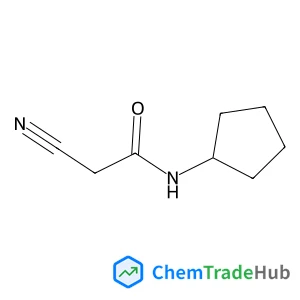
![1,10-bis(3,5-dimethylphenyl)-12-hydroxy-4,5,6,7-tetrahydroiindeno[7,1-de:1',7'-fg][1,3,2]dioxaphosphocine 12-oxide structure](https://cnstatic.chemtradehub.com/structs/141/1412439-82-7-b9a9.webp "1,10-bis(3,5-dimethylphenyl)-12-hydroxy-4,5,6,7-tetrahydroiindeno[7,1-de:1',7'-fg][1,3,2]dioxaphosphocine 12-oxide structure")
推荐供应商




免责声明
本页面提供的学术期刊信息仅供参考和研究使用。我们与任何期刊出版商均无关联,也不处理投稿事宜。如有投稿相关咨询,请直接联系相关期刊出版商。
如发现页面信息有误,请发送邮件至 support@chemtradehub.com 联系我们。我们将及时核实并处理您的问题。