








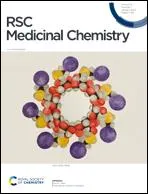
Normal breast epithelial MCF-10A cells to evaluate the safety of carbon dots
文献信息
发布日期
2020-12-10
DOI
10.1039/D0MD00317D
影响因子
0
作者
Diana M. A. Crista
查看原文
摘要
The human normal breast cell line MCF-10A is being widely used as a model in toxicity studies due to its structural similarity to the normal human mammary epithelium. Over the years, application of carbon dots (C-dots) in biomedicine has been increasing due to their photoluminescence properties, biocompatibility, biosafety and possible applications in bioimaging and as drug carriers. In this work we prepared three different C-dots from the same set of carbon and nitrogen precursors (citric acid and urea, respectively) via three distinct bottom-up synthetic routes and their safety was tested against the normal breast cell line MCF-10A. The characterization results demonstrated a similar size range and composition for all the C-dots. The MCF-10A cells were treated with different concentrations of C-dots for 24, 48 and 72 h to evaluate the cell viability over time. For the 24 h incubation, there were no significant decreases in the viability of the MCF-10A cells. For the 48 h treatment, there was a significant decrease in the viability of the cells treated with calcination-based C-dots, but without significant cellular viability changes for microwave and hydrothermal-based C-dots. For 72 h, cells treated with hydrothermal-based C-dots have the most promising viability profile. Also, compared with paclitaxel, these C-dots have a safety profile very close to that of an antineoplastic in non-tumor cells. Our results suggest that these new C-dots have potential as imaging candidates or biosensing tools as well as drug carriers, and further investigation in animal models is needed for future application in medicine.
相关文献
FTO-free counter electrodes for dye-sensitized solar cells using carbon nanosheets synthesised from a polymeric carbon source
Zico Alaia Akbar, Jinhyeon Kang, Han-Ik Joh, Sung-Yeon Jang
2014-06-25
Paper
DOI: 10.1039/C4CP01913J
Unravelling the correlated electronic and optical properties of BaTaO2N with perovskite-type structure as a potential candidate for solar energy conversion
Ahmed M. Hafez, Noha M. Salem, Nageh K. Allam
2014-07-15
Paper
DOI: 10.1039/C4CP02088J
Investigation of molecular partitioning between non polar oil droplets and aqueous solution using double potential step chronoamperometry
Jonathan C. Newland, Patrick R. Unwin, Julie V. Macpherson
2014-03-06
Paper
DOI: 10.1039/C4CP00231H
Warm white light generation from a single phase Dy3+ doped Mg2Al4Si5O18 phosphor for white UV-LEDs
Zhipeng Ci, Qisheng Sun, Shengchun Qin, Mengxing Sun, Xiaojing Jiang, Xudong Zhang, Yuhua Wang
2014-03-24
Paper
DOI: 10.1039/C4CP00357H
Analysis of hydrogen bond energies and hydrogen bonded networks in water clusters (H2O)20 and (H2O)25 using the charge-transfer and dispersion terms
2014-04-17
Paper
DOI: 10.1039/C4CP01204F
Improved performance of a polymer nanogenerator based on silver nanoparticles doped electrospun P(VDF–HFP) nanofibers
Dipankar Mandal, Karsten Henkel, Dieter Schmeißer
2014-02-27
Communication
DOI: 10.1039/C3CP55238A
Studies of protein folding and dynamics using single molecule fluorescence spectroscopy
Sujit Basak, Krishnananda Chattopadhyay
2014-03-17
Perspective
DOI: 10.1039/C3CP55219E
Computational assignment of redox states to Coulomb blockade diamonds
Stine T. Olsen, Vaida Arcisauskaite, Jacob Kongsted, Kurt V. Mikkelsen
2014-07-04
Paper
DOI: 10.1039/C4CP02055C
Magnetically recoverable Ni/C catalysts with hierarchical structure and high-stability for selective hydrogenation of nitroarenes
Peng Zhang, Chang Yu, Xiaoming Fan, Xiuna Wang, Zheng Ling, Zonghua Wang, Jieshan Qiu
2014-11-10
Paper
DOI: 10.1039/C4CP03978E
您可能还喜欢
化合物问答
3 - (二氟甲基)-1 -氟苯(CAS号:26029-52-7)适用哪些法规指南?
3 - (二氟甲基)-1 -氟苯需遵循联合国全球化学品统一分类和标签制度(GHS),包括急性毒性、皮肤腐蚀/刺激、严重眼损伤/眼刺激等分类。同时,该化合物还需符...
26029-52-71-(Difluoromethyl)-3...
化合物问答
3,5-二甲基苯胺(CAS号:108-69-0)通常如何合成?
3,5-二甲基苯胺通常通过乙苯的氨解反应合成。反应中使用硫酸作为催化剂,反应温度为120-130°C。乙苯在硫酸存在下与氨反应,生成3,5-二甲基苯胺和苯胺副产...
108-69-03,5-Dimethylaniline
化合物问答
3-甲基异噻唑-5-胺(CAS号:24340-76-9)安全吗?
3-甲基异噻唑-5-胺在适当使用和储存条件下是相对安全的,但在操作时应注意防护措施。应避免吸入粉尘,避免与皮肤和眼睛直接接触。在操作过程中,应穿戴适当的防护装备...
24340-76-93-Methyl-1,2-thiazol...
化合物问答
3-(1,3-Thiazol-2-yl)-1H-indole(CAS号:135531-86-1)通常如何合成?
3-(1,3-噻唑-2-基)-1H-吲哚通常通过多步合成方法制备。首先,由噻唑-2-基溴化物和吲哚进行偶联反应,得到中间体。然后,通过还原反应将中间体转化为所需...
135531-86-13-(1,3-Thiazol-2-yl)...
化合物问答
4-溴-2-氟苯甲基氯(CAS号:85510-82-3)的主要用途是什么?
4-溴-2-氟苯甲基氯主要用于有机合成中间体,特别是在医药、农药和染料等领域。作为一种具有特定结构的化合物,它在合成复杂有机分子时扮演重要角色。
85510-82-34-Bromo-1-(chloromet...
化合物问答
处理Fmoc-β-(3-噻吩基)-D-Ala-OH(CAS号:220497-90-5)时应注意哪些实验室安全事项?
处理Fmoc-β-(3-噻吩基)-D-Ala-OH时,应佩戴防护手套、护目镜和实验服。操作应在通风橱内进行。如发生泄露,应立即用大量水冲洗,并通知实验室管理人员...
220497-90-5N-[(9H-Fluoren-9-ylm...
化合物问答
氮化硅(CAS号:12033-89-5)通常如何合成?
氮化硅通常通过氮化硅的直接反应合成,即在高温下将四氯化硅与氨气反应。具体步骤是将四氯化硅和氨气混合并加热至1300-1700℃,在该条件下,四氯化硅与氨气反应生...
12033-89-5Trisilicon tetranitr...
化合物问答
Cetirizine EP Impurity B DiHCl(CAS号:1000690-91-4)通常如何合成?
Cetirizine EP Impurity B DiHCl通常通过一锅法合成,首先将4-氯苯基-苯甲基氯甲酸酯与1-哌嗪乙酸反应,生成相应的酸,然后与盐酸反应...
1000690-91-4{4-[(4-Chlorophenyl)...
化合物问答
如何储存1-哌啶-4-基丁-1-酮(CAS号:3509-15-7)?
1-哌啶-4-基丁-1-酮应储存在阴凉、干燥的地方,避免阳光直射。存储容器应密封,并确保通风良好。建议储存温度不超过25℃,湿度保持在相对较低的水平。
3509-15-71-Piperidin-4-ylbuta...
化合物问答
如何处理含有VORUCICLIB(CAS号:1000023-04-0)的废料?
含有VORUCICLIB的废料应进行专业的收集和处理,包括使用适当的容器进行隔离,避免与其他化学品接触。处理方法通常包括化学中和、沉淀反应或吸附过程,随后进行焚...
1000023-04-02-[2-Chloro-4-(trifl...
来源期刊
推荐化合物
![1-[3-(4-Morpholinylsulfonyl)phenyl]methanamine structure](https://cnstatic.chemtradehub.com/structs/933/933989-32-3-51af.webp "1-[3-(4-Morpholinylsulfonyl)phenyl]methanamine structure")
![2,6-Di(thiophen-2-yl)dithieno[3,2-b:2',3'-d]thiophene structure](https://cnstatic.chemtradehub.com/structs/910/910788-24-8-5b70.webp "2,6-Di(thiophen-2-yl)dithieno[3,2-b:2',3'-d]thiophene structure")
推荐供应商


免责声明
本页面提供的学术期刊信息仅供参考和研究使用。我们与任何期刊出版商均无关联,也不处理投稿事宜。如有投稿相关咨询,请直接联系相关期刊出版商。
如发现页面信息有误,请发送邮件至 support@chemtradehub.com 联系我们。我们将及时核实并处理您的问题。